Key takeaways
- Read the construction, not the adjective: “Firm” is marketing. Look for pocketed coils in the 13–15 gauge range, a thin comfort layer (2 inches or less), and high-density foam above the springs. Those three details predict feel far better than a number on a 1–10 chart.
- Zoning matters more than coil count: A zoned lumbar section uses stiffer coils under your hips and lower back while staying softer at the shoulders. That’s what keeps a firm bed from turning your spine into a straight plank.
- Check your slats before you order: Most hybrid warranties require slats spaced 3 inches apart or less. If yours are wider, cut a sheet of 1/2-inch plywood or add cross battens — a $20 fix that prevents sagging the manufacturer won’t cover.
- Match the profile to your sheets and frame: A 14-inch mattress on a tall platform bed puts the sleep surface uncomfortably high, and standard fitted sheets top out around 15 inches of pocket depth. Measure before you commit.
- Treat the trial period as part of the spec: Firm beds need two to four weeks of adjustment before your body reads them accurately. A 365-night trial is genuinely useful here; a 30-day window is not.
What's inside
Firmness is the least standardized spec in the mattress world. One brand’s “extra firm” feels like a gym mat, another’s feels like a hotel pillowtop that had a rough week. And unlike a drill or a table saw, you can’t test-drive it in a showroom aisle — you order a compressed roll, wrestle it up the stairs, and find out. That’s a rough way to spend a few hundred dollars, especially if your back is the reason you’re shopping in the first place.
This guide takes a builder’s approach: what’s actually inside the box, how the support layers are engineered, and what your existing frame needs to do to keep that support intact. I’ve focused on firm and extra-firm hybrids and foam beds currently available on Amazon, with notes on coil zoning, profile height, foundation requirements, and the trial windows that give you an exit if the feel isn’t right.
As an Amazon Associate we earn from qualifying purchases.


🛒 Best Price Today on Amazon
Prime members get fast, free shipping on everything above, plus member-only deals. New members get a 30-day free trial — cancel anytime.
How to Choose a Firm Mattress on Amazon (2026)
- Read the construction, not the adjective: “Firm” is marketing. Look for pocketed coils in the 13–15 gauge range, a thin comfort layer (2 inches or less), and high-density foam above the springs. Those three details predict feel far better than a number on a 1–10 chart.
- Zoning matters more than coil count: A zoned lumbar section uses stiffer coils under your hips and lower back while staying softer at the shoulders. That’s what keeps a firm bed from turning your spine into a straight plank.
- Check your slats before you order: Most hybrid warranties require slats spaced 3 inches apart or less. If yours are wider, cut a sheet of 1/2-inch plywood or add cross battens — a $20 fix that prevents sagging the manufacturer won’t cover.
- Match the profile to your sheets and frame: A 14-inch mattress on a tall platform bed puts the sleep surface uncomfortably high, and standard fitted sheets top out around 15 inches of pocket depth. Measure before you commit.
- Treat the trial period as part of the spec: Firm beds need two to four weeks of adjustment before your body reads them accurately. A 365-night trial is genuinely useful here; a 30-day window is not.
The Best Firm Mattresses on Amazon (2026) Reviewed
BedStory Firm 13 Inch Hybrid Queen
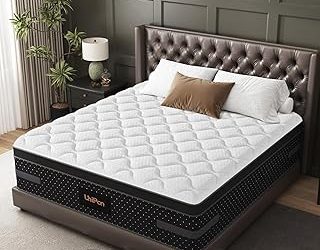
A well-balanced firm hybrid that pairs zoned lumbar coils with just enough top foam to take the edge off the spring layer, which is the combination back sleepers usually want. The 13-inch profile plays nicely with standard deep-pocket sheets and most platform frames without stilting the bed.
Sleepmax Extra Firm Full 12 Inch
The most genuinely extra-firm option on this list, and a smart pick for a guest room, bunk build, or anyone who’s been sleeping on a board and likes it. Fiberglass-free and CertiPUR-US certified, with a slim 12-inch build that suits low frames and daybed conversions.
Sleepmax Extra Firm Queen 12 Inch
Same firm foundation as the full, sized up with reinforced hip and lumbar zoning that keeps heavier sleepers from sinking through the midsection. Edge support is solid enough to sit on while you lace your boots, which is a fair proxy for perimeter coil quality.
BedStory Firm King 14 Inch
The one I’d point a couple toward when both partners want firm support but disagree about pressure points, thanks to the zoned coil layout and generous 14-inch build. Made in the USA and CertiPUR-US certified, though the height means you’ll want to verify your sheet depth first.
Firm Queen 14 Inch Cooling Hybrid
Individually pocketed springs with dedicated hip, shoulder, and lumbar zones give this one the most contoured feel of the firm group, and the cooling cover earns its keep in a warm bedroom. A good compromise if you want firm support without a completely flat sleep surface.
Frequently Asked Questions
Can a firm mattress be too firm?
Yes. If you wake with sore shoulders or hips, or you can slide your hand into a gap under your lower back while lying down, the bed isn’t letting you sink enough to keep your spine neutral. That’s a firmness mismatch, not a break-in issue.
Do I need a box spring?
No. Every mattress here works on a platform, slatted frame, or adjustable base. What you do need is continuous support with slat gaps under 3 inches — a plywood deck or added battens solves it cheaply.
How long until it fully expands?
Plan on 24 to 72 hours for full loft, and unbox in a ventilated room. New-foam odor typically clears within a few days; running a fan speeds it noticeably.
Are firm mattresses bad for side sleepers?
Not inherently, but zoning becomes essential. Side sleepers should choose a zoned hybrid that softens at the shoulder rather than a uniformly extra-firm build.
Final Thoughts
For most buyers, the BedStory Firm 13 Inch Hybrid Queen hits the best balance of firm support and livable comfort, with the BedStory Firm King 14 Inch as the couples’ upgrade. If you want uncompromising firmness and a slim profile for a low frame or guest setup, the Sleepmax Extra Firm 12 Inch is the straightforward pick — just prep your slats first.