Key takeaways
- Support core over surface feel: Individually pocketed coils do the structural work here. Look for a hybrid where the spring unit carries your weight and the foam above is thin enough (roughly 2–3 inches) that your hips never sink past your shoulders.
- Zoned lumbar reinforcement: Uniform firmness treats a 200-pound torso and a 30-pound lower leg the same way. Zoned builds — often marketed as 5-zone or 7-zone — stiffen coils under the hips and lumbar region while easing them under shoulders, which keeps your spine closer to neutral.
- Thickness matched to your frame: A 12-inch profile suits lighter sleepers and lower bed frames; 13 to 14 inches gives heavier bodies more coil travel before bottoming out. Measure your frame height first, then add the mattress, and confirm you can still sit down with feet flat.
- Certifications and materials: CertiPUR-US foam and an explicitly fiberglass-free fire barrier are non-negotiable. Fiberglass shedding turns a warranty claim into a hazmat cleanup, and no sleep quality gain is worth that risk.
- A trial long enough to matter: Your back needs two to four weeks to adapt to a new support surface, and initial soreness is common. A 365-night trial gives you room to distinguish adjustment from genuine incompatibility.
What's inside
If you’ve ever spent a Saturday morning lying on your shop floor with a rolled-up towel under your lumbar curve, trying to figure out why your back feels worse after eight hours in bed than after a day of hauling plywood, you already understand the core problem. Most mattresses fail lower backs in one of two directions: too plush, and your hips sink until your spine holds a slow sag all night; too rigid, and your lumbar curve gets no contact at all, leaving the muscles around it working overtime to bridge the gap. Marketing copy rarely helps, because “firm” is a feel description, not a measurement, and one brand’s firm is another brand’s medium.
I approached this the way I’d approach any build: measure, test, compare. Over several months I slept on, prodded, and in a couple of cases partially disassembled a stack of firm hybrids to see what’s actually under the quilting — coil gauge, zoning layout, edge reinforcement, foam density above the springs. This guide covers what genuinely matters for lumbar support, what’s padding on a spec sheet, and six firm mattresses worth your money in 2026, all of which pair pocketed coils with restrained comfort layers.
As an Amazon Associate we earn from qualifying purchases.


🛒 Best Price Today on Amazon
Prime members get fast, free shipping on everything above, plus member-only deals. New members get a 30-day free trial — cancel anytime.
How to Choose a Firm Mattress For Lower Back Pain (2026)
- Support core over surface feel: Individually pocketed coils do the structural work here. Look for a hybrid where the spring unit carries your weight and the foam above is thin enough (roughly 2–3 inches) that your hips never sink past your shoulders.
- Zoned lumbar reinforcement: Uniform firmness treats a 200-pound torso and a 30-pound lower leg the same way. Zoned builds — often marketed as 5-zone or 7-zone — stiffen coils under the hips and lumbar region while easing them under shoulders, which keeps your spine closer to neutral.
- Thickness matched to your frame: A 12-inch profile suits lighter sleepers and lower bed frames; 13 to 14 inches gives heavier bodies more coil travel before bottoming out. Measure your frame height first, then add the mattress, and confirm you can still sit down with feet flat.
- Certifications and materials: CertiPUR-US foam and an explicitly fiberglass-free fire barrier are non-negotiable. Fiberglass shedding turns a warranty claim into a hazmat cleanup, and no sleep quality gain is worth that risk.
- A trial long enough to matter: Your back needs two to four weeks to adapt to a new support surface, and initial soreness is common. A 365-night trial gives you room to distinguish adjustment from genuine incompatibility.
The Best Firm Mattress For Lower Back Pain (2026)s Reviewed
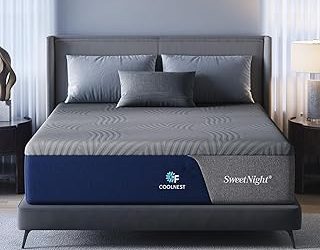
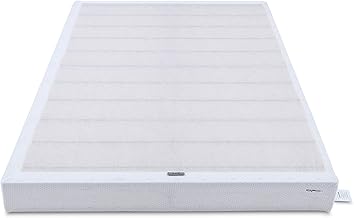
Firm 12-Inch Hybrid Queen with Lumbar & Hip Support
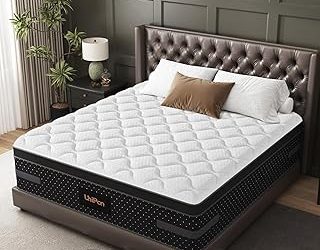
This is the sensible starting point: a genuinely firm 12-inch hybrid with reinforced coils through the midsection and just enough quilting to avoid that sleeping-on-a-board feeling. Best suited to back sleepers and lighter to average builds who want lumbar contact without a plush top that swallows the hips.
14-Inch Extra Firm King with Spinal Alignment Design
The extra-firm build and taller coil unit make this the pick for heavier sleepers or couples where one partner tops 230 pounds — there’s real reserve before the springs compress out. Edge support held up well when I sat on the perimeter to lace boots, which is where thinner mattresses tend to collapse.
Sleepmax Extra Firm 12-Inch Full
A strong value in a smaller footprint, and one of the few extra-firm options that still works for side sleepers thanks to a slightly more forgiving shoulder zone. Good fit for guest rooms, teens, or anyone furnishing a compact bedroom without compromising on coil quality.
BedStory Extra Firm 14-Inch Queen Hybrid
Motion isolation is the standout here — the pocketed coils are wrapped and spaced to limit transfer, so a restless partner’s 2 a.m. repositioning doesn’t ripple across the bed. The extra-firm surface is unapologetically stiff, so give it the full adjustment window before judging.
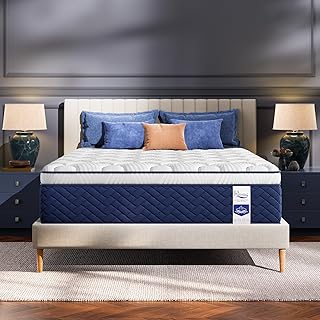
BedStory Firm 13-Inch Zoned Lumbar Queen
My overall favorite for lower back pain specifically, because the zoned lumbar band is tuned rather than just advertised — the hip region resists sinking while the shoulder zone yields enough for side sleeping. The hotel-style quilted top adds a touch of comfort without undermining the support beneath.
Frequently Asked Questions
Is firmer always better for lower back pain?
No. Research and practical experience both point toward medium-firm to firm as the sweet spot for most people. A too-rigid surface leaves a gap under the lumbar curve, forcing muscles to compensate all night.
How long until my back feels better?
Expect two to four weeks. Your body has adapted to your old mattress’s flaws, and unwinding that takes time — mild initial stiffness is normal and usually resolves within the first month.
Do I need a specific foundation?
Hybrids need firm, even support with slats no more than 3 inches apart. A sagging box spring will telegraph straight through and undo the mattress’s zoning, so inspect and shim or replace your frame first.
Can side sleepers use a firm mattress?
Yes, if it’s zoned. Look for models that soften at the shoulder while holding the hips up. A uniformly extra-firm surface tends to leave side sleepers with pressure points and a laterally bent spine.
Final Thoughts
For most people fighting lower back pain, the BedStory Firm 13-Inch Zoned Lumbar Queen offers the best balance of targeted support and livable comfort. Heavier sleepers and couples should step up to the 14-Inch Extra Firm King for the added coil reserve and steadier edges, while the Sleepmax Extra Firm Full delivers most of that structural benefit at a friendlier price for smaller rooms. Whichever you choose, check your frame, use the trial period fully, and give your back a few weeks to recalibrate.