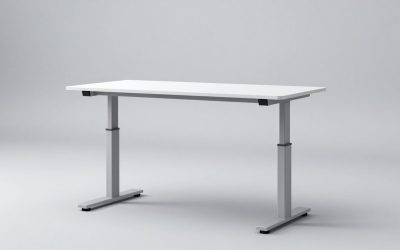
The best folding table for study in small rooms is a 40 to 48-inch wide table with a fixed height of 28 to 29 inches and a fold-flat thickness under 3.5 inches, because it provides enough depth for a laptop and notebook while still sliding into a closet or against a wall when not in use.
Our top picks
 LIFETIME Stacking Compact Folding Table
- Spacious 30 in
- Wide Foot Stance Design: Provides ample leg room…
- Practical Compact Folding Design: Folds flat for convenient…
 LIFETIME 30-Inch Personal Folding Table
- Smooth Single-Piece Tabletop: Seamless 30-inch surface provides a…
- Folds Flat for Easy Storage: Compact folding design…
- Stable Broad-Leg Stance: Wide X‑frame base delivers enhanced…
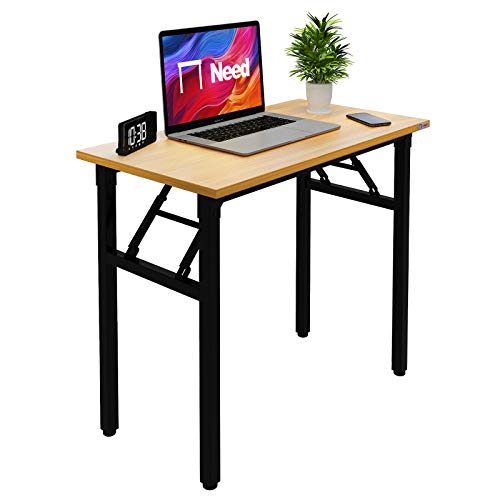 Need Small Computer Desk 31.5x15.7 Inch Folding
- Small desk size: L31.5 x W15.7 x H29.9…
- The portable desk leg uses epoxy spray paint…
- Panel material is environmental P2 standard particle wood…
| Product | Key specs | |
|---|---|---|
| LIFETIME Stacking Compact Folding Table | Spacious 30 in Wide Foot Stance Design: Provides ample leg room… Practical Compact Folding Design: Folds flat for convenient… | Check price |
| LIFETIME 30-Inch Personal Folding Table | Smooth Single-Piece Tabletop: Seamless 30-inch surface provides a… Folds Flat for Easy Storage: Compact folding design… Stable Broad-Leg Stance: Wide X‑frame base delivers enhanced… | Check price |
| Need Small Computer Desk 31.5x15.7 Inch Folding | Small desk size: L31.5 x W15.7 x H29.9… The portable desk leg uses epoxy spray paint… Panel material is environmental P2 standard particle wood… | Check price |
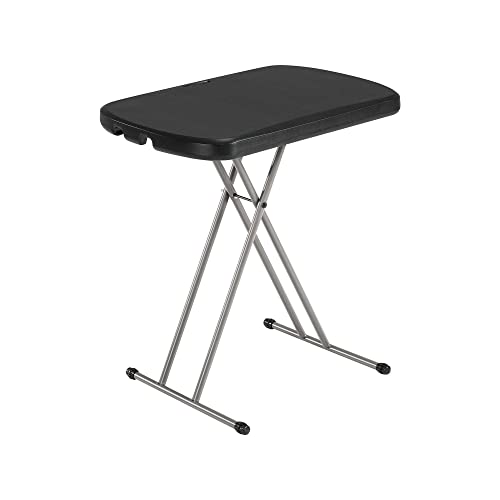 LIFETIME Adjustable Folding Laptop Table TV Tray LIFETIME Adjustable Folding Laptop Table TV Tray | Adjusts to 24 inch, 26 inch and 28… Great for home, office, crafts and outdoor activities Open dimensions as 26 in | Check price |
As an Amazon Associate we earn from qualifying purchases at no extra cost to you.
What Makes a Folding Table Work for Studying vs. General Use
A standard folding table is designed for occasional dining or events, but a study table needs to support daily laptop use, writing, and long sitting sessions. The key differences are stability under uneven weight, surface depth that keeps a screen at a healthy eye distance, and a height that matches a desk chair rather than a dining chair.
For study use, look for these three specs first:
- Height: 28 to 29 inches is the ergonomic standard for desk chairs with a seat height of 17 to 19 inches. Tables higher than 30 inches force you to shrug your shoulders when typing.
- Depth: 20 to 24 inches is the usable range. Less than 20 inches puts a 15-inch laptop screen too close to your eyes (under 18 inches viewing distance).
- Folded thickness: Under 3.5 inches lets you store it behind a door, under a bed frame with 4-inch clearance, or inside a standard dorm closet that is 24 inches deep.
40-Inch vs. 48-Inch Folding Tables: Which Size Fits Your Room?
Both sizes are marketed as compact, but they function very differently in a real room. A 40-inch table is better for sharing a room or working in a corner, while a 48-inch table is better if you need space for a monitor plus books.
| Table Size | Open Footprint (W x D) | Folded Size | Best For | Clearance Needed for Chair + Movement |
|---|---|---|---|---|
| 40 x 20 inches | 6.7 sq ft | 40 x 20 x 2.75 inches | Dorms, 10×10 ft bedrooms, single-user laptop study | 36 inches behind chair, 42 inches total depth with person seated |
| 42 x 24 inches | 7.0 sq ft | 42 x 24 x 3 inches | Balanced option for writing + laptop | 38 inches behind chair, 48 inches total depth |
| 48 x 24 inches | 8.0 sq ft | 48 x 24 x 3.5 inches | Small apartments, dual monitor or textbook + laptop | 38 inches behind chair, 48 inches total depth |
| 48 x 20 inches (Narrow) | 6.7 sq ft | 48 x 20 x 2.75 inches | Against-wall setups where floor depth is limited | 36 inches behind chair, 42 inches total depth |
In a typical 10×12 ft room (120 sq ft), a 48×24 inch table placed against the long wall occupies about 6.6% of floor space when open, but only 1.5 inches of floor depth when folded and leaned against the wall. A 40-inch model is easier to carry through a standard 29 to 30-inch interior doorway without tilting, which matters for renters who rearrange often.
How to Measure Before You Buy
Measure three things with a tape measure: the wall length where you plan to study, the distance from that wall to the nearest bed or dresser, and the storage spot when folded. You need at least 48 inches from the wall to any obstacle to push a chair back and stand up comfortably. If you have less than 44 inches, choose a 20-inch deep table instead of 24-inch deep. For under-bed storage, confirm you have at least 4 inches of vertical clearance.
Height Ergonomics for Laptop Study
Most folding tables are 29 inches high, which is slightly higher than the ideal typing height for many people. At 29 inches, your elbows should be at roughly 90 to 100 degrees when your chair seat is 18 inches high and your feet are flat on the floor. If you are under 5’4″, a 29-inch table can feel too tall and cause wrist extension.
Two practical fixes work without replacing the table:
- Use a chair with adjustable height of 17 to 21 inches so you can raise yourself rather than lowering the table.
- Add a separate keyboard and raise the laptop on a 2 to 3-inch riser or stack of books. This brings the top of the screen to eye level (about 42 to 46 inches from the floor for an average adult seated) and prevents neck flexion.
Height-adjustable folding tables, like the Lifetime Adjustable Height models that offer 22, 29, and 36-inch settings, solve this for shared households. Set it to 29 inches for seated study and 36 inches for standing review sessions. Fixed-height tables with cross-brace legs tend to wobble less than single-stage adjustable legs when you lean on them to write.
Construction and Material Trade-Offs
Folding tables for study use typically come in three constructions. The material affects weight, stability, noise, and how the surface holds up to writing pressure.
| Construction Type | Typical Weight (48-inch size) | Weight Limit | Pros for Studying | Cons |
|---|---|---|---|---|
| High-density polyethylene (HDPE) with steel frame | 18 to 25 lbs | 300 to 500 lbs distributed | Light to move, wipe-clean, resists dents and spills | Hollow sound, paper can slip, flexes slightly when writing near center |
| Engineered wood (MDF/particleboard) with steel folding legs | 28 to 40 lbs | 100 to 220 lbs distributed | Solid, quiet surface ideal for writing, looks like furniture | Heavier to fold and carry, vulnerable to moisture at edges, paint can chip if dragged |
| Solid wood or bamboo with folding trestle legs | 35 to 50 lbs | 150 to 300 lbs distributed | Most stable, best for daily long-term use, refinishing possible | Heaviest, thicker when folded (4 to 6 inches), usually $250–$600 range |
For daily study over one semester or longer, engineered wood with a laminate top provides the best balance of writing comfort and portability. HDPE is better if you will fold and move the table daily or need to carry it between rooms. Check the underside locking mechanism: a double latch or slide-lock bar prevents accidental folding, which is a common failure point on lighter tables after 12 to 18 months of use.
Decision Matrix: Which Folding Table Should You Choose?
Use your primary living situation to narrow the choice quickly:
| Your Situation | Recommended Size and Type | Why |
|---|---|---|
| Dorm room shared with roommate, under 110 sq ft | 40 x 20 inch HDPE or narrow 48 x 20 inch model | Minimal footprint, light enough to fold after each session, fits behind door |
| Small apartment, need permanent study corner | 48 x 24 inch engineered wood with steel frame | More stable for textbooks and a 24-inch monitor, feels like a real desk |
| Renter who moves frequently or needs multi-use table | 42 x 24 inch adjustable-height HDPE table | Works as desk, dining table, or standing desk; light box weight 20 to 26 lbs |
| Kids and pets at home | HDPE with powder-coated steel, rounded corners | No sharp corners, resists scratches and easy to sanitize, no veneer to peel |
| Back or neck pain from laptop use | 48-inch table with space for external keyboard + laptop riser | Allows correct viewing distance of 20 to 26 inches and elbow angle near 90 degrees |
Assembly, Moving, and Durability Realities
Most 40 and 48-inch folding tables ship fully assembled or require only leg unfolding. Box weight is often heavier than the table itself due to packaging; expect a shipping box of 22 to 45 lbs and dimensions of 50 x 26 x 4 inches for a 48-inch table. This matters if you live on an upper floor without an elevator.
Durability issues appear in this order: first, leg hinge screws loosen (tighten every 6 months), second, edge banding on engineered wood peels if exposed to water, third, HDPE surfaces develop a slight bow in the center after prolonged heavy loads over 50 lbs centered in one spot. To extend life, avoid sitting on the table, distribute weight evenly, and store it dry. Metal legs can rust at the weld points if stored in a humid balcony or garage; a dry indoor closet is preferable.
Weight limits are for evenly distributed loads. A single stack of textbooks weighing 35 lbs placed in the exact center stresses the table more than the same weight spread across the surface. If you use a 27-inch monitor plus a desktop PC, choose a table rated for at least 200 lbs distributed and look for a center support beam under the top.
How to Set Up a Folding Table for Daily Study Comfort
Place the table so the longer side is against a wall to reduce wobble and free up floor space. Leave at least 30 inches of clearance on the entry side so a chair can slide in and out. If the table has glides or caps on the feet, add adhesive felt pads if you have hard floors to prevent sliding when you lean forward.
For lighting, a clip-on or C-clamp lamp saves surface depth compared to a base lamp. Keep the dominant light source on the opposite side of your writing hand to avoid shadows. A 42 to 48-inch table allows a lamp at the back corner while still leaving a full 24 inches of clear width for an open textbook.
If the surface feels too slick for writing, use a 12 x 18 inch desk mat. It also dampens hollow noise on HDPE tops and protects engineered wood from pen indentations.
Final Picks by Situation in 2026
Best for most small rooms and dorms: A 42 x 24 inch engineered wood folding table with a steel frame and slide-lock legs. This size usually costs $90–$180, offers enough depth for comfortable laptop distance, and folds under 3 inches thick.
Best for true space saving: A 40 x 20 inch HDPE folding table. Lightest at 18 to 22 lbs, easiest to carry and store, typically $50–$110. Ideal if you fold it daily and need to reclaim floor space.
Best for a permanent study setup on a budget: A 48 x 24 inch folding table with a center support beam, usually $120–$200 for engineered wood versions. The extra 8 inches of width over a 40-inch model lets you keep a notebook open beside a 15 to 16-inch laptop without overlapping.
For any model, verify the folded thickness, the locking mechanism, and the distributed weight rating before buying. Those three numbers predict daily usability more accurately than product photos.
Frequently Asked Questions
Is a 20-inch deep folding table deep enough for studying?
Yes for laptop-only work. A 15.6-inch laptop is about 10 inches deep open, leaving 10 inches in front for your wrists and a notebook turned sideways. If you regularly use large textbooks or a separate monitor, choose 24 inches deep.
Can a folding table support a monitor and desktop computer?
Only if it has a steel frame and a center beam and is rated for at least 200 lbs distributed. Place the PC tower on the floor, not on the table, to avoid concentrated weight and vibration.
Will a folding table damage apartment floors or walls?
It can if dragged. Lift to move rather than sliding, add felt pads to the feet, and use wall bumpers if you store it folded against a wall to prevent scuffs on paint.