Key takeaways
- Stated snow load: Look for a published figure in pounds, not vague “all-weather” language. A 1,800 lb rating on a 10×12 footprint gives you real headroom in a heavy snow region; anything unrated should be treated as a three-season canopy.
- Post dimensions: Thickness drives lateral stiffness more than material choice. Cedar posts around 4.6″ and aluminum posts in the 3.9″–4.7″ range resist the twisting that pulls fasteners loose over time.
- Roof construction: Double-layer galvanized steel roofs vent rising heat in summer and shed snow faster than flat single panels. A sloped pitch matters more than roof material — steeper geometry means less accumulated weight.
- Drainage and water path: Built-in gutter channels route meltwater away from posts and footings. Without them, freeze-thaw at the base is what eventually splits wood or lifts anchors.
- Anchoring hardware included: Check whether the kit ships with base plates suited to your surface — concrete, paver, or wood deck. Wind uplift is resisted at the footing, so budget for proper wedge anchors or ledger connections if they’re not in the box.
What's inside
Anyone who has bolted a gazebo to a deck in October knows the real test isn’t the summer breeze — it’s the February morning when eight inches of wet snow settles on the roof and a gust comes off the field at 50 mph. Big-box canopy gazebos fail in predictable places: undersized posts that flex at the base plate, single-layer roofs that trap snow load with nowhere to shed it, and hardware that backs out after two freeze-thaw cycles. Once the frame racks even slightly, every joint after it loses its geometry, and the structure starts working against itself.
This guide focuses on gazebos actually engineered for four-season abuse: rated snow loads, galvanized steel or powder-coated aluminum roofing, post thickness measured in inches rather than gauge, and drainage designed in rather than added later. I’ve weighted picks toward assembly quality and anchoring options, because the strongest gazebo on paper still fails if the footing detail is an afterthought. Below you’ll find the shortlist, the specs that matter when you’re comparing spec sheets, and honest notes on what each unit asks of you during installation.
As an Amazon Associate we earn from qualifying purchases.



🛒 Best Price Today on Amazon
Prime members get fast, free shipping on everything above, plus member-only deals. New members get a 30-day free trial — cancel anytime.
How to Choose a Gazebo For High Winds And Snow (2026)
- Stated snow load: Look for a published figure in pounds, not vague “all-weather” language. A 1,800 lb rating on a 10×12 footprint gives you real headroom in a heavy snow region; anything unrated should be treated as a three-season canopy.
- Post dimensions: Thickness drives lateral stiffness more than material choice. Cedar posts around 4.6″ and aluminum posts in the 3.9″–4.7″ range resist the twisting that pulls fasteners loose over time.
- Roof construction: Double-layer galvanized steel roofs vent rising heat in summer and shed snow faster than flat single panels. A sloped pitch matters more than roof material — steeper geometry means less accumulated weight.
- Drainage and water path: Built-in gutter channels route meltwater away from posts and footings. Without them, freeze-thaw at the base is what eventually splits wood or lifts anchors.
- Anchoring hardware included: Check whether the kit ships with base plates suited to your surface — concrete, paver, or wood deck. Wind uplift is resisted at the footing, so budget for proper wedge anchors or ledger connections if they’re not in the box.
The Best Gazebo For High Winds And Snow (2026)s Reviewed
Modern Shade Wood Grill Gazebo 12′ x 16′
The 4.6″ cedar posts and sloped galvanized roof make this the most substantial option here, and the 12×16 footprint genuinely covers a grill station plus seating. Plan on two people, a full weekend, and a laser level for the post layout — the payoff is a structure that reads as architecture rather than patio furniture.
Modern Shade Permanent Wood Gazebo 10×10
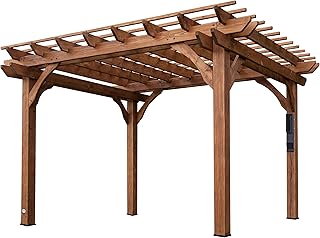
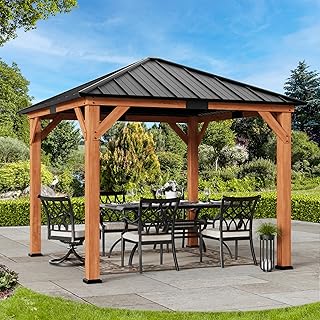
Same cedar-and-galvanized-steel build philosophy scaled to a footprint that fits a standard patio slab. The integrated hooks are more useful than they sound for hanging lights or planters without drilling into the beams later.
PURPLE LEAF 11 x 13′ Gazebo
The 4.7″ posts are the thickest in this lineup, and the built-in drainage channels solve the meltwater problem that plagues cheaper aluminum frames. Fade-resistant curtains hold color through a full season of direct sun, and setup moves faster than any wood build here.
PURPLE LEAF Hardtop Gazebo 10′ x 12′
An 1,800 lb snow load rating on a powder-coated aluminum frame is the clearest answer to heavy-snow anxiety, and the white finish stays cooler underneath than dark powder coats. Zero rot risk and no annual sealing makes it the low-maintenance choice.
Aoxun 10′ x 12′ Outdoor Wood Gazebo
Natural cedar with a double galvanized steel roof at a friendlier price than the premium wood builds. Predrilled joinery is accurate, though I’d add a coat of penetrating sealer to the end grain before final assembly rather than after.
Frequently Asked Questions
Do I need to clear snow off a hardtop gazebo?
If the unit carries a published snow load rating well above your regional accumulation, occasional clearing is optional. Use a roof rake from the ground rather than climbing — impact damage from shovels causes more failures than snow weight does.
Can I anchor a gazebo to a wood deck?
Yes, provided you land posts over joists or blocking, not just decking boards. Through-bolt with structural screws into framing; surface-mounted lag screws into 5/4 decking will pull out under uplift.
Is aluminum or cedar better for wind resistance?
Both perform well when post dimensions are adequate. Aluminum wins on maintenance and rot resistance; cedar carries more mass, which helps damp vibration in sustained wind.
Should curtains stay up through winter?
Take them down. Fabric panels act as sails and add loading the frame was never rated to carry with them attached.
Final Thoughts
For heavy snow country, the PURPLE LEAF Hardtop 10′ x 12′ and its 1,800 lb rating is the safest structural bet with the least upkeep. If you want the warmth of real wood without giving up storm performance, the Modern Shade 12′ x 16′ cedar gazebo is the one worth the weekend build, while the PURPLE LEAF 11 x 13′ splits the difference with the thickest posts here and genuinely fast assembly.