Key takeaways
- Suspension quality over stated capacity: A 500 lb rating means nothing if the tree straps are unrated afterthoughts. Look for daisy-chain webbing with multiple sewn loops so you can dial in a 30-degree hang angle without knots.
- Fabric weave and denier: 210T ripstop parachute nylon is the practical sweet spot for camping: light, breathable, and forgiving of a stray branch. Thicker weaves last longer but pack bulkier and trap heat on humid nights.
- Spreader bar material: On rope hammocks, kiln-dried oak beats pine or bamboo by a wide margin. Softwood bars cup and split after a couple of seasons outdoors, and once a bar warps the whole bed goes crooked.
- Corrosion protection on hardware: Zinc-plated or stainless rings and S-hooks are worth the upcharge if your hammock lives outside. Bare steel rusts through, stains the fabric, and eventually becomes the weakest link in the chain.
- Stand versus trees: No suitable anchors? A steel-frame stand solves it, but check the footprint before ordering. Tool-free assembly is genuinely useful, though a balance strap matters more for keeping the frame from walking across a patio.
What's inside
Hang enough hammocks and you learn the same lesson twice: the fabric is rarely what fails. It’s the hardware, the suspension, or the tree you picked in a hurry. Most buyers shop by color and capacity number, then discover their new hammock sags into a banana at 3 a.m., or that the included “straps” are two loops of webbing with no adjustment points. Weight ratings get printed on the box because they’re easy to print. Stitch density, spreader bar wood, and carabiner gate strength don’t get that treatment, and those are the parts you actually feel.
This guide comes from the perspective of someone who has re-rigged plenty of backyard setups and replaced more than a few cheap hardware kits. Below you’ll find picks split across two real use cases: packable trail hammocks that live in a stuff sack, and rope hammocks built to stay put between two oaks or on a steel stand. I’ve broken down what to check before you buy, then reviewed the top options with notes on where each one earns its keep and where it asks you to compromise.
As an Amazon Associate we earn from qualifying purchases.


How to Choose a Hammock Brand (2026)
- Suspension quality over stated capacity: A 500 lb rating means nothing if the tree straps are unrated afterthoughts. Look for daisy-chain webbing with multiple sewn loops so you can dial in a 30-degree hang angle without knots.
- Fabric weave and denier: 210T ripstop parachute nylon is the practical sweet spot for camping: light, breathable, and forgiving of a stray branch. Thicker weaves last longer but pack bulkier and trap heat on humid nights.
- Spreader bar material: On rope hammocks, kiln-dried oak beats pine or bamboo by a wide margin. Softwood bars cup and split after a couple of seasons outdoors, and once a bar warps the whole bed goes crooked.
- Corrosion protection on hardware: Zinc-plated or stainless rings and S-hooks are worth the upcharge if your hammock lives outside. Bare steel rusts through, stains the fabric, and eventually becomes the weakest link in the chain.
- Stand versus trees: No suitable anchors? A steel-frame stand solves it, but check the footprint before ordering. Tool-free assembly is genuinely useful, though a balance strap matters more for keeping the frame from walking across a patio.
The Best Hammock Brands (2026) Reviewed
Pawleys Island Deluxe Oatmeal DuraCord Rope Hammock
At 13 ft by 60 in with oak spreader bars and zinc-plated hardware, this is the benchmark for a permanent backyard hang, and the DuraCord rope resists mildew and UV fade far better than untreated cotton. The extra five inches of width over the Large model makes a real difference if two people actually plan to share it.
ENO DoubleNest Lightweight Camping Hammock
The DoubleNest earned its reputation on stitching and hardware that don’t flinch, and the aluminum wiregate carabiners are the detail budget brands skip. It’s a one-to-two person hammock in the honest sense: roomy solo, cozy for two, and it stuffs into its attached pocket in about ten seconds.
Durable Hammock 500 lb Nylon Camping Hammock
The 500 lb rating and included tree straps make this the sensible pick for someone who wants a hammock chair setup or a double they can trust with gear plus body weight. Available in single or double, and the attached carry bag means you can’t lose the sack in a truck bed.
ANAGOO Double Hammock with Stand
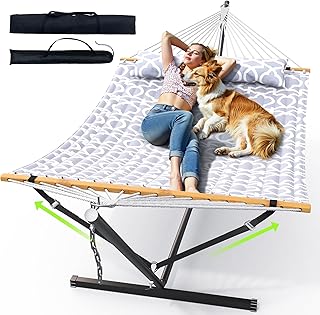
If your yard has no trees worth trusting, this bundles a 500 lb steel frame with tool-free assembly and a balance strap that keeps the bed from swinging into the uprights. Assembly takes maybe fifteen minutes solo, and the frame breaks down for winter storage.
Kootek Camping Hammock 400 lb Single
A well-executed budget entry: 210T parachute nylon, D-shaped carabiners, and tree-friendly straps at a price that makes it easy to keep one in every pack. Hand wash only, and the 400 lb single is best treated as a solo hammock rather than stretched into double duty.
Frequently Asked Questions
What hang angle should I aim for?
Roughly 30 degrees from horizontal on each strap, with the fabric sitting about 18 inches off the ground at its lowest point. Too tight and the sides squeeze your shoulders; too loose and you fold in the middle.
Will straps damage my trees?
Wide webbing straps spread the load and won’t cut into bark the way rope or cable does. Stick to trunks at least a foot in diameter and avoid dead or shallow-rooted trees entirely.
Can rope hammocks stay outside year-round?
DuraCord and similar synthetic ropes handle sun and rain well, but the oak spreader bars and hardware last longer with cover. Bringing it in for the worst months adds years of service.
Single or double for one person?
Buy the double. The extra width lets you lie diagonally, which flattens the bed considerably, and the weight penalty is usually under half a pound.
Final Thoughts
For a backyard hammock you’ll keep for a decade, the Pawleys Island Deluxe DuraCord is the one to buy: oak bars, plated hardware, and rope that survives real weather. Trail and travel use goes to the ENO DoubleNest for its hardware and packability, with the Durable Hammock 500 lb as the value alternative when you want a higher capacity rating and straps included in the box.