Key takeaways
- Suction rating in kPa: Budget units advertise 15Kpa to 18Kpa, and that number does correlate with how dry your carpet feels afterward. BISSELL doesn’t publish kPa figures but uses a proven motor and airflow path, so judge it on recovery performance rather than spec sheets.
- Hose reach and weight distribution: Check the hose length before you buy. A short hose means dragging the base unit up the stairs behind you, which is exactly when a full dirty tank sloshes over. Six feet or more lets you park the machine and work.
- Self-cleaning cycle: This is the feature that keeps a machine in service. Without it, you’re hand-rinsing a hose full of pet residue at the utility sink after every job, and that chore is what sends spot cleaners to the basement shelf permanently.
- Tank access and separation: Look for tanks that lift out independently and have wide openings you can reach into. Narrow-necked dirty water tanks trap hair and grit that you cannot flush out, and they start to smell within a few weeks.
- Included tool set: A wide upholstery head, a narrow crevice or stair tool, and a dedicated pet hair attachment cover almost every scenario. Two brush head sizes make more real-world difference than a bump in wattage.
What's inside
Anyone who has spent a Saturday afternoon on their hands and knees with a rag and a spray bottle knows the truth: surface blotting doesn’t remove a pet accident. It pushes the mess deeper into the carpet backing or sofa foam, where the odor sets up permanent residence and the stain wicks back up two days later like nothing happened. Enzyme sprays help, but without suction pulling the dissolved gunk out, you’re just relocating the problem.
A handheld spot extractor solves this by combining three things a rag can’t: heated or cold solution delivery, agitation from a stiff brush, and vacuum suction strong enough to lift dirty water out of the fibers. This guide covers what actually matters when comparing these machines in 2026, including suction ratings, tank design, hose length, and the self-cleaning features that determine whether you’ll actually keep using the thing after the first month.
As an Amazon Associate we earn from qualifying purchases.




🛒 Best Price Today on Amazon
Prime members get fast, free shipping on everything above, plus member-only deals. New members get a 30-day free trial — cancel anytime.
How to Choose a Handheld Pet Carpet Cleaner (2026)
- Suction rating in kPa: Budget units advertise 15Kpa to 18Kpa, and that number does correlate with how dry your carpet feels afterward. BISSELL doesn’t publish kPa figures but uses a proven motor and airflow path, so judge it on recovery performance rather than spec sheets.
- Hose reach and weight distribution: Check the hose length before you buy. A short hose means dragging the base unit up the stairs behind you, which is exactly when a full dirty tank sloshes over. Six feet or more lets you park the machine and work.
- Self-cleaning cycle: This is the feature that keeps a machine in service. Without it, you’re hand-rinsing a hose full of pet residue at the utility sink after every job, and that chore is what sends spot cleaners to the basement shelf permanently.
- Tank access and separation: Look for tanks that lift out independently and have wide openings you can reach into. Narrow-necked dirty water tanks trap hair and grit that you cannot flush out, and they start to smell within a few weeks.
- Included tool set: A wide upholstery head, a narrow crevice or stair tool, and a dedicated pet hair attachment cover almost every scenario. Two brush head sizes make more real-world difference than a bump in wattage.
The Best Handheld Pet Carpet Cleaner (2026)s Reviewed
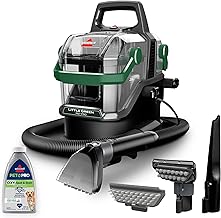
BISSELL Little Green Pet Pro 3909
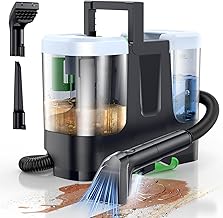
The 3909 remains the reference point in this category because the pump, hose, and recovery path are all engineered to work together, and parts stay available for years. The crevice tool and self-cleaning stain tool handle both stair edges and set-in accidents without swapping between three separate machines.
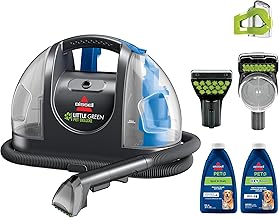
BISSELL Little Green Max Pet 3860
Step up to the Max if you’re regularly cleaning a whole sectional or detailing a vehicle interior, since the larger tanks cut down on refill trips mid-job. The pet hair removal tool earns its place on upholstery where a standard vacuum just glides over embedded fur.
Portable 15Kpa Spot Cleaner with 2 Brush Heads
For a first extractor, this hits a sweet spot: strong enough suction to leave carpet damp rather than soaked, plus two brush head sizes so you’re not forcing a wide head into a stair corner. The self-cleaning system means maintenance takes a few minutes instead of a teardown.
Starrybot 18Kpa Pet Stain Extractor
The 18Kpa rating shows up in shorter dry times, which matters when the accident is on a mattress or a car seat you need back in service the same day. Build quality is lighter than BISSELL’s, so treat it accordingly and drain both tanks after each use.
450W Portable Upholstery Shampooer
This one leans on motor wattage and works well on flat surfaces like car seats and mattress panels where you can keep the head fully sealed. Worth considering if you already own a vacuum for hair and just want extraction and scrubbing capability.
Frequently Asked Questions
Do I need to pretreat stains first?
For fresh spills, no. For dried urine or anything with protein in it, apply an enzyme cleaner and let it sit ten to fifteen minutes so it can break down the compounds, then extract. The machine removes what the enzymes loosen.
Can I use regular carpet shampoo in these?
Use low-foam formulas designed for extractors only. Household detergents foam aggressively, flood the recovery tank, and can reach the motor. Some units let you run plain hot water after pretreating, which is often the cleanest approach.
How long until the carpet is dry?
Expect two to six hours depending on suction strength and how much solution you used. Make several dry passes with the trigger released, then run a fan across the area to cut that time roughly in half.
Will these remove old, set-in odors?
Often yes, if the urine hasn’t soaked into the subfloor. When odor persists after two thorough extractions, contamination has likely passed through the carpet pad, and that requires pulling the carpet back and sealing the substrate.
Final Thoughts
If you want a machine that will still be running in five years with replacement parts on hand, the BISSELL Little Green Pet Pro 3909 is the safest buy, and the Little Green Max Pet 3860 is worth the upgrade if you’re tackling large upholstered furniture or vehicle interiors. On a tighter budget, the Starrybot 18Kpa extractor delivers genuinely strong suction and shorter dry times for a fraction of the cost.