Key takeaways
- Joint type over hardware count: True joinery frames slot and wedge together, so look for tapered tenons and captive rails. If the listing shows cam locks doing the structural work, it’s a conventional platform bed with Japanese styling.
- Wood species and honesty about it: Solid rubberwood is the sweet spot at this price — dense, stable, takes a finish well. Birch plywood slats are genuinely good (cross-laminated ply resists sagging better than pine strips), but “wood” in a title can also mean veneered MDF, so check the material line.
- Slat pitch and silencing: Aim for gaps under 3 inches to keep foam mattresses supported and warranties intact. Felt or rubber pads where slats meet the rail are the single biggest anti-squeak feature; without them, timber-on-timber contact eventually talks.
- Deck height and clearance: Low frames read cleaner but make getting up harder and kill storage. Roughly 8 inches of underbed clearance fits bins; a tatami-style deck sits near the floor and suits futons or thin foam.
- Load rating and third-party testing: A 1,500 lb static rating with SGS or IAS certification means someone loaded it until it complained. Treat uncertified numbers as marketing.
What's inside
Anyone who has knelt on a bedroom floor with an Allen key digging into their palm knows the failure mode of a cheap platform bed: four bolts through thin brackets, a bit of racking every time you roll over, and by month six the whole thing announces your movements to the rest of the house. Japanese joinery beds take the opposite approach. Instead of relying on fasteners to fight shear forces, they use interlocking wood-on-wood connections — the rails carry load through the geometry of the joint, not through a bolt in tension. Tighten nothing, squeak nothing.
I’ve assembled enough flat-pack furniture to be skeptical of “no-tool” marketing, so this guide looks at what actually matters once the box is open: joint quality, slat spacing and pitch, whether the wood is solid or veneered ply, deck height, and how the frame behaves under real load rather than on a spec sheet. Below are six frames worth your money in 2026, from a storage-headboard queen to a foldable tatami platform for floor sleepers, plus a checklist you can run through before you commit.
As an Amazon Associate we earn from qualifying purchases.


🛒 Best Price Today on Amazon
Prime members get fast, free shipping on everything above, plus member-only deals. New members get a 30-day free trial — cancel anytime.
How to Choose a Japanese Bed Frame (2026)
- Joint type over hardware count: True joinery frames slot and wedge together, so look for tapered tenons and captive rails. If the listing shows cam locks doing the structural work, it’s a conventional platform bed with Japanese styling.
- Wood species and honesty about it: Solid rubberwood is the sweet spot at this price — dense, stable, takes a finish well. Birch plywood slats are genuinely good (cross-laminated ply resists sagging better than pine strips), but “wood” in a title can also mean veneered MDF, so check the material line.
- Slat pitch and silencing: Aim for gaps under 3 inches to keep foam mattresses supported and warranties intact. Felt or rubber pads where slats meet the rail are the single biggest anti-squeak feature; without them, timber-on-timber contact eventually talks.
- Deck height and clearance: Low frames read cleaner but make getting up harder and kill storage. Roughly 8 inches of underbed clearance fits bins; a tatami-style deck sits near the floor and suits futons or thin foam.
- Load rating and third-party testing: A 1,500 lb static rating with SGS or IAS certification means someone loaded it until it complained. Treat uncertified numbers as marketing.
The Best Japanese Bed Frames (2026) Reviewed
FLEXISPOT Hako G2 Japanese Joinery Bed Frame (Queen)
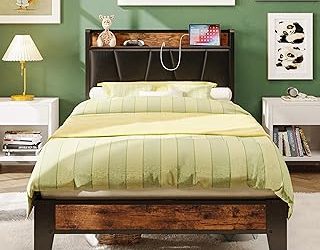
The Hako G2 is the most complete execution here: dovetailed rubberwood joints that pull tighter under load, a headboard with usable shelf depth, and 1,500 lb certified capacity backed by a 10-year warranty. Assembly is genuinely tool-free and the tolerances are tight enough that the frame feels monolithic once weighted.
Softa Mikor Queen Japanese Joinery Bed Frame
Essentially the Hako’s spec with integrated USB-A and USB-C ports, which saves you fishing a charger up from the baseboard. Same solid rubberwood construction and SGS certification, and the storage shelf handles a hardback and a glass without wobble.
Brafab Tooless Queen Joinery Platform Bed
The pragmatist’s pick: about ten minutes to build, 8 inches of underbed storage, and rounded corner detailing that makes it sensible in a kid’s room. Finish is a light natural tone that pairs well with oak flooring.
Thor Premium Solid Wood Bed Frame (Twin XL, Walnut)
The best-looking frame of the group, with a deep walnut tone and slim rails that suit small rooms and guest spaces. Twin XL solves the awkward dorm and daybed sizing problem, and the slat support handles foam mattresses without a box spring.
RUNSUNSPRI Queen Foldable Tatami Bed Frame
A different tool entirely — a folding slatted deck that works as a bunkie board over an existing frame or as a floor bed on its own. Ideal for firm-mattress sleepers, small apartments, and anyone who needs the bed to disappear into a closet.
Frequently Asked Questions
Do these frames need a box spring?
No. The slat deck replaces it. Adding a box spring on top raises the mattress uncomfortably high and defeats the low-profile design.
Is “no-tool assembly” real, or marketing?
Real on the joinery models. Parts slot together and lock with wedges or gravity. Expect one step where a second pair of hands helps align the long rails.
Will a joinery frame loosen over time?
Less than a bolted frame does. Wedged joints tend to seat further under repeated load. If you hear anything, check the silent pads before blaming the joints.
What about carpet?
Fine, though thick pile can let a leg settle unevenly. Slip a thin hardwood shim or furniture coaster under each foot to keep the deck level.
Final Thoughts
For most buyers the FLEXISPOT Hako G2 is the frame to beat — certified, warrantied, and impressively rigid for something you build with your hands alone. Choose the Softa Mikor if bedside charging matters, and grab the RUNSUNSPRI tatami platform if you sleep low, move often, or want a bunkie board that folds away.