Key takeaways
- Published EMF numbers: Look for a stated milligauss figure and, critically, the distance it was measured from. Anything under 3 mG at bench distance is solid; models that only say “low EMF” without a number deserve skepticism. Dynamic’s “under 8 mG” claim is at least specific, which counts for something.
- Wood species and joinery: Canadian hemlock and European aspen both resist warping and stay comfortable to lean against. Check that panels use interlocking tongue-and-groove edges with steel buckle clasps rather than screws through thin veneer, since that joint is what keeps heat in five years from now.
- Heater count and placement: More carbon panels spread across floor, calf, back, and side walls beat a couple of high-wattage emitters. Rear-only heat leaves your shins cold. Seven panels in a two-person cabin is a good benchmark.
- Electrical draw: A 1200W unit on 120V pulls roughly 10 amps, which is fine on a dedicated circuit but risky if you’re sharing with a space heater or dryer. Sub-1000W models like the 905W aspen cabin give you breathing room on older wiring.
- Real footprint versus interior room: Exterior dimensions include roof overhang and door swing. Measure your doorway diagonal too, because panels ship flat but the largest one still has to clear the frame.
What's inside
If you’ve ever stood in a showroom with a tape measure in one hand and a phone full of EMF readings in the other, you know the frustration. Sauna listings throw around “low EMF” like it’s a certification, when in reality it’s an unregulated marketing phrase. One brand measures at the heater surface, another measures at bench height, and a third never publishes numbers at all. Add in the guesswork around assembly, doorway clearance, and whether your 15-amp bedroom circuit will trip halfway through a session, and the whole purchase starts feeling like a gamble.
This guide approaches the problem the way a builder would: looking at panel construction, heater layout, wiring quality, and how the thing actually goes together in a real room with real ceiling heights. I’ve focused on cabins that publish EMF figures, use tongue-and-groove joinery instead of glued particleboard, and run on standard household power. Below you’ll find the current standouts, a checklist of specs that genuinely matter, and answers to the questions that come up once the crate is sitting in your garage.
As an Amazon Associate we earn from qualifying purchases.


🛒 Best Price Today on Amazon
Prime members get fast, free shipping on everything above, plus member-only deals. New members get a 30-day free trial — cancel anytime.
How to Choose a Low Emf Infrared Sauna (2026)
- Published EMF numbers: Look for a stated milligauss figure and, critically, the distance it was measured from. Anything under 3 mG at bench distance is solid; models that only say “low EMF” without a number deserve skepticism. Dynamic’s “under 8 mG” claim is at least specific, which counts for something.
- Wood species and joinery: Canadian hemlock and European aspen both resist warping and stay comfortable to lean against. Check that panels use interlocking tongue-and-groove edges with steel buckle clasps rather than screws through thin veneer, since that joint is what keeps heat in five years from now.
- Heater count and placement: More carbon panels spread across floor, calf, back, and side walls beat a couple of high-wattage emitters. Rear-only heat leaves your shins cold. Seven panels in a two-person cabin is a good benchmark.
- Electrical draw: A 1200W unit on 120V pulls roughly 10 amps, which is fine on a dedicated circuit but risky if you’re sharing with a space heater or dryer. Sub-1000W models like the 905W aspen cabin give you breathing room on older wiring.
- Real footprint versus interior room: Exterior dimensions include roof overhang and door swing. Measure your doorway diagonal too, because panels ship flat but the largest one still has to clear the frame.
The Best Low Emf Infrared Sauna (2026)s Reviewed
OUTEXER Far Infrared Sauna 1200W
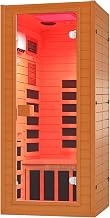
The tempered glass door and 1200W output make this a genuinely warm single-user cabin, and the 35.2″ width gives you room to shift position without bumping panels. Assembly is straightforward buckle-clamp work, though the 61.6″ interior height means taller users will sit rather than stand.
Joyous 2-Person Hemlock Sauna
Seven carbon fiber heaters distributed around a two-person bench is the layout I’d recommend to anyone sharing sessions, since nobody ends up in a cold pocket. The Canadian hemlock panels arrive well-milled, and the chromotherapy unit is wired to its own control rather than sharing the heater circuit.
Bergamo 4-Person Low EMF Sauna
This is the one to look at if the sauna is becoming a genuine household fixture rather than a solo habit. Plan the location carefully before ordering, though: at four-person scale you’re committing to a permanent corner and likely a dedicated circuit run.
Dynamic Saunas Venice 2-Person
Dynamic publishes an actual EMF ceiling, and the Venice’s panel fit is among the tightest I’ve handled, which matters for heat retention. Note the curbside delivery, so line up a second pair of hands and a furniture dolly before the truck arrives.
1-Person European Aspen Sauna, 905W
At 905W this runs comfortably on almost any household outlet, and European aspen is a lighter, knot-free wood that feels good against bare skin. The left-hinged door is worth noting during layout planning, since you can’t reverse it after assembly.
Frequently Asked Questions
What EMF reading should I actually aim for?
Under 3 mG measured at bench distance is a reasonable target, and many current carbon-panel designs land well below that. Distance matters more than raw output, so sitting a few inches forward from the wall drops your exposure meaningfully.
How long does assembly take?
Budget two to three hours for a one or two-person cabin with a helper. The panels lock together with steel buckle clasps you tighten from inside; the roof and heater plugs are the last steps and the fiddliest.
Can I put one in a garage or basement?
Yes, provided the space stays above freezing and reasonably dry. Persistent damp will eventually swell the wood joints, so a dehumidifier in an unfinished basement is cheap insurance.
Do I need a dedicated circuit?
For 1200W and up, strongly recommended. Under 1000W you can usually share a 15-amp circuit as long as nothing else high-draw is running simultaneously.
Final Thoughts
For most buyers, the Joyous 2-Person Hemlock hits the best balance of heater coverage, build quality, and household-friendly power draw. If you’re working alone and want minimal electrical fuss, the 905W European Aspen cabin is the smarter pick, while the Dynamic Venice earns its spot for publishing a real EMF figure and delivering panel fit that holds heat properly.