Key takeaways
- Height over softness: Anything under 12 inches puts you too close to the base once the comfort layers compress. Fourteen inches is the practical floor for heavier sleepers because it leaves room for a genuinely thick support core beneath the pressure-relief foam.
- Zoned support cores: Look for language like 5-zone or target-zoned construction. Firmer foam under the lumbar region resists the deepest part of the load curve, which is exactly where single-density slabs start dishing out.
- Heat management that isn’t just marketing: More body mass means more heat and more foam contact. Gel infusion, copper, graphene, and cool-touch nylon covers all help, but breathability through the core matters more than a cold-to-the-touch surface that warms up in ten minutes.
- Foundation spacing: This is the part people skip. Slats need to sit 3 inches apart or less, and a queen or king wants a center support leg touching the floor. Wide-gap slats will telegraph through even excellent foam and void most warranties.
- Certifications and materials: CertiPUR-US covers emissions and durability testing on the foam itself. Fiberglass-free construction is worth seeking out — the alternative makes a cover you can never safely remove.
What's inside
Anyone north of 230 pounds learns fast that a mattress spec sheet leaves out the part that actually matters: what happens to the foam under sustained load, night after night, for four or five years. Memory foam is graded by density and ILD, but almost nobody prints those numbers on the box. So you get a slab that feels plush during the first week, then slowly develops a hip-shaped crater while the edges collapse the moment you sit down to tie your boots. The sag isn’t the mattress failing early — it’s a comfort layer that was never engineered for the weight sitting on it.
I approach mattresses the way I approach a workbench build: check the substrate, check the load path, check the fasteners. That means poking at the support core, measuring deflection with a straightedge across the middle, and paying close attention to what’s underneath the bed before blaming the foam. This guide covers the 14-inch memory foam builds that hold up best for heavier sleepers, plus the specs and setup habits that decide whether you get five good years or eighteen months.
As an Amazon Associate we earn from qualifying purchases.


🛒 Best Price Today on Amazon
Prime members get fast, free shipping on everything above, plus member-only deals. New members get a 30-day free trial — cancel anytime.
How to Choose a Memory Foam Mattress For Heavy Person (2026)
- Height over softness: Anything under 12 inches puts you too close to the base once the comfort layers compress. Fourteen inches is the practical floor for heavier sleepers because it leaves room for a genuinely thick support core beneath the pressure-relief foam.
- Zoned support cores: Look for language like 5-zone or target-zoned construction. Firmer foam under the lumbar region resists the deepest part of the load curve, which is exactly where single-density slabs start dishing out.
- Heat management that isn’t just marketing: More body mass means more heat and more foam contact. Gel infusion, copper, graphene, and cool-touch nylon covers all help, but breathability through the core matters more than a cold-to-the-touch surface that warms up in ten minutes.
- Foundation spacing: This is the part people skip. Slats need to sit 3 inches apart or less, and a queen or king wants a center support leg touching the floor. Wide-gap slats will telegraph through even excellent foam and void most warranties.
- Certifications and materials: CertiPUR-US covers emissions and durability testing on the foam itself. Fiberglass-free construction is worth seeking out — the alternative makes a cover you can never safely remove.
The Best Memory Foam Mattress For Heavy Person (2026)s Reviewed
EGOHOME 14″ Copper Gel Memory Foam
The medium-firm tuning and copper-infused comfort layer make this the most confident pick for sleepers who want contouring without sinking through to the base, and the fiberglass-free build means you can strip and wash the graphene cover without wrecking it. Back sleepers carrying weight through the lumbar spine will notice the difference within a week.
Novilla Bliss 14″ Zoned Gel Foam
The target-zoned core is the story here: firmer foam through the midsection, softer at the shoulders and calves. It’s a smart structural answer to hip-region dishing, and the pressure relief holds its shape better than flat-density competitors in the same price bracket.
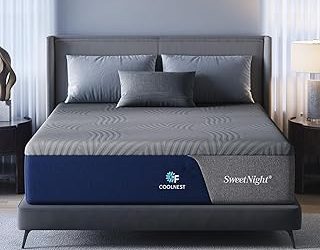
Sweetnight CoolNest 14″ 5-Zone
Five distinct support zones plus an emphasis on airflow through the core makes this the strongest choice for hot sleepers who also need real load-bearing support. The medium feel splits the difference well for combination sleepers who shift positions through the night.
Novilla Bliss Cooling 14″ Nylon Cover
Same well-regarded Bliss platform with a cool-touch nylon face that genuinely pulls heat away at first contact. Worth the small step up if your bedroom runs warm or you sleep under heavier bedding.
Novilla 14″ Gel Memory Foam
The value entry in the lineup, and a sensible pick for a guest room or a low-traffic second bed. Motion isolation is excellent for couples, though the edge support is softer than the zoned models above.
Frequently Asked Questions
What weight limit should I expect from a 14-inch memory foam mattress?
Most quality all-foam builds handle roughly 300 pounds per sleeper, meaning around 600 pounds total on a king. The foundation is usually the weaker link, not the mattress.
Will memory foam sag faster under more weight?
Yes, though thickness and zoning slow it considerably. Rotating the mattress head-to-foot every three months distributes the load and meaningfully extends its usable life.
Can I put these on a platform bed or box spring?
Platform beds with closely spaced slats are ideal. Traditional box springs flex too much for foam and can accelerate uneven compression.
How long does off-gassing take?
Give it 48 to 72 hours in a ventilated room. Full expansion in the corners sometimes takes a bit longer in cold weather.
Final Thoughts
For most heavier sleepers, the EGOHOME 14-inch copper gel model is the best all-around build — supportive, cool, and fiberglass-free. The Sweetnight CoolNest is the pick if heat is your main complaint, and the Novilla Bliss zoned version delivers the smartest support engineering for the money.