Key takeaways
- Lift mechanism: Gas pistons are the friendlier choice for a first build. They arrive pre-charged, need no tensioning, and give consistent lift across the whole arc. Torsion spring systems last longer and can be dialed in for unusual mattress weights, but adjusting them under load takes nerve and the right bar.
- Mattress weight window: Every piston set is rated for a range, typically something like 50 to 100 pounds for a queen. Weigh your actual mattress before ordering. A dense hybrid or latex queen can exceed 120 pounds and will fight a kit spec’d for a lighter foam mattress, leaving the bed hard to lift and prone to drifting open.
- Frame included or not: Some kits ship only the pivot plates, pistons, and legs. Others include steel frame rails that hold your mattress. Reading the parts list carefully saves you a second order and a week of downtime mid-project.
- Vertical versus horizontal: Vertical kits fold along the short edge and need roughly 87 inches of ceiling clearance for a queen. Horizontal kits sit lower and suit basements or rooms with sloped ceilings, though they eat more wall width. Measure your ceiling first, then choose.
- Documentation quality: This separates a satisfying build from a frustrating one. Look for kits that supply cut lists and cabinet plans, not just mechanism assembly steps. Video walkthroughs and dimensioned drawings for multiple cabinet styles are worth paying extra for.
What's inside
Anyone who has priced out a wall bed knows the sticker shock is real. A finished, factory-built Murphy bed can run three or four thousand dollars, and much of that cost is cabinetry you could build yourself in a weekend with plywood, a track saw, and some patience. The mechanism, though, is the part you don’t improvise. Lifting a queen mattress and frame against gravity, then holding it safely in the closed position, comes down to engineered gas pistons or torsion springs, properly rated pivot hardware, and a mounting system that transfers load into your wall studs or floor. Get that wrong and you have a heavy, dangerous cabinet instead of a clever guest room.
This guide focuses on what actually matters when you buy the hardware rather than the whole bed: lift mechanism type, weight ratings, whether the kit includes the frame skeleton or expects you to build one, and how usable the instructions really are. I’ve included pure hardware kits for builders who want full control over the cabinet design, plus a couple of complete cabinet units for readers who would rather skip the shop time entirely. There’s also a metal slat platform worth knowing about, since mattress support is the detail most first-time builders underestimate.
As an Amazon Associate we earn from qualifying purchases.


🛒 Best Price Today on Amazon
Prime members get fast, free shipping on everything above, plus member-only deals. New members get a 30-day free trial — cancel anytime.
How to Choose a Murphy Bed Hardware Kits (2026)
- Lift mechanism: Gas pistons are the friendlier choice for a first build. They arrive pre-charged, need no tensioning, and give consistent lift across the whole arc. Torsion spring systems last longer and can be dialed in for unusual mattress weights, but adjusting them under load takes nerve and the right bar.
- Mattress weight window: Every piston set is rated for a range, typically something like 50 to 100 pounds for a queen. Weigh your actual mattress before ordering. A dense hybrid or latex queen can exceed 120 pounds and will fight a kit spec’d for a lighter foam mattress, leaving the bed hard to lift and prone to drifting open.
- Frame included or not: Some kits ship only the pivot plates, pistons, and legs. Others include steel frame rails that hold your mattress. Reading the parts list carefully saves you a second order and a week of downtime mid-project.
- Vertical versus horizontal: Vertical kits fold along the short edge and need roughly 87 inches of ceiling clearance for a queen. Horizontal kits sit lower and suit basements or rooms with sloped ceilings, though they eat more wall width. Measure your ceiling first, then choose.
- Documentation quality: This separates a satisfying build from a frustrating one. Look for kits that supply cut lists and cabinet plans, not just mechanism assembly steps. Video walkthroughs and dimensioned drawings for multiple cabinet styles are worth paying extra for.
The Best Murphy Bed Hardware Kits (2026)s Reviewed
Queen Vertical Murphy Bed Hardware Kit with Gas Pistons
This is the kit I’d point a first-time builder toward: North American manufacturing, gas pistons that work straight out of the box, and three separate step-by-step guides covering different cabinet approaches so you aren’t locked into one design. The included plans do the heavy lifting on geometry, which is exactly where DIY wall beds usually go sideways.
Queen Deluxe Murphy Bed Kit, Vertical
The deluxe version adds heavier-gauge hardware and a more complete frame package, making it the better call if you’re running a thicker hybrid mattress or want extra margin on the lift rating. Expect a slightly longer assembly session in exchange for a mechanism that feels more solid through the swing.
Hlivelood Queen Murphy Bed with LED Lights
If woodworking isn’t your thing, this complete cabinet arrives in rustic white with gas struts and two integrated LED reading lights already wired in. The farmhouse styling reads well in a guest room or home office, and skipping the build means you’re operational the same day the truck arrives.
AMERLIFE Queen Murphy Bed with Storage & Charging Station
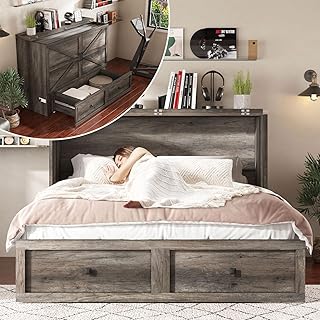
AMERLIFE bundles a large drawer and a USB charging station into a rustic grey cabinet, which handles the two things guests always need: somewhere to put their things and somewhere to plug in a phone. The fold mechanism runs quietly, a genuine advantage in a shared living space.
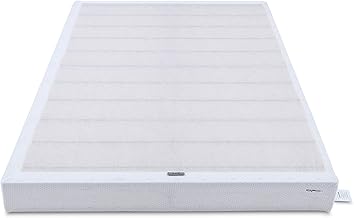
2-Inch Full Metal Box Spring with Round Corners
A low-profile steel slat platform is the unglamorous accessory that makes a Murphy bed work properly, adding rigid support inside the frame cavity without stealing precious folding depth. The 3,000-pound rating and squeak-free construction matter more than you’d think on a bed that pivots twice a day.
Frequently Asked Questions
Do I need to anchor a Murphy bed to the wall?
Yes, in nearly every case. Hardware kits are engineered with the assumption that the cabinet is fastened into studs or through the floor plate. Skipping the anchors risks the cabinet tipping when the bed swings out.
What plywood thickness should I use for the cabinet?
Three-quarter-inch hardwood plywood is the standard for good reason. It holds screws reliably, resists racking under repeated cycling, and matches the fastener specs most kits are designed around. Skip construction-grade sheathing here.
Can I use my existing mattress?
Usually, provided it falls inside the piston weight range and isn’t too thick for the cabinet depth. Most kits accommodate mattresses up to about 12 inches. Box springs are not used with Murphy beds.
How long does a typical build take?
Plan on a full weekend for cabinet construction and finishing, then a couple of hours for mechanism installation with a helper. The mechanism goes faster than people expect; the cabinet and finish work consume the time.
Final Thoughts
For builders who want to design their own cabinet, the Queen Vertical Murphy Bed Hardware Kit with gas pistons and its three included guides is the most approachable starting point, with the Deluxe Vertical kit worth the upgrade if you’re working with a heavy hybrid mattress. If you’d rather skip the sawdust altogether, the AMERLIFE Queen Murphy Bed with storage and charging station delivers a guest-ready setup with no shop time required.