Key takeaways
- Fabric grade: Solution-dyed acrylic carries pigment through the fiber core and shrugs off five-plus seasons of direct sun. Polyester is dyed on the surface, so it fades faster but costs far less — a reasonable trade if you store your umbrella indoors from October to April.
- Denier and weave density: Look for 180g to 240g polyester or better. Thin cloth telegraphs light through the weave and starts pinholing at the rib tips within two seasons. Hold a sample up to a window if you can; heavy shadow means heavy cloth.
- Rib count match: An eight-rib canopy will not sit right on a six-rib frame. Count your ribs before ordering, then measure tip-to-tip across the open span rather than trusting the number printed on the old hangtag.
- Seam and pocket construction: Double-stitched seams with reinforced rib pockets are where cheap tops fail first. Check that each pocket has a bar-tack or a doubled layer at the tip, since that’s the pressure point every gust hammers.
- Vented crown: A vented top bleeds pressure instead of letting wind balloon the canopy and lever your frame sideways. It also pulls hot air up and out, which drops the temperature underneath by a noticeable margin on still afternoons.
What's inside
Two summers ago I stripped a faded canopy off a nine-foot market frame in my driveway, planning to toss the whole thing. The ribs were straight, the crank still turned smooth, and the pole had no rust worth mentioning. The only failure was the fabric, which had gone from navy to a chalky gray-lavender and tore like wet paper when I tugged a seam. That teardown taught me something most shoppers learn the hard way: an umbrella almost never dies from the hardware out. It dies from the cloth in. Buyers keep replacing entire units when the actual problem is 40 square feet of textile that lost its UV inhibitors.
This guide sorts the material question first, because that decision drives everything else — how many seasons you get, whether the color holds, and whether rain sheets off or soaks through. Below I cover complete umbrellas worth buying new plus replacement canopies that let you salvage a good frame for a fraction of the cost. I’ll walk through the fabric grades I’ve handled, what stitching and venting actually do under load, and how to measure your existing frame so a new top fits without fighting.
As an Amazon Associate we earn from qualifying purchases.


How to Choose a/an Patio Umbrella Material (2026)
- Fabric grade: Solution-dyed acrylic carries pigment through the fiber core and shrugs off five-plus seasons of direct sun. Polyester is dyed on the surface, so it fades faster but costs far less — a reasonable trade if you store your umbrella indoors from October to April.
- Denier and weave density: Look for 180g to 240g polyester or better. Thin cloth telegraphs light through the weave and starts pinholing at the rib tips within two seasons. Hold a sample up to a window if you can; heavy shadow means heavy cloth.
- Rib count match: An eight-rib canopy will not sit right on a six-rib frame. Count your ribs before ordering, then measure tip-to-tip across the open span rather than trusting the number printed on the old hangtag.
- Seam and pocket construction: Double-stitched seams with reinforced rib pockets are where cheap tops fail first. Check that each pocket has a bar-tack or a doubled layer at the tip, since that’s the pressure point every gust hammers.
- Vented crown: A vented top bleeds pressure instead of letting wind balloon the canopy and lever your frame sideways. It also pulls hot air up and out, which drops the temperature underneath by a noticeable margin on still afternoons.
The Best Patio Umbrella Material (2026)s Reviewed
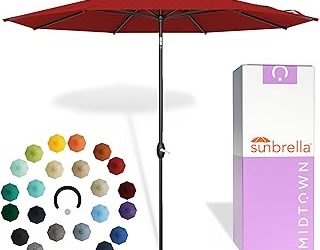
9′ Outdoor Patio Umbrella with 8 Sturdy Ribs
A straightforward complete build with push-button tilt and a crank that tracks evenly through its full travel, which matters more than spec sheets suggest — sticky cranks are the number-one complaint I hear. The eight-rib layout spreads tension well and gives you a canopy profile that stays taut rather than sagging between spokes.
9ft Patio Umbrella Replacement Canopy (Canopy Only)
The budget entry point for anyone with a sound frame and dead fabric. Swapping one takes about fifteen minutes: loosen the finial, slide each rib tip out of its pocket, thread the new top on in reverse order, and re-tension from opposite sides like you’re torquing lug nuts.
Sunnyglade 9ft Replacement Canopy
Sunnyglade’s pocket depth is generous, which makes seating rib tips easier than on tops with shallow sleeves — a real advantage if you’re working alone on a fully assembled frame. The fabric weight lands comfortably in the mid-range, holding shape without becoming stiff enough to crease at the folds.
MASTERCANOPY 9 ft Replacement Canopy, Vented Top
The vented crown is the standout here, and it’s the feature I’d pay extra for on any exposed deck or poolside setup. Airflow through the peak reduces the sail effect that snaps ribs, and the turquoise reads as a true saturated color rather than the washed-out teal these listings often ship.
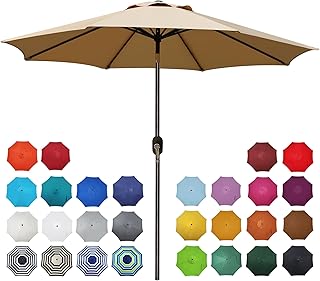
EliteShade USA 9ft Replacement Cover, Beige
EliteShade puts noticeably tighter stitching along the radial seams than most tops in this bracket, and the beige resists showing the water spotting that plagues light-colored canopies. If you want one replacement that lasts several rotations rather than an annual swap, this is the pick.
JEAREY 9FT Patio Umbrella with Tilt and Crank
A complete unit with UV-treated, water-resistant fabric and hardware that feels a grade above its price — the rib joints have real rivets instead of crimped tabs. Best suited to a garden or backyard placement where you can weight the base properly.
Frequently Asked Questions
Is acrylic really worth the premium over polyester?
If your umbrella stays open through full summer sun, yes. Solution-dyed acrylic typically holds color three to four times longer than surface-dyed polyester. If you close and store it between uses, polyester’s shorter lifespan matters much less.
How do I know if my frame is worth saving?
Open it fully and sight down each rib for kinks. Work the crank through several complete cycles listening for grinding. Surface rust wipes off and touches up fine; a bent rib or a stripped crank gear means replace the whole unit.
Does a vented top actually help in wind?
It helps, but it isn’t a substitute for a heavy base or closing the umbrella when gusts pick up. Venting relieves moderate pressure buildup. Sustained wind above roughly 20 mph still needs the canopy down.
Will a nine-foot canopy fit any nine-foot frame?
Not reliably. Rib count must match, and measured rib length varies between manufacturers even at the same nominal diameter. Measure one rib from the hub to the tip and compare against the listing’s stated dimensions.
Final Thoughts
For most people, the smartest money is a replacement canopy on a frame you already own — the EliteShade USA 9ft cover for its stitching quality, or the MASTERCANOPY vented top if your umbrella catches wind. Starting from scratch, the JEAREY 9FT complete unit gives you solid hardware and treated fabric without overpaying for a name.