Key takeaways
- Weave material: HDPE resin wicker resists UV fade and cracking far better than PVC or paper-core rattan. Look for solid-strand or flat-strand HDPE, and check whether the manufacturer mentions UV inhibitors rather than just “all-weather.” PE wicker is a reasonable middle tier if the set is otherwise well built.
- Frame construction: Powder-coated steel gives you rigidity and weight, which matters in wind; aluminum trades some strength for zero rust risk. Either way, check whether the frame is welded or bolted — welded joints are stronger, but bolted frames are easier for you to tighten and repair down the road.
- Cushion depth and fabric: Anything under 3 inches of foam will bottom out within a season. Olefin and solution-dyed fabrics hold color under sun exposure; polyester with a printed finish will chalk out. Removable, zippered covers are non-negotiable if you want to keep them clean.
- Footprint and modularity: Measure your space, then measure again with walkways in mind — most conversation sets need 30 inches of clearance to feel usable. Sectionals that separate into single units give you more layout options than fixed-frame sofas.
- Hardware and assembly quality: Stainless or coated fasteners are worth checking for; plain zinc bolts will bloom rust within a year in humid climates. A set with clear labeling and pre-drilled alignment holes will save you an hour of guesswork on the patio floor.
What's inside
Anyone who has spent a Saturday afternoon flipping over a wicker chair to inspect the frame welds knows the problem: outdoor furniture is sold on the strength of a staged photograph, not the strength of its joints. The listings all promise “all-weather” construction, but the actual difference between a set that survives five winters and one that turns brittle and grey by August comes down to details buried in the specs — whether the weave is HDPE or cheap PVC, whether the frame is powder-coated steel or raw tube, whether the cushion covers unzip for washing. From a maker’s perspective, you’re really buying a kit of parts you’ll be maintaining, tightening, and occasionally repairing yourself.
This guide sorts through the current crop of patio wicker sets with that mindset. I’ve focused on what you can actually assess before buying — frame material, weave type, cushion fill and fabric, hardware quality, and how the pieces are meant to bolt together — and paired it with notes on what tends to go wrong over time. Whether you’re outfitting a narrow balcony or a full backyard conversation area, the picks below cover the range, along with the maintenance habits that stretch a set’s lifespan well past its warranty.
As an Amazon Associate we earn from qualifying purchases.




How to Choose a Patio Wicker Furniture (2026)
- Weave material: HDPE resin wicker resists UV fade and cracking far better than PVC or paper-core rattan. Look for solid-strand or flat-strand HDPE, and check whether the manufacturer mentions UV inhibitors rather than just “all-weather.” PE wicker is a reasonable middle tier if the set is otherwise well built.
- Frame construction: Powder-coated steel gives you rigidity and weight, which matters in wind; aluminum trades some strength for zero rust risk. Either way, check whether the frame is welded or bolted — welded joints are stronger, but bolted frames are easier for you to tighten and repair down the road.
- Cushion depth and fabric: Anything under 3 inches of foam will bottom out within a season. Olefin and solution-dyed fabrics hold color under sun exposure; polyester with a printed finish will chalk out. Removable, zippered covers are non-negotiable if you want to keep them clean.
- Footprint and modularity: Measure your space, then measure again with walkways in mind — most conversation sets need 30 inches of clearance to feel usable. Sectionals that separate into single units give you more layout options than fixed-frame sofas.
- Hardware and assembly quality: Stainless or coated fasteners are worth checking for; plain zinc bolts will bloom rust within a year in humid climates. A set with clear labeling and pre-drilled alignment holes will save you an hour of guesswork on the patio floor.
The Best Patio Wicker Furniture (2026)s Reviewed
Rattaner 6-Piece HDPE Wicker Sectional Set
This is the pick for anyone who wants the better-grade weave without hunting through boutique retailers — HDPE strands hold up to direct sun in a way PE simply doesn’t, and the modular layout means you can reconfigure as your patio changes. Assembly is bolt-together, which is a plus for long-term serviceability, so keep an Allen key in your outdoor toolbox for seasonal retightening.
PHI VILLA 6-Piece Wicker Conversation Set
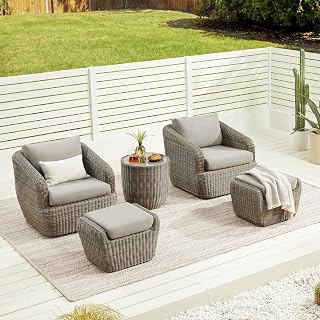
The two high-back swivel chairs are the standout here; swivel mechanisms add genuine usability around a fire pit or low table, and the dual-purpose ottomans double as extra seating when you have a crowd. Grease the swivel bases once a year with a dry silicone spray and they’ll stay smooth instead of developing that gritty rotation.
CHITA 5-Piece Outdoor Wicker Set
CHITA has done the homework on the parts that matter: 5.1-inch cushions on olefin covers, a steel frame rated to 350 pounds per chair, and 360-degree swivels throughout. If you’re the type who reads spec sheets before looking at photos, this is the set that rewards you for it.
Rattaner 6-Piece Sectional with Cover
Including a waterproof cover in the box is a small thing that signals the manufacturer expects the set to live outdoors year-round, and the non-slip cushion attachment solves the perennial annoyance of straightening seats every morning. The khaki weave hides pollen and dust better than darker finishes.
4-Piece All-Weather PE Wicker Bistro Set
A tidy footprint for balconies and small decks, with deep seating and a high back that punches above its size class for comfort. PE wicker means you should plan on storing or covering it through winter, but for the space it occupies, the value is hard to argue with.
Frequently Asked Questions
Can wicker patio furniture stay outside all winter?
HDPE resin sets can handle year-round exposure if you bring the cushions in and use a fitted cover. PE wicker is more vulnerable to freeze-thaw brittleness, so covered storage or a garage corner is the safer call in cold climates.
How do I clean resin wicker without damaging the weave?
Warm water, mild dish soap, and a soft brush handle most grime; work along the strands rather than across them. Skip pressure washers — the force loosens the weave and can crack older strands at the wrap points.
What’s the difference between HDPE and PE wicker?
HDPE is a denser, higher-grade polyethylene with better UV and temperature resistance, so it fades and cracks more slowly. PE is thinner and more affordable, and performs fine with reasonable protection from harsh weather.
How hard is assembly on these sets?
Most arrive largely pre-assembled, with feet, backs, or table tops left to attach — figure 30 to 90 minutes with a helper. Snug all bolts by hand first, then tighten fully once everything is aligned, which prevents the frame twist that makes cushions sit crooked.
Final Thoughts
If you want the set that will still look right in 2031, the Rattaner HDPE 6-piece is the durability play, while the CHITA 5-piece wins on comfort specs with its thick olefin cushions and swivel chairs. For tighter spaces or a first patio setup, the 4-piece PE wicker bistro set gets you seated and comfortable without overcommitting — and with a cover and a yearly bolt check, any of the three will outlast the season it was bought for.