Key takeaways
- Frame material: Western red cedar carries natural rot resistance and takes stain beautifully, but it needs a coat every two or three seasons. Powder-coated aluminum shrugs off moisture entirely and suits coastal or high-humidity yards where wood movement becomes a maintenance treadmill.
- Roof behavior: Open trellis slats filter light and stay breezy. Louvered roofs pivot closed for real rain protection. Fixed hardtop panels give you full shelter but shed water in a single direction, so plan gutter runoff before you set posts.
- Anchoring surface: Concrete takes wedge anchors and a hammer drill. Composite decking needs blocking underneath and through-bolts into joists. Bare soil means digging footings below your frost line, which adds a full day and a bag count you should calculate first.
- Wind rating and span: Larger footprints load the corners harder. Check the published wind rating against your local exposure, and treat any structure over 12 feet on a side as a job requiring diagonal bracing and a second set of hands.
- Assembly realism: Read the parts list before buying. Pre-drilled joinery and labeled hardware bags cut build time dramatically; a kit that expects you to lay out your own hole pattern is a very different project.
What's inside
Standing in the backyard with a tape measure and a rough sketch, most people hit the same wall: the pergola that looks perfect in a listing photo says nothing about whether it will survive a wet March, whether the footings can bite into an existing deck, or whether the hardware kit is going to fight you for a full weekend. Anchoring, roof style, and material behavior over time matter far more than the render, and those details are usually buried three scrolls down in a spec table.
This guide comes from the perspective of someone who has actually sunk posts, chased a level line across a sloped patio, and torqued down lag bolts in the rain. Below you will find the structures worth your Saturday, sorted by what they are genuinely good at, plus a short checklist for matching frame material and roof type to your climate and your slab.
As an Amazon Associate we earn from qualifying purchases.



How to Choose a/an Pergola (2026)
- Frame material: Western red cedar carries natural rot resistance and takes stain beautifully, but it needs a coat every two or three seasons. Powder-coated aluminum shrugs off moisture entirely and suits coastal or high-humidity yards where wood movement becomes a maintenance treadmill.
- Roof behavior: Open trellis slats filter light and stay breezy. Louvered roofs pivot closed for real rain protection. Fixed hardtop panels give you full shelter but shed water in a single direction, so plan gutter runoff before you set posts.
- Anchoring surface: Concrete takes wedge anchors and a hammer drill. Composite decking needs blocking underneath and through-bolts into joists. Bare soil means digging footings below your frost line, which adds a full day and a bag count you should calculate first.
- Wind rating and span: Larger footprints load the corners harder. Check the published wind rating against your local exposure, and treat any structure over 12 feet on a side as a job requiring diagonal bracing and a second set of hands.
- Assembly realism: Read the parts list before buying. Pre-drilled joinery and labeled hardware bags cut build time dramatically; a kit that expects you to lay out your own hole pattern is a very different project.
The Best Pergola (2026)s Reviewed
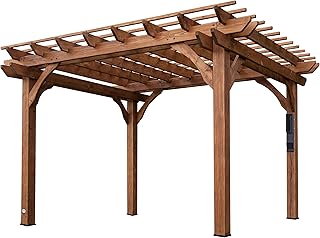
Backyard Discovery Beaumont 12′ x 10′ Cedar Pergola
This is the kit I would hand to a first-time builder: pre-cut cedar, sensible hardware organization, and a high-wind rating that reflects genuine engineering rather than marketing copy. The integrated PowerPort is the quiet standout, letting you run string lights or a fan without stapling an extension cord along a beam.
Louvered Pergola 10’x13′ Aluminum with Adjustable Louvers
Adjustable louvers turn a shade structure into a year-round room, and this aluminum frame handles the mechanism without the flex you sometimes feel in lighter builds. Expect a longer assembly than an open trellis kit, since the louver bank and crank hardware demand careful alignment before you tighten anything down.
Aoxun Cedar Wood Pergola 10×12 with Multi-level Trellis Roof
The stepped trellis roof does something clever: it throws layered shade patterns that soften afternoon glare far better than a single slat plane. Solid cedar throughout means you can stain it any tone you like, and the assembly is honest about what it is, which is a straightforward bolt-together weekend.
MIRADOR 111S Takasho Louvered Pergola 10×13
Full aluminum construction wearing a convincing cherry oak wood grain finish, which solves the eternal tradeoff between the look of timber and the upkeep of it. The rainproof louvered roof seals tightly enough to keep a dining table dry, making this the pick for anyone who entertains regardless of forecast.
Jocisland 20′ x 20′ Cedar Gazebo with Galvanized Steel Roof
At 400 square feet with a sloped galvanized roof, this is less a pergola than a permanent outdoor pavilion, and it should be treated as a serious construction project with proper footings. Worth it if you want a covered outdoor kitchen or seating area that reads as part of the house rather than an accessory.
Frequently Asked Questions
Do I need a permit for a pergola?
Often yes, particularly for permanent footings or footprints above roughly 100 to 200 square feet, though thresholds vary widely by municipality. Call your building department before you order, since a rejected structure is far more expensive than a permit fee.
Can I install a pergola on an existing deck?
Yes, provided the deck framing can carry the point loads. Bolt post bases through the decking into joists or beams, add blocking where needed, and never rely on surface screws into deck boards alone.
How long does assembly actually take?
Plan on a full day with two people for a standard 10×12 cedar kit, and a solid weekend for louvered aluminum or anything requiring poured footings. Curing time for concrete adds another day before you can load the frame.
Do cedar pergolas need sealing?
Untreated cedar weathers to a silvery gray without structural harm, so sealing is aesthetic more than protective. If you want the warm original tone, apply a UV-blocking penetrating oil and refresh every two to three years.
Final Thoughts
For most backyards, the Backyard Discovery Beaumont hits the sweet spot of buildability, cedar warmth, and real wind engineering. If you want weather control rather than just shade, the MIRADOR 111S Takasho delivers a genuinely rainproof louvered roof with zero refinishing ahead of it, while the Jocisland 20′ x 20′ cedar gazebo is the choice when you are building an outdoor room to keep for decades.