Key takeaways
- Compressor or evaporative: A compressor unit with a window kit genuinely lowers air temperature and removes moisture, but needs an exhaust path. An evaporative cooler needs no window at all and sips power, though it adds humidity and only performs well in dry air. Humid climates: go compressor. Dry Southwest summers or a garage workshop: evaporative is often the smarter buy.
- Match BTU to actual square footage: Roughly 20 BTU per square foot is the working baseline, then add for west-facing glass, poor insulation, or a vaulted ceiling. Also check whether a listing quotes ASHRAE or SACC ratings, since SACC numbers run noticeably lower and reflect real-world output more honestly.
- Window kit reality check: Most included kits assume a standard double-hung sash. Casement, sliding, or awning windows usually need a plexiglass insert you cut yourself. Budget an afternoon and a jigsaw, and plan to wrap the exhaust hose in reflective insulation, which is the cheapest efficiency upgrade you can make.
- Drainage and tank duty: Compressor units either self-evaporate condensate or need a drain plug and pan on humid days. Evaporative models want a refill every several hours, so tank size dictates how often you’re interrupted. A 1.5-liter reservoir is a desk-side commitment; a two-gallon tank runs closer to a full workday.
- Noise where you’ll actually sit: Compressors live inside the room, so decibel figures matter more than with window units. Look for a sleep mode that dims the display and steps the fan down, plus a remote so you’re not crossing a dark room at 2 a.m.
What's inside
Anyone who has hauled a window unit up a flight of stairs in July knows the drill: sweat, scraped knuckles, and a nagging suspicion that the bracket isn’t quite square. Portable units promise to skip that ordeal, but the sub-$200 shelf is where the category gets genuinely confusing. Half the listings are compressor-based units that actually pull heat out of a room and vent it outside. The other half are evaporative coolers, sometimes labeled “windowless AC,” which drop temperature by evaporating water into moving air. They are not the same machine, and buying the wrong one is the single most common regret in this price bracket.
I’ve spent enough summers rigging vent hoses through casement windows and rebuilding sagging duct runs with foil tape to have opinions about what matters here. This guide sorts the six units below by what they physically do, what they need from your space, and where the install work actually lands. Expect straight talk on BTU claims, drainage, hose insulation, and the humidity trade-off that nobody puts on the box.
As an Amazon Associate we earn from qualifying purchases.


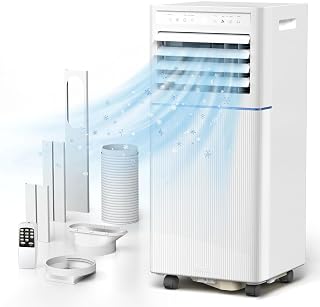

How to Choose a/an Portable Air Conditioner Under $200 (2026)
- Compressor or evaporative: A compressor unit with a window kit genuinely lowers air temperature and removes moisture, but needs an exhaust path. An evaporative cooler needs no window at all and sips power, though it adds humidity and only performs well in dry air. Humid climates: go compressor. Dry Southwest summers or a garage workshop: evaporative is often the smarter buy.
- Match BTU to actual square footage: Roughly 20 BTU per square foot is the working baseline, then add for west-facing glass, poor insulation, or a vaulted ceiling. Also check whether a listing quotes ASHRAE or SACC ratings, since SACC numbers run noticeably lower and reflect real-world output more honestly.
- Window kit reality check: Most included kits assume a standard double-hung sash. Casement, sliding, or awning windows usually need a plexiglass insert you cut yourself. Budget an afternoon and a jigsaw, and plan to wrap the exhaust hose in reflective insulation, which is the cheapest efficiency upgrade you can make.
- Drainage and tank duty: Compressor units either self-evaporate condensate or need a drain plug and pan on humid days. Evaporative models want a refill every several hours, so tank size dictates how often you’re interrupted. A 1.5-liter reservoir is a desk-side commitment; a two-gallon tank runs closer to a full workday.
- Noise where you’ll actually sit: Compressors live inside the room, so decibel figures matter more than with window units. Look for a sleep mode that dims the display and steps the fan down, plus a remote so you’re not crossing a dark room at 2 a.m.
The Best Portable Air Conditioner Under $200 (2026)s Reviewed
Garvee 14000 BTU 3-in-1 Portable AC
The heaviest hitter here, rated for around 750 square feet with dehumidifier and fan modes plus a Follow Me remote that reads temperature at your seat rather than at the chassis. Give the exhaust run some thought before you commit, because a unit this capable loses real output through an uninsulated hose.
Antarctic Star 8000 BTU 4-in-1
This one earns its keep on install simplicity, with a kit that goes together fast and a quiet-running compressor that suits a bedroom or studio. The 350 square foot rating is optimistic for a sun-drenched room, but it’s honest for a shaded office or a small apartment.
COSTWAY 10000BTU Portable Air Conditioner
A solid middle-ground pick with drying and fan modes, a 24-hour timer, and enough capacity for a 350 square foot room without the bulk of a 14,000 BTU cabinet. The sleep mode is genuinely usable, and the included window kit covers standard sashes without modification.
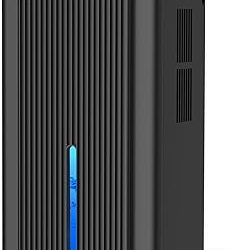
24″ Windowless 3-in-1 Swamp Cooler
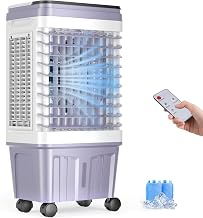
No exhaust hose, no window bracket, no install at all — just fill the two-gallon tank and let 120-degree oscillation move cooled air across a workshop or home office. It’s the right answer for basements, rentals with fixed windows, and any dry-climate space where you’d rather skip the fabrication work.
COSTWAY 8000 BTU AC Unit
The compact compressor option, sized for spaces up to roughly 230 square feet with sleep mode and a 24-hour timer. Best suited to a bedroom or a single office rather than an open-plan area, and its smaller footprint makes seasonal storage far less of a chore.
Frequently Asked Questions
Do evaporative coolers actually cool a room?
They lower air temperature by several degrees through evaporation, and in dry air the effect is real and noticeable. In humid conditions the air can’t absorb much more moisture, so output drops sharply and you’re mostly getting a fan with damp air.
Can I run a compressor unit without venting it out a window?
No. A compressor moves heat rather than destroying it, so venting indoors dumps that heat plus motor waste heat right back into the room and leaves it warmer than before. If a window isn’t an option, an evaporative model or a dryer-vent-style wall port is the path forward.
How much power do these units draw?
An 8,000 to 14,000 BTU compressor typically pulls 700 to 1,400 watts, which is fine on a dedicated 15-amp circuit but risky sharing one with a space heater or microwave. Evaporative coolers usually run under 100 watts, since they’re driving a fan and a small pump.
What maintenance keeps these running well?
Rinse the intake filter every couple of weeks, empty the condensate pan before storage so nothing grows in it, and drain evaporative tanks fully at season’s end. Check the hose coupling for gaps each spring, since a loose connection quietly bleeds hot air back into the room.
Final Thoughts
For a genuinely hot room in a humid climate, the Garvee 14000 BTU 3-in-1 gives you the most capacity and the most useful feature set for the money, with the Antarctic Star 8000 BTU close behind for anyone who values a fast, low-fuss install in a bedroom or studio. If your windows won’t cooperate or you’re cooling a dry-climate garage or basement, the 24″ Windowless Swamp Cooler skips the fabrication entirely and still moves air where you need it.