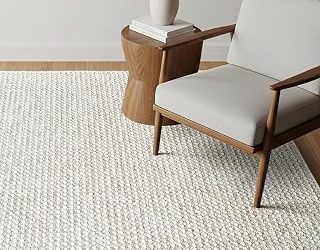
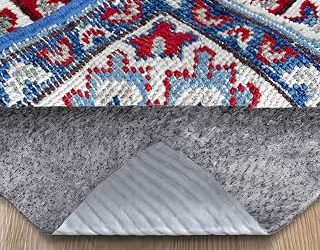
Key takeaways
- Grip mechanism: On carpet, mechanical engagement beats tackiness. Look for pads with hooked or barbed backing, or cloth-backed gripper discs designed specifically for carpet-to-carpet use. Pure rubber waffle bottoms are the wrong tool here.
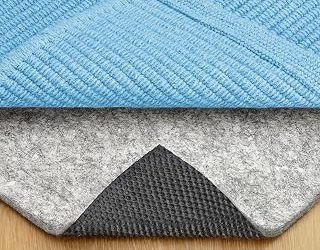
- Felt density: A dense needle-punched felt pad in the 1/4-inch range adds mass and rigidity, which stops the rug from rippling. Thin foam does nothing on top of an already-soft surface — it just compounds the squish.
- Total stack height: Carpet plus pad plus rug can add up fast. Measure your door clearance before ordering. Anything past roughly 3/8 inch of pad on medium-pile carpet creates a trip edge and stresses the rug’s backing.
- Trimmability: You want a pad you can cut cleanly to about an inch smaller than the rug on all sides. Felt and felt-rubber composites cut well with a sharp utility knife and a straightedge; some open-mesh products fray and need scissors instead.
- Coverage strategy: Full-surface pads handle large rugs and heavy traffic. Corner grippers work best on small to mid-size rugs where curling is the main complaint, and they cost far less. Match the approach to the actual failure you’re seeing.
What's inside
Layering a rug over wall-to-wall carpet is one of those design moves that looks effortless in photos and behaves terribly in real life. The problem is friction physics: a rug sitting on carpet has nothing rigid to grab. The pile underneath flexes, compresses, and rebounds every time someone walks across it, so the rug creeps sideways, bunches at the edges, and curls up at the corners. Standard rug pads — the ones built with a rubber-waffle bottom meant for hardwood or tile — actively make it worse. Rubber needs a hard, smooth surface to develop grip. Put it on carpet and it just floats, sliding along on a cushion of fiber.
I’ve spent a lot of weekends crawling around on floors with a utility knife and a roll of pad stock, and the fix comes down to matching the pad’s construction to the surface underneath. Carpet-on-carpet installations need either a dense felt body that adds enough weight and stiffness to resist creep, or a hook-and-fiber gripper that mechanically bites into the pile below. This guide breaks down which pads actually work in that scenario, what to look for on the spec sheet, and how to trim and install them so the rug stays put through vacuuming, furniture shuffling, and daily traffic.
As an Amazon Associate we earn from qualifying purchases.




🛒 Best Price Today on Amazon
Prime members get fast, free shipping on everything above, plus member-only deals. New members get a 30-day free trial — cancel anytime.
How to Choose a/an Rug Pad For Rug On Carpet (2026)
- Grip mechanism: On carpet, mechanical engagement beats tackiness. Look for pads with hooked or barbed backing, or cloth-backed gripper discs designed specifically for carpet-to-carpet use. Pure rubber waffle bottoms are the wrong tool here.
- Felt density: A dense needle-punched felt pad in the 1/4-inch range adds mass and rigidity, which stops the rug from rippling. Thin foam does nothing on top of an already-soft surface — it just compounds the squish.
- Total stack height: Carpet plus pad plus rug can add up fast. Measure your door clearance before ordering. Anything past roughly 3/8 inch of pad on medium-pile carpet creates a trip edge and stresses the rug’s backing.
- Trimmability: You want a pad you can cut cleanly to about an inch smaller than the rug on all sides. Felt and felt-rubber composites cut well with a sharp utility knife and a straightedge; some open-mesh products fray and need scissors instead.
- Coverage strategy: Full-surface pads handle large rugs and heavy traffic. Corner grippers work best on small to mid-size rugs where curling is the main complaint, and they cost far less. Match the approach to the actual failure you’re seeing.
The Best Rug Pad For Rug On Carpet (2026)s Reviewed
Mohawk Home Non Slip Rug Pad 8′ x 10′
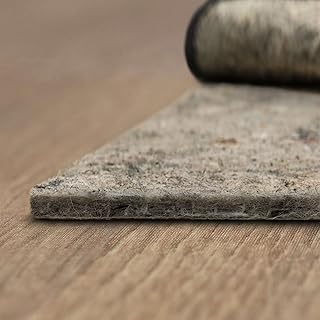
The dual-surface construction is what makes this one work over carpet — the 1/4-inch felt body provides the mass and stiffness that carpet installations desperately need, while the latex rubber layer handles hard floors if you relocate the rug later. Cuts cleanly with a fresh blade, and the felt doesn’t shed all over the room while you’re trimming it.
16-Pack Carpet-to-Carpet Rug Grippers
These are purpose-built for the exact problem, and the cloth backing plus patented mesh face is the right engineering answer: it engages the pile below instead of trying to stick to it. At 4 inches square they’re best for corners and midpoints on smaller rugs, and the 16-count pack gives you enough to treat several rugs or double up on problem corners.
Slip-Stop Magic Stop Non-Slip Rug Pad
Marketed specifically for keeping rugs in place on carpet, and the thin profile is a real advantage when you’re already dealing with a tall stack. The 5′ x 7′ size suits accent rugs in bedrooms and entries where a bulky felt pad would create a noticeable hump.
Jorvila Non-Slip Rug Pad Gripper 8×10
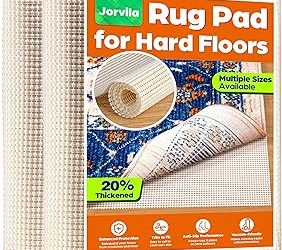
A thick cushioned option that adds meaningful underfoot comfort on top of thin low-pile carpet. Lay it out flat for a day before installing so it relaxes out of its shipping creases — rolled pads that go down still curled will telegraph through the rug.
GORILLA GRIP Strong Rug Pad Gripper, 2×3 FT
The 2×3 size makes this the sensible pick for runners, bath mats, and small accent pieces that shift constantly. Well-made and consistent, though as a full-surface pad it relies more on grip than on mass, so it performs best on shorter carpet pile.
Frequently Asked Questions
Will a regular rubber rug pad work on top of carpet?
Usually not. Rubber generates grip through contact with a hard, smooth surface. On carpet fibers, there’s nothing for it to press against, so the pad slides along with the rug. You need either a dense felt pad for mass or a mechanical gripper that engages the pile.
How much smaller than my rug should the pad be?
About an inch shorter on each side, so roughly two inches total off the length and width. That keeps the pad hidden and lets the rug edges taper down to the carpet rather than sitting on a hard shelf, which is what causes curling.
Can I use double-sided carpet tape instead?
It holds, but it tends to leave adhesive residue in the carpet pile and can pull fibers when you remove it. Grippers designed for carpet-on-carpet use are a better long-term call, especially in a rental.
Do these pads damage the carpet underneath?
Quality felt and cloth-backed grippers generally don’t. The ones to watch out for are cheap PVC-coated pads, which can transfer plasticizers into carpet fibers over time. Stick with felt, natural rubber, or cloth-backed products and lift the rug occasionally to let the area breathe.
Final Thoughts
For most rug-over-carpet setups, the Mohawk Home felt and rubber pad is the pick I’d reach for first — the 1/4-inch felt body does the heavy lifting that carpet installations require, and it trims cleanly. If curling corners are your specific complaint rather than whole-rug drift, the 16-Pack Carpet-to-Carpet Grippers solve it directly for a fraction of the cost. And for thinner accent rugs where stack height matters, Slip-Stop Magic Stop keeps things low-profile without giving up hold.