Key takeaways
- An alarm system is not the same thing as a camera, and the shelf for a security alarm system under 200 dollars proves it.
An alarm system is not the same thing as a camera, and the shelf for a security alarm system under 200 dollars proves it. Every listing here is built around a hub, a siren, and a pile of small wireless sensors that stick to doors, windows, and walls. The question is not which one shows the sharpest picture, because none of them is selling a picture, and none of them can promise how any particular night will go. The question is which one gives you the right number of sensors, a connection path that survives a router hiccup, and an app that stops nagging you about nothing.
Think of this guide as a parts-and-logistics comparison for people who want to install a kit themselves on a weekend. Most of the products below are marketed with 24 pieces and a “no monthly fee” line, which makes them look identical at a glance. They are not, and the difference lives in the details: touch panel or phone-only control, SOS button, backup power, and how setup is handled. Everything here is judged only from what the titles state, so nothing is assumed about range, battery life, or response times that the titles do not give, with plain language where a title is cut off. Shoppers in 2026 should expect nearly all of these to lean on phone alerts first and sirens second.
Quick Picks
Our top picks



As an Amazon Associate we earn from qualifying purchases at no extra cost to you.
| Product | Best for | Key spec from the title |
|---|---|---|
| 24-piece WiFi+GSM/4G alarm, auto dial | Phone-call style alerts | Auto alarm dial, real-time alert, no monthly fee |
| 24-piece WiFi+4G wireless alarm | Voice control households | SOS panic button, Alexa, app and voice control |
| 12-piece WiFi kit with door sensors | Small apartments | 120dB siren, 8-hour backup battery |
| 24-piece GSM/4G+WiFi with touch screen | Wall-panel control | 4.3 inch touch screen, SOS |
| D1D9 24-piece DIY burglar alarm | Straightforward starter kit | 4G, WiFi, GSM, no monthly fee |
| 24-piece no-pairing alarm | Fast, low-fuss setup | No pairing required, Alexa or Google |
How to Choose
Count sensors against entry points
A 24-piece kit sounds generous until you split it up. Subtract the hub, the siren, remotes, and a keypad if one is included, and the remainder is usually a mix of door contacts and motion detectors. Walk through your home with a notepad and count exterior doors, ground-floor windows, and any garage access. If the total is under eight, a 12-piece kit may suffice; if you have a two-story house with patio doors, aim for a 24-piece bundle and confirm the sensor mix on the listing.
Judge the connection path
A hub that uses only your home WiFi goes silent when the router restarts. Listings that name WiFi plus GSM or 4G suggest a second route to your phone, which is worth having if your internet is flaky. Because the titles are truncated, confirm whether the cellular path requires a SIM card you supply and whether notifications come as app pushes, text messages, or automatic phone calls. An “auto alarm dial” line in the title points toward call-style alerts, which can be useful if you do not want to rely on a data connection to your phone being strong at the moment.
Check the siren and the backup battery
Look for a stated siren volume; 120dB is the figure to compare, and it is loud enough to be unmistakable inside a house. Then check the backup battery duration. Eight hours is the stated number on one kit here (the others leave it out of the title), and it tells you how long the hub can keep reporting through a power cut. A siren without a backup battery is the first thing to go quiet when the outlet goes dead.
Plan for false alarms
Pets, drafts, and curious kids set off motion sensors. Look for kits that let you arm in modes (home, away, disarmed) or exclude individual sensors, and confirm that on the listing since titles rarely say. A kit you cannot quiet when the cat roams at night soon gets switched off, which defeats the purpose. A touch panel on the wall makes arming easier for family members who do not want to open an app, and it gives guests or a house sitter a simple way to disarm without being added to your account. What to ignore: huge piece counts that include extra remotes or stickers, and unverified claims about range.
The 6 Best Options
24-Piece WiFi+GSM/4G Alarm with Auto Dial
This kit puts its connection story front and center: WiFi plus GSM/4G, real-time alerts, and an auto alarm dial feature. The title also names phone app control and no monthly fee. For a household that wants the system to reach a phone even when no one is watching the app, that combination is the closest match in this group.
- Strength: auto dial suggests an alert that does not depend solely on a push notification.
- Strength: 24 pieces give plenty of coverage for a multi-room home.
- Trade-off: the title is cut off, so confirm the voice-assistant details and the sensor breakdown on the listing.
Skip it if you only have a couple of doors to watch, or if you prefer a physical panel on the wall over a phone app. It also asks you to read the cut-off title carefully, so budget a few minutes to compare the full listing before ordering.
24-Piece WiFi+4G Wireless Alarm with SOS Button
Built around instant app alerts, an SOS panic button, and Alexa plus app and voice control, with WiFi and 4G both named. It is the more household-friendly of the 24-piece group, since it adds a button that does not need a phone at all.
- Strength: the SOS button gives anyone in the home a one-press way to sound the siren.
- Strength: voice-assistant control can simplify arming for people who dislike phone menus.
- Trade-off: no monthly fee is stated, but verify what extras, if any, are tied to the app.
Skip it if you do not use a voice assistant at all, or if you want a wall-mounted display for arming instead. Anyone who wants to inspect a long feature list before buying may find the shorter list here a little thin.
12-Piece WiFi Home Security Kit with Door Sensors
The smaller kit, aimed at apartments. The title lists door sensors, a 120dB siren, an 8-hour backup battery, real-time alerts, and DIY installation. That mix of basics makes it a reasonable fit for a one-bedroom unit where simplicity beats breadth.
- Strength: it is the only kit in this group that states a backup battery duration in hours.
- Strength: 12 pieces are easier to place and keep track of in a small home.
- Trade-off: it names WiFi only, so a router outage can interrupt notifications.
Skip it if you own a larger house with many windows, or if you want a cellular fallback written into the title. Larger floor plans will quickly run out of sensing points.
24-Piece GSM/4G+WiFi Alarm with 4.3-Inch Touch Screen
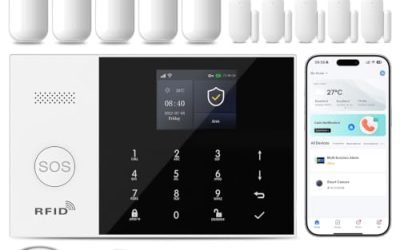
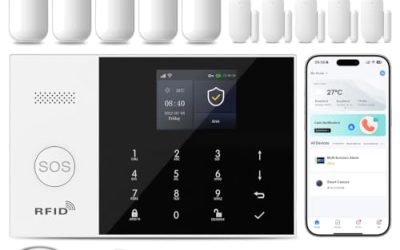
This one stands apart because of its panel. The title describes a 4.3 inch touch screen, SOS, app instant alerts, and a wireless smart system. In practice that makes it feel closer to a traditional keypad alarm than the phone-only kits around it.
- Strength: a wall or tabletop panel means family members can arm the system without a phone.
- Strength: GSM/4G plus WiFi gives it two paths named in the title.
- Trade-off: a screen means one more device to place near power, and the title is truncated, so confirm what else is included.
Skip it if you want the cleanest, no-screen setup, or if you plan to manage everything from your phone. The screen also needs a spot near an outlet, which can limit placement in rental units.
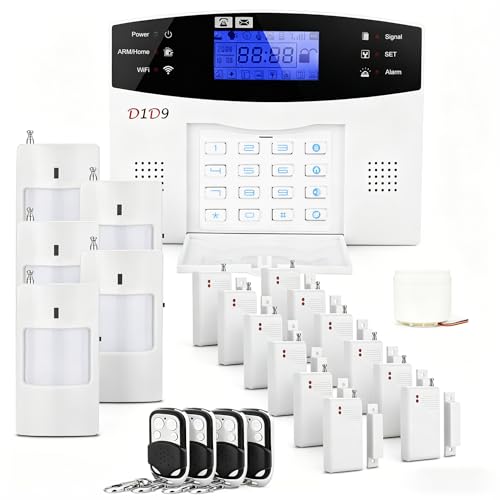
D1D9 24-Piece Wireless DIY Burglar Alarm
A plain, no-frills package described as a wireless DIY home burglar alarm with 4G, WiFi, GSM, no monthly fee, and app alerts. Its title is the shortest in the group, which makes it easy to read but light on feature detail, so shoppers should treat it as a basic option and confirm the extras themselves.
- Strength: the mix of 4G, WiFi, and GSM is spelled out directly.
- Strength: 24 pieces for a DIY kit with no monthly fee stated.
- Trade-off: the title says little about voice control, siren volume, or backup power, so the listing needs a close read.
Skip it if you need a stated decibel rating or a named backup battery figure before you buy.
24-Piece No-Pairing Alarm System
This kit sells convenience: no pairing required, quick installation, WiFi plus GSM/4G, and Alexa or Google compatibility. For a first-time installer, skipping the pairing step is the main draw.
- Strength: the no-pairing claim removes a common setup headache with wireless sensors.
- Strength: it works with either Alexa or Google, which widens its fit.
- Trade-off: the title is cut off, so confirm the sensor list and panel details on the listing.
Skip it if you want a touch panel on the wall, or if you do not care about setup speed and prefer a kit with more named hardware. Because setup ease is the selling point, it makes the most sense for buyers who have never installed a wireless sensor before.
Which One Fits Your Situation
A first-time installer who dreads setup
The no-pairing 24-piece kit is the natural pick. Less configuration means fewer abandoned boxes on the shelf, and the voice-assistant support is a bonus.
A family where not everyone uses a phone app
Choose the 4.3-inch touch-screen kit. Teenagers, grandparents, and house guests can arm and disarm from the wall without installing anything.
A small apartment with a flaky router
The 12-piece kit is sized for the space and states an 8-hour backup battery. If the router is the weak link, favor one of the GSM/4G kits instead and confirm the cellular requirements.
A home with someone who may need to raise an alarm fast
The 24-piece WiFi+4G kit with the SOS button fits best because the panic function is built into the headline features.
Common Mistakes
- Counting every piece in a “24-piece” kit as a sensor, when remotes and accessories are included.
- Skipping the check on how alerts arrive: push notification, text, or phone call.
- Placing motion sensors where pets or heating vents will constantly trigger them.
- Assuming the siren is audible from the whole house without checking the stated decibel figure.
- Forgetting to replace sensor batteries on a schedule you actually keep.
Related guides
- Battery Powered Floodlight Camera With Local Storage
- Cordless Drill Brush Attachment For Bathroom Grout
- Rechargeable Emergency Lantern For Power Outages
Frequently Asked Questions
Is a DIY alarm kit the same as monitored security?
No. These kits send alerts to you, not to a staffed monitoring center. That keeps costs down but puts the response in your hands.
Why do so many kits say 24 pieces?
Because the count includes small accessories. Look at the sensor mix on the listing and match it to the number of doors, windows, and rooms you want covered. A 12-piece kit with the right sensors can beat a 24-piece kit full of accessories.
Do I need a SIM card for the GSM or 4G models?
Some do. The titles do not always say, so confirm on the listing what the cellular link requires and how alerts are delivered when it is active.
Can I add cameras later?
Often yes, but through a separate app. Alarm hubs and cameras from different makers rarely share a single dashboard, so plan on running two apps. That is not a dealbreaker, but it is worth knowing before you spend the budget on one side of the setup.
More from Amazon
Programs that pair well with the guide above. Offers and eligibility are set by Amazon and may change.
A free business account with business pricing and bulk-buying tools for work, shop or home office.
Create a business accountFree shipping on eligible items, Prime Video and more. Eligible new members can start with a free trial.
Start a Prime free trialAudiobooks and podcasts to listen to on the go. Eligible new members can start with a free trial.
Try Audible freeAd-free music streaming. Eligible new subscribers can start with a free trial.
Try Music Unlimited freeAs an Amazon Associate we earn from qualifying purchases.