Key takeaways
- Spray or machine formula: These are not interchangeable. Trigger sprays like Resolve and Capture are built for blotting by hand; machine formulas are engineered to foam minimally so your extractor’s pump and recovery tank do not choke. Pouring a spray bottle into a Little Green is a fast way to fill the tank with suds and pull almost nothing back out.
- Residue behavior: Look for language about rinsing clean or leaving no sticky film. Cheap surfactant packages are what cause re-soiling, where the treated spot attracts dirt faster than the carpet around it and ends up darker within a month.
- Oxygen boosters versus enzymes: Oxy chemistry breaks the color bonds in tannin stains — wine, coffee, tea, juice. Enzymes digest protein and organic matter, which is what you want for pet accidents, vomit, and milk. Knowing which mess you have saves you from buying the wrong bottle twice.
- Fiber and dye safety: Test on a closet corner or an offcut before you touch the middle of the room. Wool and natural fibers dislike high-pH cleaners and optical brighteners, and some solution-dyed synthetics will shrug off what bleaches a nylon loop.
- Concentrate or ready-to-use: Concentrates such as Sunny & Honey and the Vacmaster jug cost far less per treatment and store compactly, but you have to mix accurately. Ready-to-use sprays win on speed when the toddler tips the grape juice and you have about ninety seconds.
What's inside
Every spot cleaner solution promises to lift the stain. Fewer of them tell you what happens three weeks later, when a faint brown halo blooms back through the pile right where the coffee landed. That resurfacing is almost always residue: surfactants left behind in the backing that wick soil upward as the fibers dry. If you have ever scrubbed the same patch twice and blamed yourself, the bottle was probably the problem.
I have gone through a lot of these bottles maintaining a wool runner, a low-pile office carpet, and a sofa that two dogs consider communal property. What follows is a working shortlist built around three things that actually matter on the floor: how cleanly a formula rinses, whether it plays nicely with a portable extractor, and whether the odor is neutralized or merely perfumed over. Below you will find selection criteria, short reviews of the strongest options, and answers to the questions that come up mid-job.
As an Amazon Associate we earn from qualifying purchases.




🛒 Best Price Today on Amazon
Prime members get fast, free shipping on everything above, plus member-only deals. New members get a 30-day free trial — cancel anytime.
How to Choose a Spot Carpet Cleaner Solution (2026)
- Spray or machine formula: These are not interchangeable. Trigger sprays like Resolve and Capture are built for blotting by hand; machine formulas are engineered to foam minimally so your extractor’s pump and recovery tank do not choke. Pouring a spray bottle into a Little Green is a fast way to fill the tank with suds and pull almost nothing back out.
- Residue behavior: Look for language about rinsing clean or leaving no sticky film. Cheap surfactant packages are what cause re-soiling, where the treated spot attracts dirt faster than the carpet around it and ends up darker within a month.
- Oxygen boosters versus enzymes: Oxy chemistry breaks the color bonds in tannin stains — wine, coffee, tea, juice. Enzymes digest protein and organic matter, which is what you want for pet accidents, vomit, and milk. Knowing which mess you have saves you from buying the wrong bottle twice.
- Fiber and dye safety: Test on a closet corner or an offcut before you touch the middle of the room. Wool and natural fibers dislike high-pH cleaners and optical brighteners, and some solution-dyed synthetics will shrug off what bleaches a nylon loop.
- Concentrate or ready-to-use: Concentrates such as Sunny & Honey and the Vacmaster jug cost far less per treatment and store compactly, but you have to mix accurately. Ready-to-use sprays win on speed when the toddler tips the grape juice and you have about ninety seconds.
The Best Spot Carpet Cleaner Solutions Reviewed
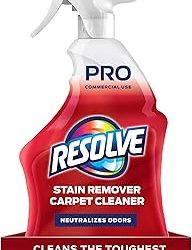
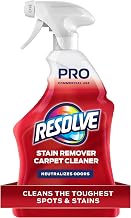
Resolve Professional Strength Spot and Stain
The one I keep within arm’s reach of the living room because dwell time is short and the trigger works one-handed. It is genuinely strong on fresh food and traffic-lane grime, though on light carpet you should blot with clear water afterward — skipping that rinse is where the reappearing-spot complaints come from.
Bissell Professional Spot and Stain + Oxy
Formulated for portable machines, so it stays low-foaming under pump pressure and does not overwhelm the recovery tank. The oxy component earns its place on tannin stains, and the low-suds behavior means you spend the session extracting soil rather than chasing bubbles.
Sunny & Honey Carpet Cleaner Shampoo
A concentrate that works in both upright and spot machines, with a mint scent that reads clean rather than synthetic. It is my pick for pet households: the odor performance holds up after drying instead of returning once the moisture is gone, and the dilution ratio makes a single 32 oz bottle last through a lot of accidents.
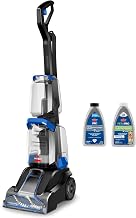
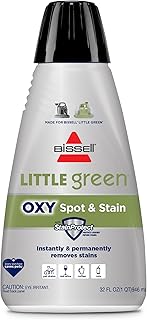
Bissell Little Green Spot & Stain with OXY and StainProtect
Pairs an oxy cleaning package with a StainProtect finish, which is the differentiator here — treated fibers shed the next spill instead of drinking it. Worth the premium on high-traffic paths and stairs, and it runs in any leading portable deep cleaner, not just Bissell hardware.
Capture Spot and Stain Remover Spray
Strong on the classic problem stains — wine, coffee, juice, tracked-in dirt — and it moves easily from carpet to sofa cushions and upholstered chairs. A good pick when you want one bottle covering multiple surfaces instead of a shelf of specialists.
Frequently Asked Questions
Can I use spray solution in my portable carpet cleaner?
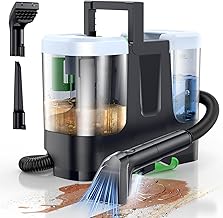
Generally no. Hand sprays foam heavily under a pump and can overflow the recovery tank or, over time, damage the motor. Use a machine-labeled formula like the Bissell Professional or Vacmaster shampoo in any extractor.
Why does the stain come back after it dries?
Two usual culprits: leftover surfactant residue wicking soil up as the carpet dries, or the stain itself migrating back from the backing and pad. Rinse with clear water, extract as much moisture as you can, then weight a folded towel over the spot overnight.
How long should I let the product sit?
Three to five minutes covers most fresh spills. Set pet stains and old grease can take ten, but never let a treated area dry out with product still in it — mist lightly again if it starts to go tacky.
Is any of this safe for wool?
Check the label for a wool-safe or neutral-pH note and always spot-test first. Skip oxidizers and optical brighteners on natural fibers; a mild enzyme cleaner applied sparingly is the safer route.
Final Thoughts
For machine work, the Bissell Little Green Spot & Stain with OXY and StainProtect is the one I reach for first, since the protective finish buys you easier cleanups down the line. Pet owners running frequent cycles will get more value from the Sunny & Honey concentrate, and a bottle of Resolve Professional Strength belongs in the cabinet regardless — nothing beats it for the spill you catch in the first minute.