Key takeaways
- Variable steam control: This is non-negotiable for LVP. You want a low or “dust mop” setting that produces a light vapor rather than a full blast. Single-output mops give you no way to dial back, which means your only moisture control is how fast you walk.
- Pad absorbency and swap-ability: A thirsty microfiber pad pulls condensate off the surface before it migrates into plank seams. Look for kits that ship with multiple washable pads so you can change to a dry one halfway through a large room instead of pushing a saturated pad around.
- Head profile and swivel: A low, well-articulated head keeps you moving. Stiff steering makes you pause and wiggle, and pausing is exactly what damages vinyl. Wider heads clear open floors faster; narrow heads win in galley kitchens and around toe kicks.
- Tank size versus weight: Big tanks mean fewer refills but more mass overhead all session. If you’re doing stairs, a smaller reservoir with a detachable handheld unit is genuinely easier to live with.
- Cord length and heat-up time: A 20-plus-foot cord covers most rooms from one outlet, which keeps you from unplugging mid-pass. Fast heat-up (10 to 30 seconds) matters more than it sounds, since it stops you from leaving a hot head resting on one plank while you wait.
What's inside
Luxury vinyl plank is one of the toughest floors to shop steam mops for, and it’s mostly because the marketing and the manufacturer warranty tell you opposite things. Walk into any big-box aisle and half the boxes claim “safe for vinyl,” while the installation manual tucked in your closet warns against steam entirely. Having pulled up a few planks in my own house to see what actually happens underneath, the reason for that gap is simple: LVP is a layered product held together with adhesive and click-lock seams, and prolonged heat plus moisture at the joints is what causes edge lift and cupping. The mop itself isn’t usually the villain. Technique and dwell time are.
So this guide takes a maker’s view of the problem. Instead of ranking machines by raw steam output, I looked at how much control each one gives you over heat and moisture, how quickly the pad wicks water away from the seams, and whether the head glides easily enough that you’re not parked in one spot scrubbing. Below are the models worth your money in 2026, plus a buying checklist you can use on any mop you find, and answers to the questions that come up most often once people realize their floor warranty has fine print.
As an Amazon Associate we earn from qualifying purchases.



🛒 Best Price Today on Amazon
Prime members get fast, free shipping on everything above, plus member-only deals. New members get a 30-day free trial — cancel anytime.
How to Choose a Steam Mop For Lvp Floors (2026)
- Variable steam control: This is non-negotiable for LVP. You want a low or “dust mop” setting that produces a light vapor rather than a full blast. Single-output mops give you no way to dial back, which means your only moisture control is how fast you walk.
- Pad absorbency and swap-ability: A thirsty microfiber pad pulls condensate off the surface before it migrates into plank seams. Look for kits that ship with multiple washable pads so you can change to a dry one halfway through a large room instead of pushing a saturated pad around.
- Head profile and swivel: A low, well-articulated head keeps you moving. Stiff steering makes you pause and wiggle, and pausing is exactly what damages vinyl. Wider heads clear open floors faster; narrow heads win in galley kitchens and around toe kicks.
- Tank size versus weight: Big tanks mean fewer refills but more mass overhead all session. If you’re doing stairs, a smaller reservoir with a detachable handheld unit is genuinely easier to live with.
- Cord length and heat-up time: A 20-plus-foot cord covers most rooms from one outlet, which keeps you from unplugging mid-pass. Fast heat-up (10 to 30 seconds) matters more than it sounds, since it stops you from leaving a hot head resting on one plank while you wait.
The Best Steam Mop For Lvp Floors (2026)s Reviewed
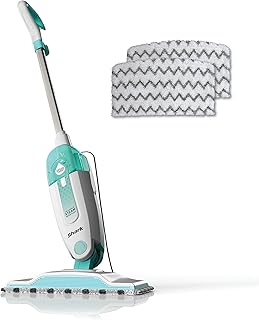
Shark Steam Mop S1000
The simplest tool here and, for LVP, arguably the smartest choice: it’s light, the removable tank refills at the sink without gymnastics, and the Dirt Grip pads soak up moisture well. There’s no variable dial, so keep it moving and treat it as a maintenance mop rather than a deep-scrub machine.
BISSELL PowerFresh 1940A
My pick for the best balance of control and coverage. The three-level steam selector lets you run low on vinyl and crank it for grout, and the flip-down scrubber handles dried spills without you leaning on the head. The 12-inch path clears an open kitchen quickly.
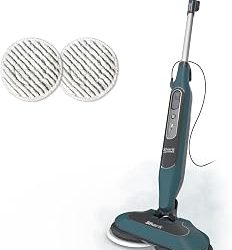
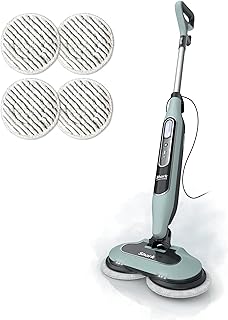
Shark Steam & Scrub S8001
The self-cleaning pad rotation genuinely works, laying down steam and wiping in one motion, and the LED headlights reveal grime you’d otherwise miss on dark plank. It puts more moisture down than the others, so use it on well-sealed, tight-seam LVP and dry as you go.
Adjustable Steam Mop with 23ft Cord
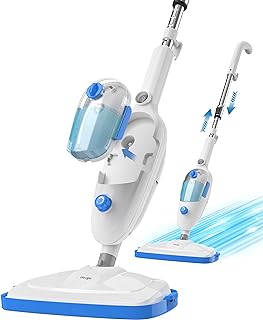
A budget standout thanks to adjustable steam modes plus height adjustment, which lets shorter and taller users keep a natural posture. The long cord is a real convenience upgrade, and two washable pads mean you can swap mid-job.
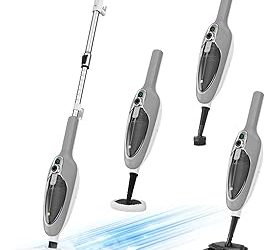
10-in-1 Detachable Handheld Steam Mop
Best for whole-home versatility rather than floors alone: the handheld detaches for grout, upholstery, and appliance work, with a 15oz tank and adjustable output. It’s the one I’d choose in a smaller home where storage space only allows for one cleaning tool.
Frequently Asked Questions
Is steam actually safe on LVP?
On quality, properly installed LVP with tight seams, occasional low-steam cleaning is generally fine. Check your manufacturer’s warranty first, because some brands void coverage for any steam use, and glue-down installations are more vulnerable than floating click-lock.
How long can I leave the mop in one spot?
Ideally, never stationary. Keep the head moving continuously and limit yourself to two or three passes over the same plank. Standing water or lingering heat at a seam is what causes swelling and edge curl.
Do I need distilled water?
It’s not required, but it extends the machine’s life considerably if you have hard water. Mineral scale clogs steam jets over time, and an uneven jet pattern means uneven moisture on your floor.
Can I add cleaning solution to the tank?
Only if the manufacturer explicitly allows it. Detergent in a non-approved tank gums up internal components and voids most warranties. Spot-treat stubborn marks with an LVP-safe cleaner before you steam instead.
Final Thoughts
For most LVP homes, the BISSELL PowerFresh 1940A is the safest all-rounder because its variable steam levels let you match output to your floor rather than hoping for the best. Choose the Shark S1000 if you want the lightest, lowest-risk option for weekly upkeep, or the Shark Steam & Scrub S8001 if your planks are sealed tight and you’d rather have scrubbing power than minimal moisture.