Key takeaways
- Match the bed exactly: Storage systems are cut for a specific generation, cab, and bed length. A 6’6″ unit will not work in a 5’7″ bed, and mid-size trays won’t span a full-size bed. Confirm your model year range before ordering — returns on 200-pound freight items are a headache nobody wants.
- Drawers versus slide-out trays: Drawer decks give you weatherproof, lockable storage and a flat load floor on top, but they raise the bed floor several inches and cut vertical capacity. Slide-out trays preserve full bed depth and pull your gear to the tailgate, which is better if you haul bulky loads and just want reach.
- Drilling or no drilling: Bolt-in systems are rock solid but permanent and can involve existing bed anchor points or new holes. No-drill designs that clamp or sit on the bed floor keep your truck’s resale intact and let you remove the whole system for a big haul.
- Rated capacity, not just claims: Check the load rating per drawer or tray separately from the deck-top rating. A generator, a welder, or a couple of ammo cans of fasteners will find the weak point fast. Aluminum trays are lighter and rust-proof; steel-reinforced polymer decks carry more on top.
- Access ergonomics: Think about how you actually work. Full-extension slides mean you’re not climbing into the bed at every job site, and tailgate-height operation matters if you’re loading solo. Also check whether the system fits under your existing tonneau or cap.
What's inside
Anyone who’s spent a season hauling tools in an open bed knows the routine: sockets rattling under the wheel well, a cordless drill sliding out of reach the second you take a corner, and that one bungee cord doing the work of six. An open truck bed is a fantastic hauler and a terrible toolbox. Loose gear migrates, gets rained on, and disappears from parking lots. Meanwhile the space under a tonneau cover sits mostly empty because there’s no structure to make it usable.
A proper bed storage system fixes the organization problem and the security problem in one shot. This guide walks through the two main approaches available in 2026 — full-height drawer decks that turn your bed floor into locking storage, and lighter slide-out aluminum trays that keep the bed open above — plus a shelf option for SUV owners. Everything below is judged on install effort, real load capacity, and how it holds up to daily grit and weather.
As an Amazon Associate we earn from qualifying purchases.


🛒 Best Price Today on Amazon
Prime members get fast, free shipping on everything above, plus member-only deals. New members get a 30-day free trial — cancel anytime.
How to Choose a/an Truck Bed Storage System (2026)
- Match the bed exactly: Storage systems are cut for a specific generation, cab, and bed length. A 6’6″ unit will not work in a 5’7″ bed, and mid-size trays won’t span a full-size bed. Confirm your model year range before ordering — returns on 200-pound freight items are a headache nobody wants.
- Drawers versus slide-out trays: Drawer decks give you weatherproof, lockable storage and a flat load floor on top, but they raise the bed floor several inches and cut vertical capacity. Slide-out trays preserve full bed depth and pull your gear to the tailgate, which is better if you haul bulky loads and just want reach.
- Drilling or no drilling: Bolt-in systems are rock solid but permanent and can involve existing bed anchor points or new holes. No-drill designs that clamp or sit on the bed floor keep your truck’s resale intact and let you remove the whole system for a big haul.
- Rated capacity, not just claims: Check the load rating per drawer or tray separately from the deck-top rating. A generator, a welder, or a couple of ammo cans of fasteners will find the weak point fast. Aluminum trays are lighter and rust-proof; steel-reinforced polymer decks carry more on top.
- Access ergonomics: Think about how you actually work. Full-extension slides mean you’re not climbing into the bed at every job site, and tailgate-height operation matters if you’re loading solo. Also check whether the system fits under your existing tonneau or cap.
The Best Truck Bed Storage System (2026)s Reviewed
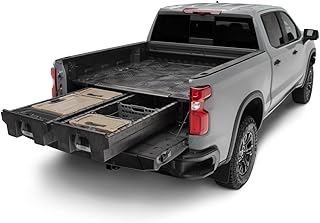
DECKED Truck Bed Storage System — Ford F150 (2015-current) 6’6″
The two full-length drawers slide out at tailgate height and each swallows a startling amount of tools while staying dry and lockable, and the deck top handles a full pallet load above. Installation is a two-person afternoon with basic hand tools and no drilling on most F150s, which is why it’s still the benchmark for anyone using their truck as a rolling job site.
DECKED Truck Bed Storage System — Chevy Silverado & GMC Sierra 2500/3500 (2020-Current) 6’6″
Same drawer architecture, sized and reinforced for heavy-duty three-quarter and one-ton beds where the gear tends to be bigger and heavier. If you’re running a service truck or towing regularly, the ability to keep chains, straps, and impact tools sorted and out of the weather pays for itself in the first month.
DECKED Truck Bed Storage System — Ford Super Duty (2017-current) 6’9″
The 6’9″ Super Duty fitment is the version to get if you’ve got the longer bed and don’t want to leave a foot of unmanaged space behind the drawers. Build quality and the included accessory hardware match the rest of the line, and the drawers roll smoothly even loaded — a real difference from cheap sliding organizers.
S2 Series Aluminum Slide-Out Organizer (Full Size, 5’7″, Two Trays)
Two independent aluminum trays give you a lighter, no-drill alternative to a full drawer deck, sliding out toward the tailgate so you’re not crawling over the wheel wells. It’s a smart pick for weekend haulers and campers who want organization without permanently sacrificing bed height or adding a couple hundred pounds.
S1 Series Aluminum Organizer Tray with Rollers (Mid-Size)
Purpose-built for Tacoma, Ranger, Colorado, Canyon, and Frontier beds, this single roller-mounted tray drops in without drilling and immediately makes a short bed usable for tools and recovery gear. The non-folding aluminum construction keeps it rigid under load and it lifts out in minutes when you need the full bed back.
Frequently Asked Questions
Will a drawer system fit under my tonneau cover?
Usually yes with roll-up and folding covers, since drawer decks sit at or below the bed rail line. Hard one-piece covers and canopies are more variable, so measure your interior clearance at the bulkhead before buying.
How much bed space do I lose?
A drawer deck raises your load floor roughly six to seven inches, so you trade vertical capacity for organized, secure storage. Slide-out trays cost you far less depth but don’t lock or seal against weather the same way.
Do these systems hurt fuel economy?
A full drawer deck adds weight in the low hundreds of pounds, which you’ll notice slightly on long highway runs. Aluminum trays add a fraction of that and are essentially unnoticeable in daily driving.
Can I install one by myself?
Aluminum trays are a genuine solo job. Full drawer systems ship as heavy freight and assembly involves lifting large panels into the bed — grab a second set of hands and budget two to three hours.
Final Thoughts
For serious daily use, the DECKED system for the F150 6’6″ remains the most complete answer: secure, weatherproof drawers plus a deck you can still load on top. Heavy-duty owners should go straight to the Silverado/Sierra 2500/3500 version for the same setup scaled to bigger gear, while anyone who wants organization without permanent commitment will get most of the benefit from the S2 Series aluminum slide-out trays at a fraction of the weight and install effort.