Key takeaways
- Test any cleaner on the underside of a seat slat first — old finishes and stains sometimes react unexpectedly.
- Slip a plastic putty knife or bamboo skewer wrapped in a rag into slat gaps; that’s where mildew hides and where most people stop scrubbing.
- Retighten bolts and check for loose mortise joints while the piece is disassembled and dry. Teak swells and shrinks seasonally.
- Store furniture off the ground over winter, or at least on feet, so end grain isn’t wicking moisture from wet pavers for months.
What's inside
Teak earns its reputation outdoors because of what’s inside it: a dense grain packed with natural oils and silica that shrug off rot, insects, and rain. That toughness is also why so much teak gets ruined by well-meaning owners. Hit a teak dining set with a pressure washer on the wrong tip and you’ll blast away the soft spring growth between grain lines, leaving a fuzzy, furrowed surface that traps dirt forever. Scrub it across the grain with a stiff nylon brush and you’ll do a milder version of the same damage. The wood doesn’t need rescuing so much as it needs the right touch.
This guide walks through what actually happens when teak goes gray, how to strip off the years of grime and mildew without wrecking the fibers underneath, and the honest tradeoff between oiling and letting it patina. I’ve refinished enough weathered benches and slatted chairs in my own driveway to know where the shortcuts bite you. Below you’ll find the gear worth buying, a step-by-step method that takes an afternoon, and answers to the questions that come up once the first coat dries.
As an Amazon Associate we earn from qualifying purchases.



Understand What You’re Actually Removing
That silvery gray isn’t dirt and it isn’t decay — it’s UV degradation of the surface lignin, maybe two or three cells deep. Underneath, the wood is honey-colored and perfectly sound. What sits on top of that gray layer is the real problem: airborne grime, pollen, tree sap, and mildew colonies feeding on organic film. A cleaner’s job is lifting that layer. A brightener’s job is neutralizing the cleaner and using mild oxalic acid to restore the warm tone. Two-part systems like the Furniture Clinic Teak Care Kit bundle cleaner, brightener, and oil precisely because those three jobs are genuinely separate. Single-bottle products like the Bayes High Performance Teak Cleaner & Restorer combine cleaning and conditioning in one pass, which suits maintenance more than deep restoration.
Set Up Before You Wet Anything
Work in shade on a mild day. Cleaner drying on the surface before you rinse it leaves streaks that are annoying to correct. Pull cushions and hardware, sweep the joints with a dry brush, and lay a tarp if you’re working over pavers or a deck you’d rather not bleach. Keep a garden hose with a gentle spray nozzle within reach — not a pressure washer. Wear nitrile gloves and eye protection; these are alkaline and acidic solutions, not soap.
Clean With the Grain, Then Brighten
Wet the piece down first so the wood doesn’t drink cleaner unevenly. Apply your cleaner — the Furniture Clinic Teak Cleaner or STAR BRITE Premium Outdoor Teak Cleaner both work well here — and let it dwell the recommended few minutes without drying. Scrub with a soft-bristle brush or a green scouring pad, always running parallel to the grain lines, never across them. Rinse thoroughly. Then apply the brightener while the wood is still damp, let it work, and rinse again. Expect the color to look alarming mid-process; it settles as it dries.
Decide Whether to Oil or Let It Weather
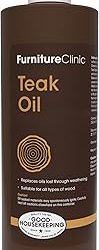
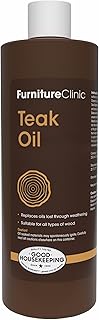
This is a genuine fork in the road, not a right answer. Oiling with something like Furniture Clinic Teak Oil restores that rich, freshly milled look and gives a matte finish that resists water spotting. The catch is commitment: oil feeds mildew if you let it break down, so you’re signing up for reapplication every four to six months in wet climates. Sealers behave differently — the EcoDecors Teak Cleaner & Teak Sealer Kit uses a sealer that blocks UV without penetrating the way oil does, so it holds color longer between coats. Or you can skip both, clean once a year, and enjoy the silver-gray patina, which is what most furniture makers actually recommend for teak left outdoors.
Apply Finish Thin and Let It Cure
Wood must be bone-dry before finishing — give it a full 24 to 48 hours after rinsing. Apply oil with a lint-free cloth in thin coats, working with the grain, and wipe back any excess after fifteen minutes. Puddled oil never cures properly; it stays tacky and collects dust. Two thin coats beat one heavy one every time. Dispose of oily rags in a sealed metal container or spread them flat outdoors to dry, since they can self-heat.
Tips
- Test any cleaner on the underside of a seat slat first — old finishes and stains sometimes react unexpectedly.
- Slip a plastic putty knife or bamboo skewer wrapped in a rag into slat gaps; that’s where mildew hides and where most people stop scrubbing.
- Retighten bolts and check for loose mortise joints while the piece is disassembled and dry. Teak swells and shrinks seasonally.
- Store furniture off the ground over winter, or at least on feet, so end grain isn’t wicking moisture from wet pavers for months.
Frequently Asked Questions
Can I use a pressure washer on teak?
Not recommended. Even at low pressure the water erodes soft grain and raises fibers, permanently roughening the surface. A garden hose and a soft brush give better results with zero risk.
Will bleach clean teak?
Household bleach kills mildew but degrades lignin and can leave a whitish, chalky surface. Purpose-made two-part cleaners are more effective and gentler on the wood.
How often should teak be cleaned?
Once a year for most climates, ideally in spring. Add a light rinse mid-season if you’re under trees or dealing with pollen and sap.
Do I need to sand after cleaning?
Usually not. If the surface feels rough after drying, a light pass with 220-grit paper along the grain smooths it before oiling. Avoid aggressive sanding, which removes wood you can’t get back.
Conclusion
Cleaning teak well comes down to patience rather than force: a proper cleaner and brightener, a soft brush moving with the grain, a real drying window, and thin coats if you choose to finish. Decide upfront whether you want golden or gray, buy the products that match that goal, and your set will still be solid decades from now.