Key takeaways
- Handles: Reinforced handles make a large mattress easier to steer, especially on stairs.
- Closure: A zipper is generally easier to secure than loose tape or an open-ended sleeve.
- Material: Heavy-duty, waterproof material offers better protection during loading and short outdoor transfers.
- Reusability: A reusable bag can be worthwhile if you move often or need seasonal mattress storage.
What's inside
Moving a king size mattress is less about brute strength than preparation. Its width makes stairways, doorways, and vehicle loading awkward, while an unprotected mattress can pick up dirt, moisture, snags, or permanent bends along the way. The safest approach is to control the shape, protect the fabric, and use enough hands—or the right moving equipment—to keep the load stable.
This guide explains a practical DIY method for moving a king mattress across a room, down stairs, or into a moving truck. You’ll learn how to choose a properly sized mattress bag, create a manageable carry plan, protect corners and walls, and decide when a mattress should be replaced rather than transported.
As an Amazon Associate we earn from qualifying purchases.


🛒 Best Price Today on Amazon
Prime members get fast, free shipping on everything above, plus member-only deals. New members get a 30-day free trial — cancel anytime.
1. Measure the Mattress and Plan the Route
Before buying supplies or lifting anything, measure the mattress’s length, width, and thickness. A standard king is usually about 76 by 80 inches, but pillow-top and hybrid models can be considerably thicker. Check the mattress label or manufacturer’s specifications rather than guessing.
Walk the entire route from the bedroom to the vehicle. Measure narrow doorways, stair landings, elevator doors, and tight turns. Remove doors from their hinges if necessary, clear pictures and lamps from walls, and move small furniture out of the way. Decide whether the mattress will travel flat, on its side, or vertically. On stairs and through doorways, carrying it on its side is usually more manageable, but do not fold or sharply bend a foam or hybrid mattress unless the manufacturer specifically allows it.
2. Choose a Proper Mattress Bag
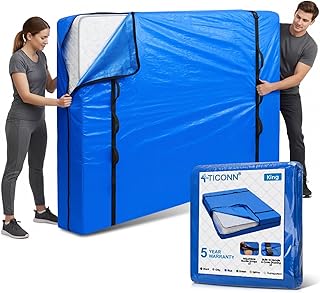
A mattress bag is the most useful piece of moving gear because it keeps upholstery away from dusty floors, damp pavement, truck grime, and accidental spills. Choose a king-size cover with enough depth for the mattress, a sturdy closure, and handles positioned for carrying. A thin plastic sheet may prevent surface dirt but can tear quickly around corners and seams.
- Handles: Reinforced handles make a large mattress easier to steer, especially on stairs.
- Closure: A zipper is generally easier to secure than loose tape or an open-ended sleeve.
- Material: Heavy-duty, waterproof material offers better protection during loading and short outdoor transfers.
- Reusability: A reusable bag can be worthwhile if you move often or need seasonal mattress storage.
The King Mattress Bags for Moving with 12 reinforced handles and a strong zipper is designed around frequent carrying and broad handle placement. SGPAC Heavy Duty Mattress Bags emphasize extra-thick material, reinforced handles, and a zipper closure. Nordic Elk King Size Mattress Bags use eight reinforced handles and an extra-strong zipper. TICONN Mattress Bags include a full-around handle and adjustable buckles, which can help keep the cover snug around a bulky mattress.
3. Bag the Mattress Without Tearing It
Strip all bedding, inspect the mattress for loose hardware, and vacuum both sides if practical. Do not drag it across concrete, gravel, or rough flooring. Slide it onto a clean sheet, moving blanket, or piece of cardboard first, then lift one end at a time while a helper pulls the bag into position.
Keep the zipper and seams away from sharp bed-frame parts. If the bag is tight, stop and check the size rather than forcing it over the corners. Once closed, leave a little air space around handles and avoid wrapping tape directly around the mattress. For extra protection, place a moving blanket over the bag, securing the blanket around the outside with stretch wrap or straps—not tightly enough to compress the mattress.
4. Carry It With a Team and Clear Commands
Two strong adults may manage a king mattress on a short, level route, but three or four people are safer for stairs, long distances, or a thick hybrid mattress. Assign one person to lead and call out commands such as “lift,” “lower,” “stop,” and “turn.” The person at the front should watch the route while the others focus on grip and balance.
Lift with your legs, keep the mattress close to your body, and avoid twisting while carrying. Use the sewn-in bag handles only if they feel firmly attached; they are for control, not for swinging the entire load. A furniture dolly can reduce carrying distance on level ground, but strap the mattress securely and keep it upright. Never ride on a loaded dolly or allow a mattress to slide down stairs.
5. Load, Secure, and Unpack Correctly
Keep the mattress on its side when possible, with the broad face supported by a clean wall or another stable load. In a moving truck, place it where it will not be crushed by heavy boxes. Use ratchet straps or tie-downs to prevent shifting, padding contact points with blankets so buckles and hooks do not rub against the cover.
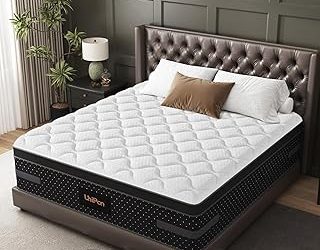
Do not stack heavy furniture on top of a mattress. Avoid leaving it compressed under straps for longer than necessary, particularly if it is foam or a pillow-top model. At the destination, carry it indoors before opening the bag. Let any condensation evaporate, then inspect the cover and mattress before putting it on the bed frame. A new boxed mattress should be handled according to its manufacturer’s unpacking instructions. For example, the King Size Mattress 14Inch Medium Firm Fiberglass-Free Hybrid Mattress and the King Size Mattress 14″ Thickness Hybrid Memory Foam Mattress in a Box are both product types that should be allowed to expand as directed rather than being forced into shape.
Tips
- Keep a utility knife, scissors, gloves, and a roll of painter’s tape nearby, but cut packaging away from the mattress.
- Use painter’s tape to mark door edges and fragile corners; avoid adhesive tape on painted walls and mattress fabric.
- Take a photo of the mattress label and condition before moving it, especially during a rental or warranty-related move.
- If rain is possible, stage the vehicle as close to the entrance as safely allowed and use a second outer cover for the outdoor transfer.
Frequently Asked Questions
Can I fold a king size mattress to move it?
Usually, no. Folding can damage coils, foam layers, edge support, or the internal cover. Some mattresses are specifically designed to be rolled or folded for delivery, but a conventional mattress should remain flat or gently upright unless the manufacturer provides different instructions.
How many people are needed to move a king mattress?
Two adults can handle a short, uncomplicated move if the mattress is not unusually thick or heavy. Three or four people are recommended for stairs, narrow turns, long carries, or mattresses with substantial hybrid construction. Add help rather than attempting a risky lift.
Should a mattress travel flat or on its side?
On its side is often the most practical position for carrying through doorways and securing in a truck. Support it evenly and prevent it from bending sharply. Follow the manufacturer’s guidance, particularly for foam, adjustable-base, or specialty mattresses.
Is a mattress bag enough for storage?
A bag protects against dust and incidental moisture, but storage also requires a dry, temperature-stable space. Keep the mattress elevated from concrete, away from leaks and pests, and supported so it does not remain permanently bent or compressed.
Conclusion
The best way to move a king size mattress is to measure first, protect it with a correctly sized heavy-duty bag, plan the route, and use enough people to control the load. Reinforced handles, moving blankets, a dolly, and properly rated straps can make the job smoother, but careful coordination matters just as much as the gear. Take your time, avoid dragging or folding the mattress, and it should arrive clean, dry, and ready for its next night of use.