Key takeaways
- Rib material and count: Fiberglass ribs flex and rebound; aluminum ribs bend once and stay bent. Eight ribs is the practical minimum for a 9-foot span, and check whether the rib-to-hub joint uses a riveted ferrule or a molded plastic socket. The plastic ones are the first thing to shatter at 25 mph.
- Vent design: A single-tier canopy traps pressure underneath. Double or triple-tier tops bleed that pressure out the top instead of loading the ribs, which is why they hold up in gusts that flip flat canopies.
- Base weight, not base price: Freestanding 9-footers want 50 pounds minimum. Cantilever models need 150 to 250 pounds, and manufacturers rarely include it. Budget for the ballast separately or plan on bolting the base into concrete.
- Fabric weight in GSM: 180 GSM polyester is fine for a shaded deck; 240 GSM solution-dyed fabric resists both fade and the stitching blowout that happens when seams take repeated wind loading. Look for double-stitched seam tape at the rib pockets.
- Serviceability: Before you buy, confirm the crank housing is bolted rather than glued and that replacement ribs are available. An umbrella you can rebuild with a screwdriver and a rivet gun lasts three times as long as a sealed unit.
What's inside
Anyone who has spent a Saturday assembling a patio umbrella only to watch it cartwheel across the lawn the following Tuesday knows the real failure point isn’t the fabric. It’s the skeleton. Cheap umbrellas fail in a predictable order: a rib ferrule cracks, the pole flexes past its yield point, and the whole canopy inverts like a busted golf umbrella. Add a base that weighs less than a bag of mulch and you’ve built a sail with a mast.
This guide comes from a builder’s perspective, meaning I care about rib material, hub construction, wall thickness, and whether you can actually service the thing when a part gives up. Below are the models worth your money in 2026, plus the ballast math and simple shop-level upgrades that turn a decent umbrella into one that shrugs off a summer squall.
As an Amazon Associate we earn from qualifying purchases.


🛒 Best Price Today on Amazon
Prime members get fast, free shipping on everything above, plus member-only deals. New members get a 30-day free trial — cancel anytime.
How to Choose a Wind Resistant Patio Umbrella (2026)
- Rib material and count: Fiberglass ribs flex and rebound; aluminum ribs bend once and stay bent. Eight ribs is the practical minimum for a 9-foot span, and check whether the rib-to-hub joint uses a riveted ferrule or a molded plastic socket. The plastic ones are the first thing to shatter at 25 mph.
- Vent design: A single-tier canopy traps pressure underneath. Double or triple-tier tops bleed that pressure out the top instead of loading the ribs, which is why they hold up in gusts that flip flat canopies.
- Base weight, not base price: Freestanding 9-footers want 50 pounds minimum. Cantilever models need 150 to 250 pounds, and manufacturers rarely include it. Budget for the ballast separately or plan on bolting the base into concrete.
- Fabric weight in GSM: 180 GSM polyester is fine for a shaded deck; 240 GSM solution-dyed fabric resists both fade and the stitching blowout that happens when seams take repeated wind loading. Look for double-stitched seam tape at the rib pockets.
- Serviceability: Before you buy, confirm the crank housing is bolted rather than glued and that replacement ribs are available. An umbrella you can rebuild with a screwdriver and a rivet gun lasts three times as long as a sealed unit.
The Best Wind Resistant Patio Umbrellas (2026) Reviewed
PURPLE LEAF Cantilever 10′ x 10′ Square Double Top
The 35 mph rating here is credible because the frame uses thick-wall aluminum with a genuine double-top canopy that dumps pressure rather than fighting it. Setup runs about 30 minutes and the cross base accepts standard patio stones, though I’d fill it to the full recommended weight and add wedge anchors if your slab allows it.
PURPLE LEAF Patio Umbrella 10′ x 10′ Heavy Duty Frame
This is the offset model to buy if you want 360-degree rotation and five tilt stops without a wobbly pivot, and the triangle bracing at the mast base is the detail that separates it from lookalikes. The cast handle takes real torque, which matters when you’re adjusting a wet canopy.
Ayge 9 FT Patio Umbrella with Fiberglass Frame
Fiberglass ribs make this the smart pick for exposed decks where flex beats rigidity, and the UV50+ canopy holds its color through a full season of afternoon sun. At 180 GSM the fabric is lighter than the PURPLE LEAF options, so treat it as a fair-weather workhorse rather than a storm umbrella.
9ft 3-Tier Patio Umbrella in Navy
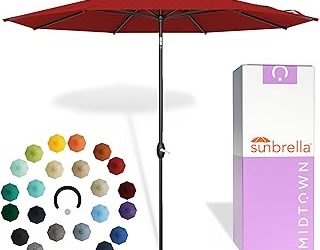
Three vent tiers on a 9-foot frame is unusual at this price and it genuinely reduces the lift that inverts single-canopy umbrellas. Eight ribs, push-button tilt, and a smooth crank make it an easy recommendation for a standard six-seat table.
9′ Market Umbrella with 8 Sturdy Ribs
A straightforward, well-proportioned market umbrella with a functional tilt and crank that covers a dining set without drama. Pair it with a heavier base than the listing suggests and it earns its keep.
Frequently Asked Questions
How much base weight do I actually need?
For a freestanding 9-foot umbrella, 50 pounds is the floor and 75 is better. If the umbrella passes through a table, 35 to 50 pounds works because the tabletop provides lateral support. Cantilever models need 150 pounds minimum.
Can I leave a wind resistant umbrella open overnight?
No rating replaces closing the canopy. Wind ratings assume steady flow, not the sudden gusts that arrive with a thunderstorm. Close and strap it with a bungee or a hook-and-loop wrap.
Are fiberglass ribs really better than aluminum?
For wind, yes. Fiberglass stores energy and springs back, while aluminum work-hardens and creases. Aluminum poles are still excellent; it’s specifically at the ribs where fiberglass wins.
What’s the easiest DIY upgrade?
Replace factory rib set screws with stainless hardware and a drop of thread locker, then wrap the pole where it meets the base with a rubber shim to kill the play that causes fatigue cracks.
Final Thoughts
For serious wind exposure, the PURPLE LEAF Cantilever 10′ x 10′ Double Top is the most engineered option here, with the PURPLE LEAF 10′ x 10′ Heavy Duty Frame close behind if you prefer a cast handle and full rotation. If you’re covering a dining table on a budget, the 9ft 3-Tier model gives you real vent geometry for the money.