Key takeaways
- Rot resistance beats hardness: Western red cedar, cypress, teak, and white oak carry natural oils and tannins that fight fungus. Pine and poplar are stronger per pound in some tests but have no built-in defense, so they need constant sealing to survive.
- Watch the grain and knots: Straight, tight vertical grain moves less with humidity swings. Big loose knots near a leg mortise or armrest are stress risers that crack first, so inspect photos and the chair itself at the joints.
- Hardware is part of the material choice: Cedar’s acidity corrodes plain steel and reacts with regular zinc. Stainless or hot-dip galvanized fasteners are non-negotiable, and if a chair ships with bare screws, swap them before assembly.
- Decide your maintenance budget honestly: Real wood wants a UV-blocking oil or spar finish every year or two. If that sounds like a chore you’ll skip, a faux-wood polymer chair will look better in year five than a neglected cedar one.
- Check seat width and weight rating together: Slat thickness tells you more than a marketing number. Look for at least 3/4-inch stock, tight slat spacing across the seat, and a stated capacity of 300 pounds or more.
What's inside
Every spring I get the same question from friends who’ve just tried to build or buy their first Adirondack chair: why did the last one turn gray, wobble, and start weeping rust stains after two seasons? The answer is almost never the design. It’s the species of wood underneath the paint, and the hardware holding it together. A chair cut from kiln-dried pine will drink up rain, swell, split around the screws, and lose its joinery tension long before a cedar or acacia frame even starts to patina.
This guide comes from a workshop perspective rather than a catalog one. I’ll walk through which woods genuinely survive outdoors, how to read a listing when the seller just says “solid wood,” and what to expect from the pre-assembled folding chairs that dominate the market right now. Below are the models I’d actually put on a deck, plus the trade-offs on each so you can match the material to your climate instead of gambling on it.
As an Amazon Associate we earn from qualifying purchases.




How to Choose a Wood For Adirondack Chair (2026)
- Rot resistance beats hardness: Western red cedar, cypress, teak, and white oak carry natural oils and tannins that fight fungus. Pine and poplar are stronger per pound in some tests but have no built-in defense, so they need constant sealing to survive.
- Watch the grain and knots: Straight, tight vertical grain moves less with humidity swings. Big loose knots near a leg mortise or armrest are stress risers that crack first, so inspect photos and the chair itself at the joints.
- Hardware is part of the material choice: Cedar’s acidity corrodes plain steel and reacts with regular zinc. Stainless or hot-dip galvanized fasteners are non-negotiable, and if a chair ships with bare screws, swap them before assembly.
- Decide your maintenance budget honestly: Real wood wants a UV-blocking oil or spar finish every year or two. If that sounds like a chore you’ll skip, a faux-wood polymer chair will look better in year five than a neglected cedar one.
- Check seat width and weight rating together: Slat thickness tells you more than a marketing number. Look for at least 3/4-inch stock, tight slat spacing across the seat, and a stated capacity of 300 pounds or more.
The Best Wood For Adirondack Chair (2026)s Reviewed
Casafield Folding Cedar Adirondack Chair
Cedar is the benchmark for outdoor seating, and this one delivers the real thing rather than a stained substitute, with the aromatic oils that keep moisture and insects out of the end grain. Partial pre-assembly means you still tighten the critical joints yourself, which I consider a plus since you can set the fasteners to your own torque.
Shine Company Westport Adirondack Chair
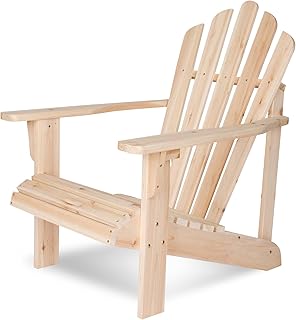
The Westport profile is the original 1903 silhouette, and Shine executes it with a pre-assembled back and seat that keeps the slat spacing dead consistent. It’s a fixed-frame chair rather than a folder, which makes it noticeably more rigid under load around a fire pit.
VINGLI Folding Wooden Lounger
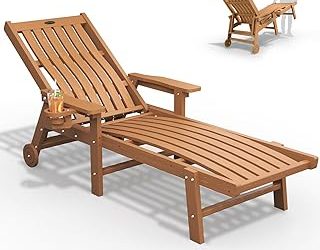
A 350-pound rating puts this at the top of the folding category, and the wider seat pan is a genuine comfort difference if you’re taller or broader. The natural finish is a starting point, not a protective coat, so plan on a penetrating oil before it ever sees rain.
Christopher Knight Home Hanlee Chair
The Hanlee’s natural stain gives you a warmer, more furniture-like tone than raw lumber, and it folds flat enough to store in a shed corner over winter. Sold as a twin set, it’s the most sensible pick if you’re outfitting a small patio in one purchase.
Outdoor Folding Adirondack Chair Set of 2
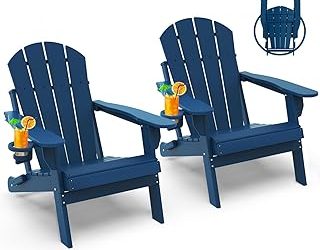
This light brown pair arrives with the backrest already built, which removes the single fussiest step in Adirondack assembly. The ergonomic back curve is well judged, though I’d add felt or rubber feet to keep the legs off wet decking.
Frequently Asked Questions
Is cedar really better than pine for an Adirondack chair?
Yes, meaningfully so. Cedar resists rot and insects without chemical treatment and stays dimensionally stable through wet-dry cycles, while pine needs a sealed film coat and will fail quickly wherever that coat cracks.
Should I stain, paint, or oil my chair?
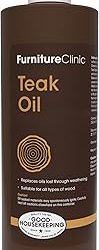
Penetrating oil with UV inhibitors is the easiest to maintain since it soaks in and can be reapplied without stripping. Paint lasts longest but peels, and once it does you’re sanding rather than wiping.
What about faux wood instead of lumber?
The Lifetime Faux-Wood Adirondack chair in UV-protected polystyrene is the honest answer for anyone who won’t refinish. It won’t develop cedar’s silver patina, but it won’t rot, splinter, or need a single coat of anything.
How do I stop the legs from rotting first?
End grain wicks water like a straw, so seal the bottom of every leg generously and keep the chair off standing water with feet or pavers. That single habit adds years to any wooden chair.
Final Thoughts
If you want the most durable material for the money, the Casafield cedar folder is the one I’d build my patio around, with the Shine Company Westport as the sturdier fixed-frame alternative for fire pit seating. For anyone who’d rather never pick up a brush, the Lifetime faux-wood chair sidesteps the maintenance question entirely.