Key takeaways
- Know the species, not just the label: Pine is light and easy to work but dents; rubberwood and bamboo are denser and hold threads far better. If a listing says “wood” without naming the tree, treat it as engineered panel until proven otherwise.
- Slat math beats slat count: Aim for gaps of 3 inches or less and slats at least 0.5 inch thick. Wide gaps void most foam mattress warranties and cause visible dips within a season, regardless of how many boards are in the pack.
- Inspect the joinery and hardware: Look for steel-to-steel bolt connections, barrel nuts, or metal brackets at the rail-to-leg junction. Wood screws driven straight into end grain are the number one source of wobble.
- Measure your clearance before you buy: A 12-inch deck gives real under-bed storage; low-profile frames sit closer to 7 or 8 inches and suit tall mattresses or low ceilings. Add your mattress height and check it against your nightstand.
- Favor frames you can service: Threaded inserts, labeled hardware, and a felt or rubber pad at each slat pocket mean you can re-tighten and re-silence the bed for years instead of replacing it.
What's inside
Anyone who has built furniture in a garage knows the tell: you tighten the last bolt, sit down on the corner, and the whole thing talks back. Most bed frame complaints trace to the same handful of shortcuts, and none of them are visible in a product photo. Slats cut too thin and spaced too wide. Cam locks pressed into softwood that strips on the second turn. “Wood” that turns out to be veneered particleboard once you drill a pilot hole. A bed carries a third of your life and roughly 400 pounds of static load, and it does it while flexing every time you roll over.
This guide looks at six solid wood platform frames the way a maker would size up a project: what species is actually in the box, how the rails meet the legs, whether the slat deck can support a heavy hybrid mattress without a center beam, and how serviceable the whole assembly is a year later when something loosens. Every pick below is a genuine no-box-spring foundation, and each one earns its spot for a different reason.
As an Amazon Associate we earn from qualifying purchases.



🛒 Best Price Today on Amazon
Prime members get fast, free shipping on everything above, plus member-only deals. New members get a 30-day free trial — cancel anytime.
How to Choose a Wood Platform Bed Frame in 2026
- Know the species, not just the label: Pine is light and easy to work but dents; rubberwood and bamboo are denser and hold threads far better. If a listing says “wood” without naming the tree, treat it as engineered panel until proven otherwise.
- Slat math beats slat count: Aim for gaps of 3 inches or less and slats at least 0.5 inch thick. Wide gaps void most foam mattress warranties and cause visible dips within a season, regardless of how many boards are in the pack.
- Inspect the joinery and hardware: Look for steel-to-steel bolt connections, barrel nuts, or metal brackets at the rail-to-leg junction. Wood screws driven straight into end grain are the number one source of wobble.
- Measure your clearance before you buy: A 12-inch deck gives real under-bed storage; low-profile frames sit closer to 7 or 8 inches and suit tall mattresses or low ceilings. Add your mattress height and check it against your nightstand.
- Favor frames you can service: Threaded inserts, labeled hardware, and a felt or rubber pad at each slat pocket mean you can re-tighten and re-silence the bed for years instead of replacing it.
The Best Wood Platform Bed Frames (2026) Reviewed
Mellow Naturalista Classic 12-Inch Solid Wood Platform Bed
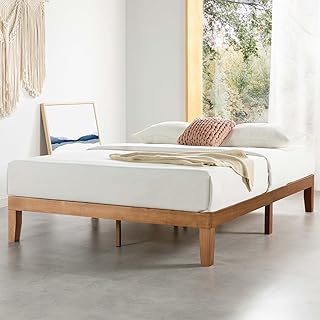
The straightforward workhorse of this list: honest pine, a full 12 inches of clearance, and a slat deck with enough support to skip a box spring outright. Assembly is genuinely tool-light, and because it is real softwood throughout, you can add a screwed-in center support or wax the joints yourself without hitting a layer of laminate.
Merax Bamboo Platform Bed with Tall Headboard
Bamboo is the sleeper material here, harder than most bedroom-grade hardwood and dimensionally stable in humid rooms. The tall mid-century headboard is the design draw, but the real win is thread retention in the leg joints, which is why this frame stays quiet longer than comparable pine builds.
LIFEMENT Classic Wood Platform Bed Frame
A clean, no-headboard platform aimed squarely at people who want function and storage rather than a focal point. Slat pockets are cushioned to kill the tick-tick noise that plagues bare wood-on-wood contact, and the open underside swallows bins with room to spare.
DUMOS Solid Wood Platform Queen Bed Frame
Thick natural pine slats and a heavier-than-expected rail section make this one of the more reassuring frames to sit on the edge of. It is the pick if you sleep on a dense hybrid or latex mattress and want margin in the deck rather than the bare minimum.
Yaheetech Low-Profile Solid Wood Platform Bed
Rubberwood construction with 12 plywood slats gives this frame the best strength-to-height ratio in the roundup, and the dark walnut finish reads far more expensive than it is. Choose it when your mattress is thick and you still want the sleeping surface at a normal height.
Frequently Asked Questions
Do I really need to get rid of my box spring?
Yes, and you should. Stacking a box spring on a platform deck raises the bed awkwardly and adds a second layer of springs that undermines the flat support your mattress was engineered for.
Why does a new wood bed squeak, and can I fix it?
Almost always friction at the slat ends or a bolt that backed off during break-in. Re-torque every fastener after two weeks, then rub paraffin or beeswax on the slat contact points, or cut felt pads for each pocket.
Can I add a headboard to a frame that ships without one?
Usually yes if the head rail has pre-drilled holes or enough thickness to accept bolts. Wall-mounted headboards are the safer DIY route since they put no leverage on the frame at all.
What if I want more support than the stock slats provide?
Add a center rail with a leg, or lay a sheet of half-inch plywood over the slats. On a solid wood frame like the Zinus Moiz or DUMOS, both modifications are simple and reversible.
Final Thoughts
For most bedrooms, the Mellow Naturalista Classic hits the best balance of real solid wood, 12-inch storage clearance, and a build you can tinker with. Spend a little more on the Merax bamboo frame if you want a statement headboard and the quietest long-term joints, or choose the Yaheetech low-profile rubberwood frame if a thick mattress and normal sitting height matter more than under-bed space.