Key takeaways
- Pros: Zero floor legs to work around; ideal for galley kitchens and narrow craft rooms; can double as a wall desk at 28-30 inches high.
- Cons: Requires solid wall anchoring; not movable once installed; limited to lighter loads.
- Look for: Solid steel folding brackets rated for at least 1.5x your intended load, a locking support arm to prevent accidental collapse, and a top thickness of at least 3/4 inch to resist sag.
A fold out table saves 7 to 10 square feet of floor space by folding flat against a wall, dropping its leaves, or collapsing for storage, making it the best secondary table for kitchens, craft rooms, and patios under 120 square feet.
Unlike a permanent dining table or fixed desk, a fold out model gives you a full 24 to 36-inch deep work surface when you need it and as little as 2 to 6 inches of projection when you don’t. The right style depends on where you need it, how often you will fold it, and how much weight it must hold.
Our top picks


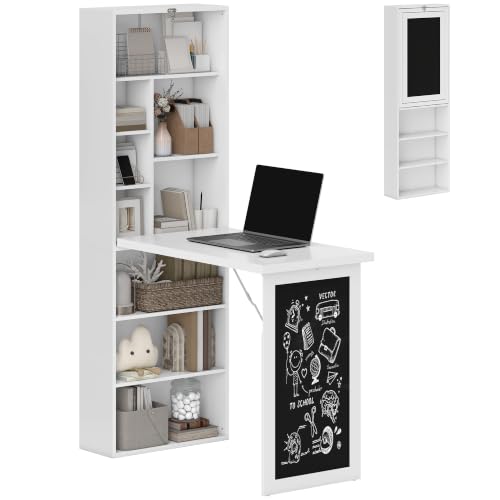

As an Amazon Associate we earn from qualifying purchases at no extra cost to you.
3 Main Fold Out Table Styles Compared
Most options fall into three categories. Your space and how you plan to use the table will determine which mechanism makes sense.
| Style | Folded Footprint | Open Size (Typical) | Weight Capacity | Best For | Price Range (2026) |
|---|---|---|---|---|---|
| Wall-Mounted Drop-Down | 1.5 – 6″ deep from wall | 30″ W x 24″ D to 48″ W x 30″ D | 35 – 75 lbs when anchored to studs | Small kitchens, home offices, laundry rooms | usually $90 – $350 |
| Drop-Leaf / Gateleg | 10 – 14″ deep with leaves down | 36″ – 54″ L x 30″ – 36″ W with both leaves up | 75 – 150 lbs total (25 – 45 lbs per leaf) | Everyday dining for 2-4, craft tables | usually $150 – $500 |
| Portable Folding (Trestle / Suitcase) | 3 – 5″ thick, stores vertically | 48″ L x 24″ W to 72″ L x 30″ W | 100 – 300 lbs (steel frame) / 50 – 100 lbs (aluminum/plastic) | Patios, events, temporary craft stations | usually $60 – $280 |
1. Wall-Mounted Fold Out Table
This style hinges directly to the wall and is held up by brackets, folding arms, or a French cleat. It is the most space-efficient option because it frees floor space completely.
- Pros: Zero floor legs to work around; ideal for galley kitchens and narrow craft rooms; can double as a wall desk at 28-30 inches high.
- Cons: Requires solid wall anchoring; not movable once installed; limited to lighter loads.
- Look for: Solid steel folding brackets rated for at least 1.5x your intended load, a locking support arm to prevent accidental collapse, and a top thickness of at least 3/4 inch to resist sag.
2. Drop-Leaf and Gateleg Table
These have one or two hinged leaves supported by swing-out legs or gate frames. With leaves down they function as a slim console; with one leaf up they seat 2; with both up they seat 4.
- Pros: No installation; stable for dining and sewing machines; wheels on gateleg models make it easy to move.
- Cons: Still occupies floor space (even folded); hinge and leg hardware can loosen with daily flipping.
- Look for: Drop-leaf hinges with a positive lock, legs that splay slightly for stability, and apron height under 25 inches so chairs can tuck fully.
3. Portable Folding Table
Trestle-style tables with central folding legs or bi-fold suitcase tops. Lightweight aluminum and high-density polyethylene (HDPE) versions are best for patios because they resist moisture and UV.
- Pros: No installation or wall damage; easy to carry outdoors; highest weight capacity for the price.
- Cons: Less attractive for permanent interiors; plastic tops can bow under sustained heavy loads; requires closet or garage storage.
- Look for: Cross-braced legs, non-slip foot caps, and a latch that locks the top flat before you load it.
Space-Saving Measurements That Actually Work
Product listings show top dimensions but rarely tell you how much room you need to use the table comfortably. Use these clearance rules before you buy:
- Walkway behind a seated person: 36 to 44 inches from table edge to wall or other furniture. 32 inches is the absolute minimum and feels tight.
- Chair pull-out space: Allow 18 to 24 inches from table edge to wall so you can slide a chair back and stand up.
- Standard heights: Dining height is 28-30 inches, counter height is 34-36 inches, bar height is 40-42 inches. Match your fold out table to existing seating – a 30-inch table with 18-inch seat-height chairs is the classic ergonomic pairing.
- Room fit example: In a 10×12 ft kitchen (120 sq ft), a 48×30 inch fixed table uses 10 sq ft plus 28 sq ft of clearance, leaving little circulation. A 36×24 inch wall-mounted table folded down uses 0.5 sq ft and opens only when needed.
- Patio allowance: On a 8×10 ft balcony, a 48-inch portable table needs at least 72 inches of open length to allow chairs on both ends.
Quick Sizing Guide by Seats
| Seats Needed | Minimum Open Top Size | Folded Depth to Aim For | Clearance Zone Required |
|---|---|---|---|
| 1 person (laptop / breakfast) | 30″ W x 20″ D | Under 6″ | 36″ x 36″ use area |
| 2 people | 36″ W x 24″ D | Under 10″ | 60″ W x 48″ D |
| 4 people | 48″ L x 30″ W | Under 14″ (drop-leaf) | 84″ L x 72″ W |
Material and Construction Trade-Offs
The material determines weight, durability, and whether the table can live outdoors.
| Material | Weight | Durability | Moisture / Heat Resistance | Maintenance |
|---|---|---|---|---|
| Solid Wood (rubberwood, pine, acacia) | Heavy (35-60 lbs for 48″ table) | Very durable; can be refinished; may warp if humidity swings | Low – needs coasters, sealant, indoor use | Oil or reseal annually |
| Engineered Wood (MDF / particleboard with veneer or laminate) | Medium (25-45 lbs) | Stable, resists warping; chips on edges; cannot be sanded | Moderate – laminate resists stains but swells if water enters core | Wipe clean; avoid soaking |
| Metal + Wood Combo (steel frame, wood top) | Medium-heavy (30-50 lbs) | Strongest folding mechanism; top may still be wood-based | Moderate – powder-coated steel resists rust | Tighten bolts every 6 months |
| HDPE Plastic / Aluminum | Light (15-28 lbs) | Dent and stain resistant; can sag under 100+ lbs over time | High – UV and water resistant | Hose off; no finishing needed |
For daily kitchen use with heat and spills, choose laminate over engineered wood or HDPE. For a craft room where you will pin, cut, and clamp, solid wood or a metal-frame table with a replaceable wood top holds up better than MDF. For patios and balconies, only HDPE or powder-coated aluminum will tolerate rain and sun without swelling or rusting.
Which Fold Out Table Should You Choose?
Match your situation to the style that causes the fewest compromises:
| Your Situation | Best Choice | Why |
|---|---|---|
| Small apartment or galley kitchen under 100 sq ft | Wall-mounted 30-36″ wide drop-down | Reclaims floor space; no legs to navigate in tight aisles |
| Renter who cannot drill into walls | Drop-leaf console or portable trestle | No installation or wall repair needed; moves with you |
| Family with kids and pets | Gateleg with locking leaves and rounded corners | Stable base prevents tipping; locks stop unexpected folding |
| Craft/sewing room with daily folding | Wall-mounted with heavy-duty steel brackets or gateleg with HDPE top | Hardware rated for 500+ fold cycles; wipeable surface |
| Back pain / need to alternate sitting and standing | Wall-mounted at 36″ counter height with folding stools | Allows standing work without a separate standing desk |
| Outdoor dining or balcony garden | Portable HDPE or aluminum 48-60″ folding table | Weatherproof, lightweight, stores vertically in 5″ of space |
Installation and Durability Realities
Wall-Mounted Install Tips
A wall-mounted fold out table is only as strong as its anchor. Drywall alone will not hold more than 15-20 lbs.
- Find studs: Locate at least two wood studs (typically 16 inches on center) or use a solid masonry wall. Use a stud finder and confirm with a small pilot hole.
- Hardware: Use 2.5 to 3-inch wood screws or lag bolts for studs, or 3/16-inch toggle bolts for masonry. The brackets should be rated for 75-100 lbs per pair even if you only plan to load 40 lbs.
- Height: Mount so the top is 28-30 inches for dining, 36 inches for counter-height work. Mark the bracket height with a level and test-fold before final tightening.
- Weight distribution: Keep heavy items (mixers, sewing machines) centered over the brackets, not on the outer edge where leverage doubles the force on the wall.
Assembly, Moving, and What Wears First
- Box weight and doorways: Drop-leaf and gateleg tables often ship in one box weighing 45-70 lbs and measuring 50+ inches long. Measure your doorway (standard interior is 29-30 inches) and stairwell turns before ordering. Wall-mounted tables ship smaller (35-50 inches) but require 45-60 minutes for wall install.
- What wears first: On wall-mounted models, the hinge screws loosen and the bracket pivot develops play. On drop-leaf models, the leaf hinges and the gate leg casters wobble first. On portable plastic tables, the leg brace rivets and the center seam of bi-fold tops loosen. Check and tighten all fasteners every 3-6 months.
- Weight limits are static: A 50-lb rating means evenly distributed static load. Sitting or leaning on the edge can exceed that instantly. Never sit on a fold out table.
- Floor protection: Add felt pads under gateleg feet and portable legs to prevent scratching hard floors when folding.
Styling It for Kitchen, Craft Room, and Patio
In a kitchen, mount a 36-inch wall table under a window to use natural light and keep the floor clear for a trash bin or high chair. Pair it with two folding stools that hang on wall hooks when not in use.
In a craft room, choose a 48-inch gateleg with a 36×60 inch cutting mat on top. Leave one leaf down as a permanent material staging area and flip the second leaf up only for large projects. Add a pegboard above the wall-mounted version to store tools without cluttering the work surface.
On a patio, use a 60-inch HDPE portable table with powder-coated steel legs. It can serve as a potting bench at 30 inches high and fold to 3 inches thick against the wall during winter. Store it vertically to prevent water pooling on the top.
FAQ
How much weight can a wall-mounted fold out table hold?
When properly anchored to two wall studs with steel brackets, most 30 to 48-inch models are rated for 50 to 75 lbs of evenly distributed weight. Models anchored only to drywall with anchors should be limited to 15 to 20 lbs. Always check the bracket rating, not just the top material.
Can I install a fold out table on drywall without studs?
It is not recommended for anything heavier than a laptop. For renter-friendly options, choose a freestanding drop-leaf or portable table instead, or use a floor-supported wall table that has legs folding down to the floor to transfer load off the wall.
What is the difference between a drop-leaf and a gateleg table?
Both have hinged leaves, but a drop-leaf uses a simple swing bracket under each leaf, while a gateleg has a full frame (the gate) that swings out to support the leaf. Gatelegs are more stable for 4-person dining and heavier craft equipment, while drop-leaves are slimmer and lighter when folded.