Key takeaways
- Six documented layers clarify where foam ends and coil support begins.
- More than 1,000 individually wrapped springs encourage independent movement.
- The 11-inch height avoids the deep-pocket-sheet problem of taller models.
A hybrid mattress is worth considering when an all-foam bed feels too slow to respond but a traditional spring mattress lacks cushioning at your shoulders and hips. The useful comparison is comfort-layer construction, coil behavior, firmness options, and returns. We compare six named queen-size beds, ranging from a firm, relatively inexpensive boxed model to layered, high-profile designs and a premium delivered-and-installed option.
Quick Verdict: The Leesa Sapira Hybrid is our Best Overall pick for its published 11-inch, six-layer construction, more than 1,000 individually wrapped springs, and breathable foam design. Its 115-pound queen size is heavy, and the price is not entry-level. This is an editorial recommendation based on manufacturer documents reviewed as of October 2026, not in-house testing. Check the seller’s current price and return terms before ordering.
As an Amazon Associate we earn from qualifying purchases.
By DIY Ideas 4 Home Editorial Team
6 Best Hybrid Mattresses Reviewed
We prioritized published queen-size dimensions, named foam and spring systems, recognizable firmness choices, and policies shoppers can actually use. These are separate products, not six configurations of one mattress. Manufacturer product specifications and policy pages were our primary sources; a dated independent price report is clearly identified where a brand’s live price could not be retrieved. As of October 2026, the sampled queen prices or reference prices run from about $699 to $2,284, before selecting extras. US mattresses also fall under the Consumer Product Safety Commission’s 16 CFR 1632 and 1633 fire-safety requirements; those legal requirements are not a substitute for checking each brand’s material disclosures.
| Product | Best For | Key Spec | Listed Price (as of October 2026) | Watch Out For |
|---|---|---|---|---|
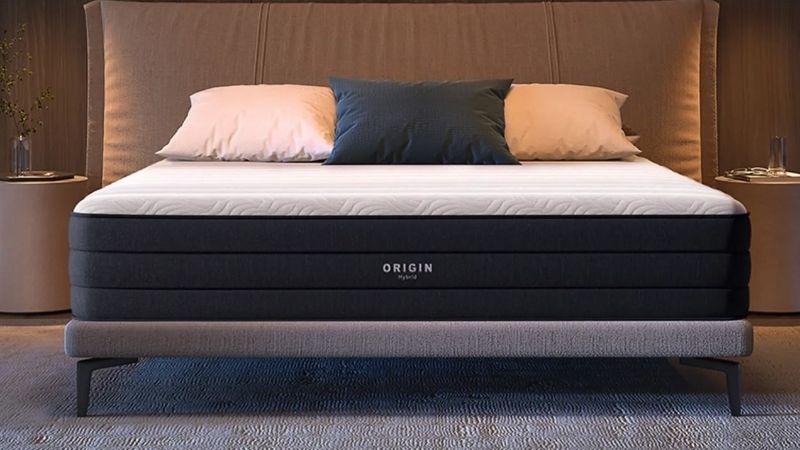
| Leesa Sapira Hybrid, Queen | Best Overall: balanced foam and coils | 11 in; 1,000+ wrapped springs; six layers | $1,599 sale; $2,139 reference | 115 lb; premium over entry-level |
| DreamCloud Classic Hybrid, Queen | Best Budget: firmer feel | 12 in; six layers; 1 in memory foam | $699 current advertised price | Firm feel, limited plush contour |
| Brooklyn Bedding Signature Hybrid, Queen | Best for Firmness Choice | 13.25 in; 8 in wrapped coil core; three feels | $1,465 maker’s reference price | Optional pillowtop changes height and cost |
| Bear Elite Hybrid, Queen | Best for Zoned Support | 14 in; five-zone coil system; three feels | $1,598.80 sale; $2,284 reference | Optional cooling layer costs more |
| Saatva Classic, Queen, 11.5 in | Best for In-Home Setup | 11.5 in; dual-coil design; three feels | $1,904 sale; $2,229 reference | 14.5-in version is not for adjustable bases |
| WinkBeds The WinkBed, Queen Luxury Firm | Best for Firm Edges | 13 in; wrapped coils; 135 lb | About $1,799, reported in 2026 | Price is a published estimate, not a live quote |
Leesa Sapira Hybrid: Best Overall
Best For: Couples who want a fairly responsive bed with substantial cushioning but do not need an extra-tall pillowtop.
Leesa’s Sapira earns the overall position because it explains the spring-and-foam balance more concretely than most competitors. The ventilated upper foam is intended to recover after you turn, while independent springs limit the sense that the entire mattress moves with you. Compared with the softer-choice Brooklyn model, this has a more tightly defined build rather than multiple firmness configurations. Its chief compromise is cost: the DreamCloud is dramatically less expensive for a buyer who can tolerate a firmer surface.
Leesa’s product page for the Sapira Hybrid and its Product Specifications identify an 11-inch profile, a 6-inch steel-spring section, 1.5 inches of GreenFlex foam, and another 1.5 inches of memory foam. The company describes more than 1,000 individually wrapped springs and CertiPUR-US foams; it also identifies a cool-knit cover rather than promising that every sleeper will remain cool. The Queen was advertised at $1,599 against a $2,139 reference price in October 2026. The published trial information has varied on different versions of Leesa’s page, so verify the applicable term at checkout rather than assuming an older promotion still applies.
The queen measures 60 by 80 by 11 inches and weighs 115 pounds according to the Leesa product specification section. That matters when a two-person household must carry the package upstairs or rotate the finished bed. The individual wrapped coils support a more flexible perimeter than continuous interconnected springs, but a partner who frequently sits on the edge may prefer the WinkBed’s expressly reinforced border. If you intend to use a closely spaced slatted frame, inspect Leesa’s foundation instructions rather than transferring a rival brand’s slat-spacing rule. The limited lifetime warranty covers specified defects, not a promise that foam will never soften.
Pros:
- Six documented layers clarify where foam ends and coil support begins.
- More than 1,000 individually wrapped springs encourage independent movement.
- The 11-inch height avoids the deep-pocket-sheet problem of taller models.
Cons:
- The queen weighs 115 pounds, complicating solo setup and rotation.
- Shoppers seeking selectable plush, medium, or firm models have fewer options.
Who Should Buy It: Choose Sapira for a responsive everyday bedroom mattress; choose the DreamCloud Classic Hybrid if the current $699 ticket matters more than fine-tuned cushioning.
DreamCloud Classic Hybrid: Best Budget
Best For: Price-conscious back or stomach sleepers who prefer a firmer, flatter surface and generous evaluation time.
DreamCloud’s Classic is the least expensive queen in this comparison at the documented October price, but its standout distinction is a deliberately firm presentation rather than a budget version of a plush bed. The thin contouring layer leaves more of the feel to the support structure. That can be helpful if you dislike sinking deeply, whereas a side sleeper whose shoulder needs noticeable give should compare the softer Brooklyn Signature option. We would not position the Classic as a universal bargain without that comfort caveat.
DreamCloud’s product page for the Classic Hybrid documents a 12-inch mattress with six construction layers, including 1 inch of memory foam over individually wrapped coils. Its description calls the sleeping feel Firm, and its trial-policy section advertises a 365-night home trial and a Forever Warranty, subject to the full terms. The current queen purchase price shown by DreamCloud in October 2026 was $699. That number is for the mattress; a $1,398 figure visible elsewhere on the site relates to an upgraded bundle with a base and must not be confused with the mattress-only price.
A standard queen has a 60-by-80-inch sleeping footprint, while this model’s overall height is 12 inches. That profile accommodates ordinary deep-pocket fitted sheets more easily than a 14-inch pillowtop, but check the sheet maker’s actual pocket range. DreamCloud describes its Classic as fiberglass-free and states that its foam is CertiPUR-US certified. Those claims are useful material disclosures, not medical endorsements. Because the edge design is not the same reinforced perimeter configuration as the WinkBed, buyers who primarily sit at the side of the bed should account for that use, not just motion isolation during sleep.
Pros:
- The manufacturer’s queen price was $699 in October 2026.
- The 12-inch design includes individually wrapped springs under contouring foam.
- A 365-night home trial offers time across changing sleep conditions.
Cons:
- The Firm description suggests less shoulder give than a plush option.
- Only 1 inch of memory foam is documented above the support layers.
Who Should Buy It: Buy the Classic when a firm, lower-cost hybrid is the objective; consider the Leesa Sapira Hybrid if responsive cushioning matters more than the initial price.
Brooklyn Signature Hybrid: Best for Firmness Choice
Best For: Households uncertain about comfort level and willing to choose soft, medium, or firm before ordering.
The Signature Hybrid makes a particularly useful middle-ground choice for people who know they want coils but have not settled on the surface feel. Brooklyn Bedding builds this product around three explicit firmness choices rather than one mattress described vaguely as suitable for everyone. Its optional Cloud Pillow Top also changes the feel, which can be valuable, but it means two otherwise similar orders can arrive with a different height and a different final charge. That complexity is exactly why we prefer a specified no-pillowtop configuration when comparing prices.
Brooklyn Bedding’s product page for the current Signature Hybrid and Compare the Collection details give the standard model a 13.25-inch construction with an 8-inch Ascension X individually wrapped coil core, plus comfort foams and a GlacioTex cover. The brand identifies up to 760 coils in its construction diagram and offers soft, medium, and firm selections. Its queen reference price is listed at $1,465 as of October 2026; this is a suggested price, not a guarantee of the promotional checkout amount. The optional pillowtop increases published height to 14 inches. A 120-night trial and limited lifetime warranty are presented in the company policy summary.
At 13.25 inches tall, the standard mattress needs more vertical room than the Leesa. Before paying for a platform bed with a fixed headboard, check whether a thick pillow and fitted sheet will raise the finished sleep surface too high. The product’s wrapped coil unit is paired with gel-swirled memory foam and transition layers, a materially different arrangement from the thinner-conforming DreamCloud. Brooklyn recommends substantial foundation support, and the brand’s FAQ cautions against broad unsupported gaps between slats. Choosing the medium firmness because someone else uses it is still a gamble; sleep position and body weight change how each version feels.
Pros:
- Three firmness builds let shoppers select cushioning without changing brands.
- An 8-inch individually wrapped coil system forms the support core.
- A 120-night comfort trial permits a substantial at-home adjustment period.
Cons:
- The optional pillowtop changes the thickness and total purchase cost.
- Its 13.25-inch standard profile may hide low decorative headboards.
Who Should Buy It: Choose the Signature when selecting firmness is the primary decision; buy the Bear Elite Hybrid when a documented five-zone support layout is more important.
Bear Elite Hybrid: Best for Zoned Support
Best For: Sleepers comparing support under the midsection who want several firmness choices and a taller mattress.
Bear’s Elite separates itself through its five-zone support structure rather than through unqualified promises about pain relief. Different portions of the coil core are intended to respond differently to body weight, an appealing design consideration when a uniformly soft mattress seems to let the hips dip. That does not mean the Elite treats back pain, and a very light side sleeper may still prefer an ordinary softer build. The cooler-feeling optional layer is another real decision point: do not assume it comes with the basic medium-firm configuration pictured in an advertisement.
Bear’s product page for the Elite Hybrid Mattress and its specifications describe a 14-inch profile with a five-zone spring design, copper-infused memory foam, and soft, medium, and firm options. The company identifies a Celliant cover as standard, while CoolForce is an upgrade. The reviewed queen configuration had a $2,284 reference price and an advertised $1,598.80 sale price with a promotion in October 2026. Bear also currently describes a 365-night trial, a limited lifetime warranty, and fiberglass-free construction. Claims about enhanced recovery or medical outcomes require independent clinical evidence and are not reasons for our selection.
The queen is stated as 60 by 80 by 14 inches, weighing 80 pounds according to Bear’s size-and-dimensions table. That published weight is lower than some heavier quilted hybrids in this roundup, but the 14-inch height still means checking fitted-sheet depth and bedside furniture. Five-zone springs are a design feature, not a universal firmness rating: the Soft and Firm choices use different comfort expectations even with the same named support concept. Bear advertises GREENGUARD Gold and CertiPUR-US foam credentials; buyers focused on a particular textile or barrier material should request that documentation for the actual variant before checkout.
Pros:
- Five-zone coil architecture targets support variation along the sleeping surface.
- Soft, medium, and firm builds offer different pressure-relief preferences.
- Brand specifications identify a relatively manageable 80-pound queen mattress.
Cons:
- The CoolForce temperature feature is an added-cost upgrade, not standard.
- A 14-inch profile raises the total bed height substantially.
Who Should Buy It: Consider the Elite for a zoned-coil construction and upgradeable cover; choose the Brooklyn Bedding Signature Hybrid if a lower reference price and shorter profile take priority.
Saatva Classic: Best for In-Home Setup
Best For: Buyers who want a traditional premium bed delivered and set up, with a choice of firmness and height.
Ordering a heavy mattress in a box solves shipping logistics for the seller, but it does not always solve installation for the buyer. Saatva is the clear alternative here because its Classic is delivered with in-home setup rather than being left for you to haul to an upstairs bedroom. Its dual-coil construction also feels conceptually closer to a high-quality innerspring bed with added contouring than to a heavily foamed hybrid. For shoppers who sleep near a partner who changes position constantly, individual-spring isolation may feel different from the foam-dominant Leesa; no manufacturer specification can guarantee an undisturbed night.
Saatva’s product page for the Classic identifies three firmness levels, Plush Soft, Luxury Firm, and Firm, plus two separate finished heights of 11.5 and 14.5 inches. Its materials description includes a 3-inch Euro pillowtop and dual steel-coil support. The brand listed a $2,229 queen reference price and a $1,904 promotional price in October 2026, along with a 365-night trial and lifetime warranty. The 11.5-inch Luxury Firm configuration is the one evaluated here. Saatva specifically limits adjustable-base compatibility to the 11.5-inch height; buying the taller version for extra visual height would defeat that use case.
Saatva’s published mattress-weight guide puts the Classic queen at 110 pounds in its 11.5-inch configuration and 120 pounds at 14.5 inches. Both occupy the standard queen 60-by-80-inch bed footprint. The hands-on delivery service reduces the strain of initial positioning but does not eliminate future concerns when moving house. This brand also publishes base and foundation requirements, so owners of an older flexible box spring should check support compatibility. Review the specific return-processing charge before treating the 365-night trial as an entirely cost-free experiment. Finally, a thicker, more buoyant Euro top will appeal differently to someone switching from a slow-responding all-foam mattress.
Pros:
- In-home delivery avoids carrying the 110-pound queen upstairs yourself.
- Three firmness levels pair with distinct 11.5-inch and 14.5-inch heights.
- Dual-coil construction provides an alternative to thick foam-heavy hybrids.
Cons:
- The higher 14.5-inch model cannot be used on adjustable bases.
- A trial return may incur a processing charge despite in-home delivery.
Who Should Buy It: Pick the Classic for coordinated setup and an innerspring-leaning feel; pick the Leesa Sapira Hybrid for a shorter foam-and-spring design at a lower advertised price.
WinkBeds The WinkBed: Best for Firm Edges
Best For: Couples who frequently sit along the mattress edge or want a defined perimeter on a tall, quilted bed.
Some people use a bed edge as a seat while dressing, putting on socks, or getting up in the morning. For that buyer, WinkBeds makes its Extra-Edge support a central engineering feature, not a vague side benefit. The cushiony Euro-pillow top still changes how the middle feels, so edge reinforcement should not be confused with an extra-firm entire mattress. This is a useful alternative to the DreamCloud’s flatter feel, particularly for someone who wants cushioning without feeling as though the perimeter folds away. The cost is significant weight and a less transparent web price.
The WinkBed’s product page documents individually wrapped coils, gel-infused Euro-pillow-top foam, a Tencel cover, and the brand’s Extra-Edge perimeter system. The model comes in Softer, Luxury Firm, Firmer, and a structurally different Plus variant. We evaluate the standard Luxury Firm rather than combining specifications from Plus. WinkBeds lists a 120-night trial and a lifetime warranty. A May 2026 Tom’s Guide price report put a queen at about $1,799 at WinkBeds, but the manufacturer’s current shop page renders pricing dynamically. This is a dated market estimate, not an independently retrieved October checkout price.
The official WinkBeds FAQ specifies 13 by 60 by 80 inches and 135 pounds for the standard queen Luxury Firm. It also identifies a cotton-and-rayon fire barrier in standard WinkBed models and CertiPUR-US foam claims. With that weight, do not plan on effortless solo rotation; furniture and frame assembly should be finished before moving the mattress into position. The Plus version has a different 14.5-inch profile, so its specifications cannot be assigned to this Luxury Firm selection. The exact edge firmness you perceive will also depend on your body weight and where you sit, not only the maker’s construction label.
Pros:
- Extra-Edge perimeter engineering is explicitly detailed by the manufacturer.
- The 13-inch standard queen balances a Euro top with coil support.
- A published 120-night trial provides time to judge edge usability.
Cons:
- Its 135-pound queen makes relocation and bed rotation labor-intensive.
- The October price must be confirmed because online pricing is dynamic.
Who Should Buy It: Choose The WinkBed for a reinforced perimeter and quilted surface; choose the Saatva Classic instead if hands-on delivery is more important than an edge-focused design.
How to Choose a Hybrid Mattress
The word hybrid tells you that more than one support material is involved; it does not tell you how softly the top layers compress or how much assistance the frame will need. In this group, documented heights span 11 to 14 inches, and the published trials span 120 to 365 nights, which can alter the practical buying decision as much as the brand name. Use the following checks to decide whether a promotional price represents an appropriate long-term purchase.
Match Foam and Coils to Sleeping Position
Start by identifying how much surface contouring you actually tolerate. DreamCloud describes its 12-inch Classic as Firm and discloses just 1 inch of memory foam in its six-layer build. A side sleeper who feels pressure at the shoulder might instead compare a softer Brooklyn Signature with its optional pillowtop or a Bear Elite Soft, rather than ordering a firm model and hoping it breaks in. Firmness numbers are not standardized across competing brands, and weight distribution changes the feel considerably.
Next, ask how the mattress behaves when someone turns over. Individually wrapped springs respond separately, but the thickness and density of the foam above them also affect motion. Leesa explicitly identifies a 6-inch spring section with two substantial foam comfort layers, whereas Saatva has a dual-coil architecture and 3-inch Euro top. Neither design is automatically better. Sleep with a partner, get in and out frequently, or sit up reading? Those habits reveal whether you should value movement isolation, responsiveness, or cushion depth first.
Check Profile, Queen Weight, and Foundation
Measure the combined height of your bed frame and intended mattress against your comfortable sitting height, not just against the headboard photograph. A 14-inch Bear Elite adds 3 inches compared with the 11-inch Leesa Sapira, and the 14.5-inch Saatva option is expressly unsuitable for adjustable bases. Standard queen dimensions are nominally 60 by 80 inches, but handcrafted tolerances and mattress covers may vary; compare your bed frame’s actual internal measurements.
Weight deserves equal attention. The reviewed Leesa queen weighs 115 pounds, Saatva’s 11.5-inch queen weighs 110 pounds, Bear’s queen is listed at 80 pounds, and WinkBeds reports 135 pounds. These numbers affect stairways, maneuvering around doorframes, and whether future rotation will need two people. Coil mattresses also need suitable frame support. Do not assume that a frame approved for one brand automatically meets another brand’s limits on slat gaps, center legs, or adjustable-base articulation.
Compare Trial Rules and Real Payment
A long trial is only valuable when its conditions work for your household. DreamCloud and Bear advertise 365-night trials; Brooklyn and WinkBeds describe 120-night trials. Saatva also offers 365 nights but may charge a processing fee upon return. Some brands ask buyers to keep a mattress for an adjustment period before accepting returns, and a free mattress return is different from removal of an old mattress. Read the written terms that apply on the date of checkout, especially on clearance items and optional add-ons.
Compare the amount charged for your exact size and configuration, excluding bundles unless you need those extras. The October manufacturer price for DreamCloud’s queen Classic was $699, while Brooklyn’s displayed $1,465 queen figure was a reference price rather than a reliably extracted sale total. Bear’s $1,598.80 sale price depended on a code, and an independent WinkBeds article quoted about $1,799 earlier in 2026. A mattress listed at one price can move into another tier when you add cooling layers, a pillowtop, sales tax, delivery upgrades, or a new foundation.
Inspect Foam Claims and Fire Barriers
US mattress fire-safety requirements include the CPSC’s 16 CFR 1632 smoldering-ignition standard and 16 CFR 1633 open-flame standard. These apply to US mattresses as a category; they are not special safety endorsements for a particular marketing claim. CertiPUR-US describes qualifying polyurethane foam, not blanket certification of the assembled mattress and not proof that the fire barrier lacks fiberglass. If a seller advertises fiberglass-free construction, check the exact model’s materials statement rather than relying on a broad category page.
WinkBeds identifies a cotton-and-rayon barrier for its standard WinkBed, and DreamCloud expressly calls the Classic Hybrid fiberglass-free on the model page. Ask for documentation if the barrier material is unclear, particularly for a household sensitive to exposed fibers. Do not unzip, cut, or remove a mattress cover unless the manufacturer specifically says it is designed for removal. A cover made to protect internal layers is not automatically machine washable, regardless of how easy its zipper looks to operate.
Frequently Asked Questions
Before placing a mattress order, these four details often determine whether a bed works after the initial excitement of unboxing has passed. They involve daily care and household realities that a coil-count comparison alone cannot answer.
Does a Hybrid Mattress Need to Be Flipped?
Usually no. The hybrids reviewed here are designed with their comfort materials above a supporting coil core, so turning the mattress upside down changes which layers contact your body. Rotating head to foot, when the brand recommends it, is different from flipping. Follow the specific care schedule printed by the manufacturer, and ask for help if the queen is too heavy to move safely.
Can I Sleep on It the Night It Arrives?
Often yes, but follow the maker’s unboxing instructions rather than applying one universal waiting period. Many compressed beds expand considerably after the wrapping is removed, yet they may continue to regain their intended loft and feel over time. Clear the path to the bed first and use assistance for heavy boxes. Saatva’s scheduled in-home delivery avoids the compressed-box setup used by most of the other brands here.
Will a Hybrid Mattress Work With My Existing Sheets?
Only if the fitted sheet’s stated pocket depth accommodates the mattress and any protector. The products here range from 11 to 14 inches high, while choosing Saatva’s taller option moves that model to 14.5 inches. Deep-pocket labels vary by bedding maker. Before buying new sheets, measure the actual finished mattress and allow room for the protector rather than treating a height label as an exact pocket measurement.
Will a New Hybrid Stop My Back Pain?
No mattress is a guaranteed treatment for back pain. A surface that gives appropriate support and enough pressure relief may feel more comfortable for some sleepers, but medical symptoms have many causes. Consider your normal position, body weight, and the ability to exchange firmness rather than buying based on a claim about spinal alignment alone. Persistent or worsening pain, especially with numbness or weakness, warrants medical evaluation rather than relying on a new bed purchase.
Final Thoughts
The Leesa Sapira Hybrid remains our Best Overall recommendation because its 11-inch build, more than 1,000 wrapped springs, and clearly documented foam layers give buyers a concrete starting point for comparing feel and trade-offs. Before you buy, perform one less obvious check: ask whether your existing foundation and bedroom access can handle the exact queen model, especially if you have a narrow staircase or an adjustable base. That requirement can overturn a product ranking immediately. If carrying a 115-pound boxed bed is impractical, consider the Saatva Classic’s in-home setup; if cost is the limiting factor and you prefer firm support, compare DreamCloud’s $699 Classic instead. Confirm the final price and return terms on the actual order page.