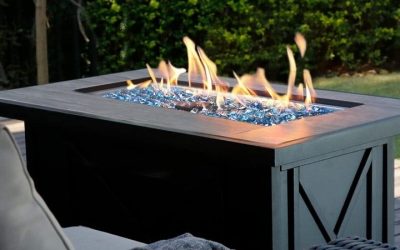
Key takeaways
- Accepts both wood pellets and small wood pieces on its built-in grate.
- Included stand elevates a 7-inch stainless body above a suitable table.
- Maker cites 45 to 60 minutes of operation per pellet load.
Many patios have room for a small flame but not a ground fire bowl. A tabletop fire pit solves that space problem, provided you choose the fuel and the surface together. These six actual models range from a 4-inch soy-wax tin to a 14-pound concrete gel-fuel bowl. The Consumer Product Safety Commission warned in December 2024 against fire pits burning pooled liquid alcohol because of flame-jetting hazards. None of the choices below requires pouring alcohol into an exposed burning reservoir.
Quick Verdict: The Solo Stove Mesa XL is our Best Overall for an outdoor table because its 7-inch body burns either pellets or small pieces of wood, sits on an included stand, and weighs 2.3 pounds. These editorial picks use published maker documents as of October 2026, not in-house testing. Compare the listed price and check local open-flame rules before ordering.
As an Amazon Associate we earn from qualifying purchases.
By DIY Ideas 4 Home Editorial Team
6 Tabletop Fire Pits for Different Fuel Needs
We selected individual models from maker product pages, current U.S. retail listings, warranty information and official fire-safety notices. Fuel compatibility, real tabletop dimensions, heat exposure to the supporting surface and a clearly identified product were the deciding factors. Prices in this comparison run from $24.95 to $99.99 at the brands’ listed rates, with the Flame King model at $61.36 through Home Depot as of October 2026. These are small decorative fires, not substitutes for a room heater or a full-size backyard pit.
| Product | Best For | Key Spec | Listed Price (as of October 2026) | Watch Out For |
|---|---|---|---|---|
| Solo Stove Mesa XL | Best Overall | Wood or pellets; 7-in diameter; 2.3 lb | $99.99 | Stand still transfers substantial heat downward |
| East Oak Mini Fuoco | Best Value | Wood or pellets; 6-in inner diameter; 4 lb | $49.99 | More ash handling than sealed fuels |
| Flame King FK-TTFP | Best for Adjustable Gas | Propane or butane; 8 x 8 x 11 in | $61.36 at Home Depot | Fuel cylinder not included |
| City Bonfire Portable | Best for Picnics | Soy wax; 4-in tin; 3 to 5 hr claimed burn | $24.95 | Consumable tin needs replacement after use |
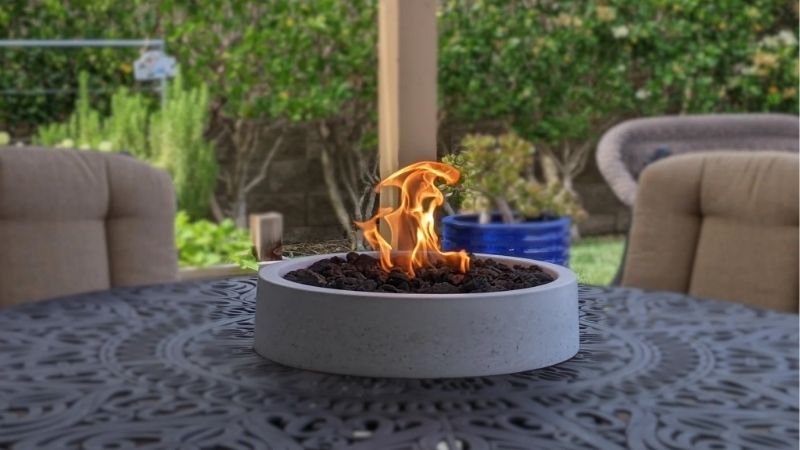
| Solo Stove Cinder | Best for Small Tables | Sealed gel can; 6-in diameter; 5.62 lb | $49.99 | Requires compatible replacement gel cans |
| Solo Stove Geo | Best for Fixed Centerpieces | Sealed gel can; 8.125-in diameter; 14 lb | $99.99 | Weight limits grab-and-go portability |
Solo Stove Mesa XL: Best Overall
Best For: Outdoor hosts who want actual wood flames on a small table without the footprint of a ground fire pit.
The Mesa XL is the strongest all-around choice because it accommodates two solid fuels without introducing a gas hose, a fuel canister rack or an exposed liquid reservoir. Compared with the City Bonfire tin, you can keep the flame going by adding appropriate wood or pellets rather than using up a self-contained fuel charge. Its tradeoff is familiar campfire upkeep: ignition materials, ash removal and enough attention to avoid letting a small fuel load burn down unexpectedly.
Solo Stove’s product page for Mesa XL with stand identifies a 304 stainless steel body and a dual-fuel grate for wood pellets or appropriately sized wood. The maker describes roughly 45 to 60 minutes of pellet burn time under its stated conditions, not an independently measured guarantee. Its October 2026 product listing shows $99.99 for the Mesa XL configuration. That places it above the East Oak Mini Fuoco even though both offer small wood fires.
With the supplied stand, the Mesa XL measures 7 inches across and 8.6 inches high and weighs 2.3 pounds, according to Solo Stove’s Mesa product specifications. It can move between suitable patio tables after completely cooling, but the stand does not make a wood table or plastic deck furniture automatically heat-safe. The maker specifically says outdoor use only, warns that heat can accumulate underneath and advises against operating below a canopy or umbrella. Its qualified lifetime warranty covers manufacturing defects rather than exhausted fuel or accidental scorch marks.
Pros:
- Accepts both wood pellets and small wood pieces on its built-in grate.
- Included stand elevates a 7-inch stainless body above a suitable table.
- Maker cites 45 to 60 minutes of operation per pellet load.
Cons:
- Wood fire demands ash disposal and attentive refueling through the evening.
- Its $99.99 list price is roughly double the East Oak alternative.
Who Should Buy It: Pick Mesa XL for a reusable outdoor centerpiece with real embers; buy the East Oak Mini Fuoco if a lower upfront cost outweighs Mesa’s accessory ecosystem.
East Oak Mini Fuoco: Best Value
Best For: Buyers who use pellets regularly and want a real flame without paying the Mesa XL price.
The Mini Fuoco makes sense when a wood or pellet fire is nonnegotiable but the spending ceiling is closer to fifty dollars. It offers the secondary-airflow approach buyers seek in low-smoke tabletop designs, yet uses a wider upper rim than its six-inch combustion opening might suggest. That distinction matters when fitting a fire into the middle of a dinner table: check the outside body, not just the fire chamber. The advantage over sealed-gel bowls is freedom to choose a solid fuel supply.
East Oak’s product page for the Mini Fuoco 6-Inch Smokeless Fire Pit lists $49.99 in October 2026 and specifies 304 stainless steel, wood chips or pellets, and 1,000 grams of pellet capacity. East Oak also states a 60 to 90 minute burn range; that figure depends on fuel and conditions and has not been independently replicated for this article. Its published three-year warranty term is shorter than Solo Stove’s lifetime manufacturing-defect policy, which is a material difference for owners who store gear outside.
East Oak measures the Mini Fuoco at 7.2 inches across the upper outside rim, with a 6-inch inner diameter, and reports 4.0 pounds of weight. That is heavier than the Mesa XL despite the smaller advertised chamber. The manufacturer’s assembly instructions call for proper placement of the stand, fire ring and body; its care guidance recommends dry storage and gentle cleaning once cool. Empty ash only when cold, using a metal container appropriate for fire debris rather than tipping it into a plastic trash can.
Pros:
- Maker lists a 1,000-gram pellet capacity for longer small-fire sessions.
- Current $49.99 price undercuts the Mesa XL by a substantial margin.
- Three-year maker warranty provides a stated support term for the body.
Cons:
- Its 4-pound weight is relatively substantial for packing on hikes.
- The solid-fuel chamber still produces embers and requires cold-ash cleanup.
Who Should Buy It: Choose Mini Fuoco for budget-conscious pellet sessions on a stable patio surface; move to Solo Stove Mesa XL if lower carry weight and branded accessories matter more.
Flame King FK-TTFP: Best for Adjustable Gas
Best For: Patio diners who want an adjustable flame without transporting pellets, kindling or a container of ash.
Gas changes the evening’s rhythm: you can turn down the flame instead of waiting for burning pellets to settle, and shutting off the gas is more straightforward than managing a glowing bed of coals. Flame King’s FK-TTFP occupies a different buying niche from Mesa XL and Mini Fuoco, though it is not fuel-free convenience. You must purchase and correctly fit an approved cylinder, and the tabletop must accommodate both the burner and its supply arrangement.
Flame King’s FK-TTFP product page identifies propane and butane compatibility, an adjustable knob, a supplied butane adapter, a mesh screen and lava stones. It states that the fuel cylinders are sold separately and lists a one-year manufacturer’s defect warranty. Home Depot’s U.S. product listing for model FK-TTFP shows $61.36 as of October 2026; Flame King’s own product page does not post a list price. The brand describes the unit as CSA-approved, although buyers should check the exact model documentation rather than assuming every Flame King burner has the same listing.
The current FK-TTFP product specification page gives dimensions of 8 by 8 by 11 inches and a weight of 7 pounds. A larger propane tank can be connected only with the compatible optional hose and the table arrangement specified by Flame King, including an umbrella opening where required. Keep the cylinder upright, inspect connections as directed and never use the burner indoors or in an enclosed porch. A gas flame avoids wood smoke but still makes hot surfaces and combustion gases.
Pros:
- Adjustable gas valve offers flame control absent from wood-fired designs.
- Included butane adapter provides a second maker-approved gas fuel option.
- Mesh screen and lava stones come with the FK-TTFP burner.
Cons:
- A compatible propane or butane cylinder adds an immediate purchase.
- The optional large-tank hose has restrictive table-placement requirements.
Who Should Buy It: Choose FK-TTFP when flame control and ash-free shutdown dominate; the City Bonfire Portable Fire Pit is simpler for a picnic without gas equipment.
City Bonfire Portable: Best for Picnics
Best For: People carrying a tiny one-piece outdoor flame to a picnic or a short evening beside a campsite.
The City Bonfire is closer to a ready-to-light portable campfire than a miniature metal stove. It removes assembly and the need to haul logs, and its lid provides a prescribed way to extinguish the flame. That convenience makes a difference for a one-off s’mores gathering, particularly when everyone is packing up supplies afterward. It is less compelling for frequent nightly use: eventually the wax and embedded briquettes are consumed, while the East Oak or Mesa can be fueled again with ordinary suitable pellets.
City Bonfires’ current listing and its product page for the single City Bonfire lists a $24.95 price and describes soy wax with plant-based briquettes in a recyclable steel container. The maker states a 3 to 5 hour burn duration under its conditions, rather than promising the same length for every windy outing. The page expressly limits use to outdoors and describes extinguishing the fire with its supplied lid. A separate City Bonfires accessories page lists an optional wrought-iron trivet, which is a sensible addition if the existing tabletop is not made for direct heat exposure.
The compact steel tin measures about 4 inches wide and 2 inches tall and weighs approximately 1 pound, according to City Bonfires’ specifications. That small size makes it easy to pack, but also easier for a careless guest to knock into plates or napkins. Place it centrally on a firm, noncombustible trivet and never touch or move the can while burning. Because the wax is part of the original product rather than a removable generic fuel cartridge, ongoing use involves buying more City Bonfires rather than pouring in liquid fuel.
Pros:
- Four-inch tin fits into a small outdoor picnic kit.
- Maker claims 3 to 5 hours from its factory-filled wax.
- Included metal lid can snuff the flame as instructed.
Cons:
- Exhausted wax means purchasing another filled tin for the next outing.
- Compact size demands care around tableware and moving guests.
Who Should Buy It: Buy the City Bonfire for occasional outdoor picnics and simple transport; Flame King FK-TTFP is better for diners who need adjustable flame height.
Solo Stove Cinder: Best for Small Tables
Best For: Owners of compact patio side tables who prefer replaceable gel cans to loose wood or poured liquids.
The Cinder combines a contained gel-fuel system with an unusually compact concrete shell, making it attractive where a metal wood burner would overwhelm the furniture. It is a decorative light source first; do not buy it to take the chill off an entire seating area. Unlike open bowls that require pouring liquid alcohol onto a burning surface, this Solo Stove design uses a manufacturer-specified fuel canister that is replaced as a unit. That distinction matters following the CPSC’s pooled-alcohol safety warnings, although a contained flame still requires supervision.
Solo Stove’s product page for the Cinder Tabletop Bowl, natural finish, lists $49.99 and specifies its Smokeless Gel Fuel cans. The company states up to three hours per can and explains that the can may be relit until the original gel is consumed, following its directions. Cinder uses molded concrete, copper details and a bamboo base; its manufacturer warranty addresses qualifying defects. Fuel is a separate recurring purchase, so the model’s lower upfront price compared with Mesa XL is not its total cost over a season.
The Cinder bowl is 6 inches in diameter, stands 4.25 inches high and weighs 5.62 pounds per the maker’s specifications. Its low shape fits a modest table better than the taller gas Flame King, although its concrete weight discourages carrying it in a daypack. Solo Stove permits certain indoor use with specified gel fuel; for a mixed household and patio purchase, treat outdoor placement as the conservative default and follow the full manual, ventilation requirements and local fire code. Do not move a warm bowl, and never substitute loose alcohol or an unapproved refill.
Pros:
- Six-inch footprint occupies little space on a properly protected side table.
- Up to three hours of maker-stated burn from one gel can.
- Replaceable sealed fuel format keeps loose liquid out of the setup.
Cons:
- Brand-specific gel cans create an ongoing supply requirement.
- The flame is decorative rather than a credible outdoor heating solution.
Who Should Buy It: Choose Cinder for compact gel-can ambiance; the City Bonfire Portable Fire Pit is lighter for one-off outdoor picnics.
Solo Stove Geo: Best for Fixed Centerpieces
Best For: Hosts with a substantial outdoor dining table who prefer a weighty decorative bowl over portable camping gear.
The Geo is for a different kind of ownership than the grab-and-go City Bonfire. Its substantial concrete construction and angled presentation make sense where the fire bowl will live on one suitable table, with the flame providing atmosphere rather than wood-fire heat. Its fuel mechanism is similar to Cinder’s, so the reasons to pay more are the look, mass and larger visual presence, not a claim of stronger combustion. Avoid it if you expect to carry the bowl from a patio to a park every weekend.
Solo Stove’s product page for the Geo Tabletop Fire Bowl lists $99.99 for the selected version in October 2026. It specifies compatible Smokeless Gel Fuel cans with a maker-stated burn duration of up to three hours per can, and the bowl is made with concrete and bamboo materials. Solo Stove’s published lifetime warranty is limited to qualifying product defects. Since the flame system consumes proprietary cans, calculate replacement-fuel availability before treating the bowl as a one-time décor purchase.
Geo measures 8.125 inches across, 5.125 inches high and weighs 14 pounds, according to Solo Stove’s Geo product specifications. That mass makes its supporting table’s rated capacity and stability important, especially where people routinely pull out chairs or pass dishes. Its finish can be wiped with a soft damp cloth after cooling; the maker advises against abrasive cleaners. The bowl is described by Solo Stove as compatible with certain indoor setups, but an enclosed room, balcony or apartment does not automatically satisfy building rules or safe ventilation, so confirm both before use.
Pros:
- Fourteen-pound concrete body suits a dedicated, stable outdoor location.
- 8.125-inch diameter provides a larger decorative presence than Cinder.
- Gel can replacement avoids collecting and disposing of wood ash.
Cons:
- Not practical for a lightweight folding table or frequent travel.
- The $99.99 purchase still depends on ongoing compatible gel supplies.
Who Should Buy It: Select Geo for a permanent patio centerpiece with adequate table strength; the City Bonfire Portable Fire Pit better suits travel and short visits.
How to Choose a Tabletop Fire Pit
Start with how the unit feeds its flame and where the fire can legally operate. Tabletop does not mean safe for a wooden dining table, a covered balcony or an indoor coffee table. The CPSC’s December 2024 consumer alert, identified as warning 25-074, tells buyers to stop using open-reservoir pooled-alcohol tabletop fire pits that can produce dangerous pool fires and flame jetting. Its July 2026 warning 26-615 additionally names Houswise models Vesper, Altair, Quad and Astra. Check current recall and safety notices for the precise product, rather than assuming a fashionable small fire is inherently low-risk.
Choose a Fuel Format Before a Finish
Solid fuel offers crackling wood and a reusable burn chamber. Mesa XL and Mini Fuoco accept specified pellets or small dry wood, but both demand lighting supplies, fire-aware refueling and ash management. Gas offers an adjustable flame on the FK-TTFP, but cylinders and approved connectors add setup responsibilities. The City Bonfire uses soy wax already placed in its tin, while Cinder and Geo require the maker’s compatible gel-fuel cans. Do not pour rubbing alcohol, ethanol or other liquids into an improvised container as a shortcut to any of these systems.
Neither a gel can nor a wax fire is automatically safe in a room because it creates little visible smoke. The appliance instructions, ventilation, carbon monoxide protection when appropriate, building policies and local fire rules govern actual use. For the wood and gas options here, plan on outdoor operation only. If an apartment prohibits open flames on balconies, choose an electric lighting effect rather than attempting to find an exception in the product description.
Measure the Table, Not Just the Fire Bowl
A 7-inch rim does not describe everything you need to clear. Account for the height of the fire, the stand, dishes, elbows, tablecloths and the distance to umbrellas or overhead coverings. Compare the 4-inch City Bonfire, 7-inch Mesa XL, 8-inch Flame King body and 8.125-inch Geo footprint against the actual usable surface. East Oak also reports separate 6-inch internal and 7.2-inch external dimensions, a useful reminder that advertised opening size is not the same as table space consumed.
Use a stable, noncombustible base that follows the manufacturer’s support instructions; a folding stand or bamboo trim does not itself prove that a composite tabletop tolerates the heat. In its 2022 educational safety reference, the National Fire Protection Association advises keeping personal fireplaces outdoors, well away from the home and combustible materials, and never leaving fire pots unattended. Local clearance rules and model manuals may be more restrictive. Watch pets and children throughout the entire cool-down period, not only while flames are visible.
Think About Burn Time and Repeat Purchases
Maker-published duration figures describe different fuels, not directly comparable laboratory measurements. East Oak reports 60 to 90 minutes per fuel load, Solo Stove reports roughly 45 to 60 minutes on pellets for Mesa XL, City Bonfires says 3 to 5 hours for its wax tin, and Solo Stove quotes up to three hours per gel can. Wind, initial fuel quantity and relighting all change what owners experience. Flame King’s gas duration depends on the selected approved cylinder and flame setting rather than a universal timetable.
A fifty-dollar solid-fuel model may be economical for regular use when dry pellets are already available. By contrast, a gel bowl asks you to keep buying the exact canister type, and a wax tin has a finite amount of factory-installed fuel. Compare the price of each compatible consumable and how often you actually entertain before selecting a low sticker price. The gas option also needs a cylinder that is not supplied with the burner; do not omit that from your shopping total.
Check Cleanup and Storage Logistics
Pellet users must wait for the ashes and stove to cool fully before emptying the chamber into a suitable metal ash container. Store the metal pit dry to limit surface staining and corrosion. With gel models, the maker describes replacing the finished can rather than shoveling ashes; the City Bonfire closes with its dedicated snuffing lid. Never reseal or handle hot fuel containers before the device instructions allow it, and do not invent homemade fuel refills. For FK-TTFP, close the gas supply and check the manufacturer’s cylinder removal and storage procedure.
Finally, distinguish storage weight from cooking suitability. The Mesa XL weighs 2.3 pounds, while Geo weighs 14; that difference matters more than decorative appearance for a camping kit. Marshmallow use must be allowed by the exact fuel label: Solo Stove says its Pure gel can be used for roasting but specifically prohibits cooking over the citronella-scented version. If food preparation is central to the outing, buy the correct approved fuel and dedicated roasting utensils, then follow normal food-hygiene practices.
Frequently Asked Questions
The answers below address decisions that product photos rarely settle: how much warmth you actually get, the difference between a flame ban and a product approval, and what to check after purchase. The details depend on the precise fuel system and where you plan to light it.
Will a Mini Fire Pit Warm Four People?
No, a tabletop unit this small should not be purchased as the primary heater for four adults on a cold patio. A real flame can feel pleasant at close range, but its output, height and exposure to wind differ dramatically from a larger outdoor heater. The listed models prioritize atmosphere and portability; even Flame King’s adjustable gas flame is not a substitute for a properly rated space-heating appliance.
If warmth is the main need, compare an outdoor heater’s rated output and the manufacturer’s clearance requirements. Do not solve poor warmth by bringing a wood, gas or wax fire into an enclosed tent or room. Combustion products and hidden fire hazards remain relevant even if the flame looks small.
Can I Use One During a Local Burn Ban?
Not automatically. Local restrictions can distinguish between recreational wood burning, contained gas appliances and other open flames, and those rules can change with wind and drought. Some gas models are marketed as acceptable during many fire restrictions, but that does not override a municipal or park prohibition. Contact the relevant fire authority or campground before lighting a tabletop unit.
Check whether the rules also prohibit flames under balconies, canopies or on shared apartment property. A product’s fuel type or claimed certification does not grant permission to operate it in a location where open flames are banned.
How Do I Check Whether a Model Was Recalled?
Search the U.S. Consumer Product Safety Commission’s recall and product-warning database using the exact brand, model and any number printed on the packaging. A vague listing titled tabletop fireplace is not enough identification. Check whether a warning says stop using the item rather than merely modifying the operating instructions.
For context, the CPSC’s October 17, 2024 recall 25-015 covered Colsen-branded tabletop fire pits that used poured liquid alcohol, while its July 2026 warning 26-615 identified specified Houswise designs. Do not resell, gift or continue using a product when the agency directs disposal.
Is a Glass Patio Table an Acceptable Base?
Only when both the table maker and fire-pit maker explicitly allow the heat exposure and the necessary stand or barrier is present. Tempered glass is not the same as a surface rated for an open flame, and a concentrated hot spot can damage supporting furniture. Placing a small wood burner in the center of a glass table because it looks attractive is not a safety assessment.
Use an appropriately rated noncombustible support on level ground instead if either manual is unclear. Do not improvise with towels, placemats, untreated wood or thin kitchen trivets; those may shift, char or transmit heat.
Final Thoughts
For an outdoor setting that allows a real tabletop wood flame, the Solo Stove Mesa XL remains our Best Overall: its two supported solid-fuel options and included stand provide the most flexible mix for repeated gatherings. Before checking out, measure the actual distance from flame to chairs, fabric and overhead structures, not merely the fire pit’s diameter. If your table cannot accept a hot burner or your building forbids open flames, the correct purchase is no fire pit at all; use a flameless centerpiece instead. If it can, check today’s seller price, permitted location and current CPSC notices for the exact model.