Key takeaways
- Pro: Unbeatable upfront price at $59.99.
- Pro: Instant Ink trial removes early cost anxiety.
- Con: No automatic duplex; you flip pages by hand.
Most people who search for what is the best printer for home use are not looking for a print-shop replacement. They need a machine that sits quietly on a desk or shelf, produces legible documents for taxes, schoolwork, and shipping labels, connects over Wi-Fi without a driver nightmare, and does not drain the wallet every refill cycle. The problem is that the market floods buyers with near-identical specs while the real differentiators—ink cost per page, duplex reliability, and whether a phone actually talks to the printer on the first try—get buried in marketing copy.
What separates a good home printer from a frustrating one in 2026 comes down to three things: whether the manufacturer has solved its own software ecosystem (HP’s Instant Ink versus Canon’s PIXMA app versus Brother’s iPrint), whether the unit handles two-sided printing without manual page flips, and how compact the chassis is for the paper capacity it offers. Below, we compared published specifications, listed prices, and recurring owner feedback across eight models to narrow the field for everyday household and small-office use.
Our top picks


As an Amazon Associate we earn from qualifying purchases at no extra cost to you. Ratings are shown as listed on Amazon.
Quick Picks
| Product | Best for | Price |
|---|---|---|
| HP DeskJet 2955 | Tightest budget entry | $59.99 |
| Canon PIXMA TS6520 | Photo-quality color on a budget | $80.48 |
| Canon PIXMA TS4320 | Small desks, minimal footprint | $69 |
| Canon PIXMA TR4720 | Fax + ADF combo on a budget | $69 |
| HP Envy 6155 | Best all-around home office | $89.99 |
| Canon PIXMA TR7120 | Compact ADF with modern controls | $99 |
| Brother MFCJ1360DW | Heavy scan and duplex volume | $99.98 |
| HP DeskJet 2855e | HP buyers who want the cheaper model | $89.99 |
How We Picked
We evaluated each model against four criteria that consistently drive owner satisfaction or frustration: total ink cost over 12 months of typical home use, wireless setup reliability and app quality, automatic duplex and paper-handling capability, and physical footprint relative to feature set. A printer that scores well on hardware but fails on software—dropping Wi-Fi connections, requiring repeated firmware updates, or bundling aggressive ink subscriptions you cannot cancel—was ranked lower regardless of paper specs.
The 8 Best What Is The Printer For Home Use in 2026
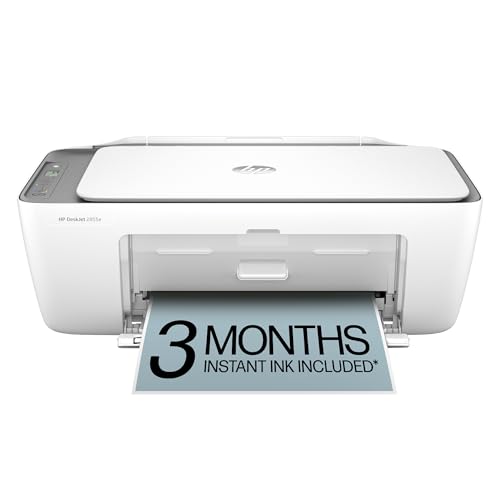
HP DeskJet 2955
The lowest-priced entry point on this list, the DeskJet 2955 covers print, scan, and copy in a compact chassis that fits a narrow shelf. Its three-month Instant Ink trial lets you evaluate subscription economics before committing, and the AI-capable smart features auto-recognize document types.
- Pro: Unbeatable upfront price at $59.99.
- Pro: Instant Ink trial removes early cost anxiety.
- Con: No automatic duplex; you flip pages by hand.
Skip it if you print more than a few two-sided pages weekly—the manual reversal adds up quickly.
Canon PIXMA TS6520
This model targets households that print photos or color-rich school projects alongside standard documents. The five-cartridge system (including dedicated photo black) delivers sharper color gradients than the four-cartridge competitors at this price tier.
- Pro: Automatic duplex printing eliminates manual page flips.
- Pro: Separate photo and matte black cartridges produce gallery-style prints.
- Con: Five individual cartridges mean more replacements and higher ink cost over time.
Skip it if you only print text documents; the extra cartridges are wasted money.
Canon PIXMA TS4320
The smallest unit in this roundup, the TS4320 is designed for apartment dwellers or students with a single shelf beside a laptop. Canon’s PIXMA app handles mobile printing cleanly, and the fold-flat design means it disappears when not in use.
- Pro: Compact enough for a nightstand or narrow desk edge.
- Pro: Solid mobile print and scan via PIXMA app.
- Con: Small paper tray requires frequent refilling if you print in batches.
Skip it if you handle multi-page documents weekly; the tray size becomes a chore.
Canon PIXMA TR4720
For home offices that still receive paper faxes or need to scan stacks of documents, the TR4720 is one of the few budget models bundling an automatic document feeder alongside built-in fax. The ADF lets you batch-scan without feeding pages one by one.
- Pro: Automatic document feeder simplifies multi-page scanning.
- Pro: Built-in fax and mobile printing in a $69 package.
- Con: Duplex printing is manual, so two-sided scans require flipping the stack.
Skip it if fax is irrelevant to your workflow; the TR7120 offers a more modern panel.
HP Envy 6155
The Envy line is HP’s step up from the DeskJet, and the 6155 earns its spot as the most balanced all-around option. Automatic duplex, faster print speeds than the DeskJets, and a larger paper tray combine with the same Instant Ink ecosystem for lower long-term ink costs.
- Pro: Automatic duplex plus faster output suits weekly multi-page printing.
- Pro: Larger input tray reduces refill frequency.
- Con: Slightly bulkier than the DeskJet models on this list.
Skip it if desk space is severely limited; the footprint is noticeably wider.
Canon PIXMA TR7120
Canon’s compact ADF contender pairs a flatbed scanner with a document feeder and an intuitive control panel that makes setup and daily operation straightforward. The white finish suits modern home decor, and the overall design feels more current than the TR4720.
- Pro: ADF plus flatbed covers both quick-scan and book-scanning needs.
- Pro: Clean, intuitive panel reduces setup confusion.
- Con: Lacks automatic duplex, so two-sided printing is manual.
Skip it if duplex is a dealbreaker; the Brother MFCJ1360DW handles it automatically.
Brother MFCJ1360DW
Brother’s workhorse targets households that scan and print in higher volumes than typical. The auto document feeder, automatic two-sided printing, and dedicated wireless band support give it a productivity edge, and Brother’s reputation for low-cost third-party toner extends to its ink cartridges.
- Pro: Automatic duplex plus ADF for true two-sided scan-and-copy workflows.
- Pro: Competitive ink-per-page cost among inkjet all-in-ones.
- Con: Bulkiest chassis here; plan your shelf before buying.
Skip it if you need a compact machine for a small desk.
HP DeskJet 2855e
Essentially a step down from the Envy 6155, the 2855e retains the DeskJet compact form factor with Instant Ink compatibility. The critical limitation is its 2.4 GHz-only Wi-Fi—older routers and congested apartment networks handle it fine, but it will not connect to a 5 GHz band.
- Pro: Instant Ink trial and familiar HP app ecosystem.
- Pro: Compact size suits small home setups.
- Con: 2.4 GHz-only Wi-Fi causes dropouts on mixed-band networks.
Skip it if your router is set to 5 GHz only or you experience frequent Wi-Fi interference.
Buying Guide
Ink Cost Per Page and Subscription Models
Upfront hardware price is the smallest part of a printer’s true cost. HP’s Instant Ink plans charge by page rather than cartridge, which can reduce annual ink spending by half for moderate users. Canon’s five-cartridge systems cost more to replace but deliver better photo output. Brother tends to have the lowest generic-compatible ink prices, though that can void warranty claims.
Connectivity and Mobile Print Reliability
Wi-Fi band matters more than most buyers realize. A 2.4 GHz-only printer on a network where the router defaults to 5 GHz will fail to connect or drop frequently. Look for dual-band support or confirmed 2.4 GHz compatibility with your specific router. App quality also differs: HP Smart, Canon PRINT, and Brother iPrint all work, but owner feedback consistently flags HP Smart’s subscription prompts as the most aggressive.
Duplex, ADF, and Paper Handling
Automatic duplex saves time and paper for anyone printing more than ten pages weekly. An ADF is essential if you scan receipts, contracts, or multi-page forms regularly. Without an ADF, every scan requires lifting the lid and placing pages individually—a small friction that compounds over hundreds of uses per year.
Our Verdict
Top pick: The HP Envy 6155 offers the best balance of automatic duplex, paper capacity, connectivity, and ink-subscription value for most home offices at $89.99. Budget pick: The HP DeskJet 2955 at $59.99 is the smartest entry point if you print occasionally and accept manual duplex. Alternative winner: If you scan multi-page documents weekly and need automatic two-sided printing, the Brother MFCJ1360DW outperforms every other model here despite its larger footprint.
FAQ
Do I really need a printer if I work from home?
Most people do, at least occasionally—tax forms, shipping labels, contracts for signature, and school documents still require physical output. A $60 inkjet that sits idle most weeks costs less than any single trip to a print shop.
Is Instant Ink worth the monthly subscription?
For anyone printing 50 or more pages per month, yes. The per-page rate is typically well below retail cartridge pricing. Light users printing under 15 pages monthly will save more by buying cartridges on sale.
Can I use a printer without Wi-Fi?
Every model on this list supports USB direct connection as a fallback. You lose mobile printing and wireless scanning convenience, but the printer remains fully functional for a single computer.
What is the biggest difference between a DeskJet and an Envy?
Envy models add automatic duplex, faster print speeds, a larger paper tray, and more reliable wireless radios. The price gap of $30 to $50 buys roughly a decade of time saved on manual page flips and refills.