Key takeaways
- Pneumatic Brad Nailer Setup: If you start from scratch, you will buy a quality pneumatic gun ($70), a 6-gallon pancake compressor ($120 to $150), and a 50-foot hybrid air hose with fittings ($30). Your initial investment is roughly $220 to $250. Over five years, your maintenance costs are near zero—perhaps $10 for a bottle of pneumatic tool oil. Because pneumatic tools do not use batteries, the tool will run perfectly in year five with no additional costs. Total 5-Year Cost: ~$260.
- Cordless Finish Nailer Setup: A high-end cordless nailer kit with a battery and charger typically runs between $250 and $350. While your initial setup is clean and simple, lithium-ion batteries have a finite lifespan. By year four or five, a heavily used battery will begin to lose its charge capacity, requiring a replacement battery pack ($80 to $130). Total 5-Year Cost: ~$380 to $480.
When you are standing in the middle of a home renovation project, staring at a pile of uninstalled baseboards or window casing, the tools you choose will directly dictate your frustration levels. The debate between a pneumatic brad nailer vs cordless finish nailer isn’t just about how the tool is powered—it is a fundamental trade-off between weight, holding power, setup speed, and long-term cost.
For decades, pneumatic tools were the undisputed standard for trim carpentry. They are lightweight, inexpensive, and run forever. However, modern battery technology has mounted a massive challenge. Today’s DIYers and professionals are increasingly willing to cut the cord, trading the reliability of air hoses for the ultimate portability of lithium-ion cells. To make the right choice, you must understand how these tools differ in gauge sizes, mechanical holding power, and everyday ergonomics.
Our top picks



As an Amazon Associate we earn from qualifying purchases at no extra cost to you.
Quick Verdict
If you already own an air compressor, work primarily in a dedicated workshop, or have a whole house of trim to install where tool weight will cause wrist fatigue, choose a pneumatic brad nailer. It offers unmatched light weight (usually under 2.5 pounds) and a highly affordable entry price.
If you live in a multi-story home, hate the loud cycling of an air compressor, value a 10-second setup time, or need the stronger holding power of 15- or 16-gauge nails for heavy door jambs and crown molding, choose a cordless finish nailer (or a heavy-duty cordless brad nailer). The freedom from hoses and loud noise easily justifies the higher upfront cost and heavier physical weight.
Side by Side
To understand how these two categories stack up across key ownership metrics, review the comparative breakdown below:
| Feature | Pneumatic Brad Nailer (18-Gauge) | Cordless Finish Nailer (15/16-Gauge) |
|---|---|---|
| Comfort & Weight | Extremely lightweight (2.0 to 2.8 lbs); highly maneuverable in tight corners. | Heavy (6.0 to 8.5 lbs with battery); can cause wrist fatigue during overhead work. |
| Durability & Lifespan | Exceptional; very few moving parts; can easily last 15–20 years with basic oiling. | Moderate; complex internal motors and electronics; batteries degrade in 3–5 years. |
| Price Range | $35 to $120 (tool only; requires compressor). | $120 to $350 (often includes battery and charger). |
| Maintenance | Requires 2–3 drops of pneumatic tool oil before every use; occasional clearing of jams. | Virtually zero daily maintenance; requires keeping batteries charged and dry. |
| Space Needed | High; requires storage for the gun, a 25-to-50-foot hose, and a bulky air compressor. | Minimal; fits entirely inside a single hard case or tool bag on a shelf. |
| Aesthetic of Work | Leaves tiny, easily fillable holes; rarely splits delicate pine or MDF trim. | Leaves larger holes requiring wood filler; can split narrow molding without pre-drilling. |
| Resale Value | Low to moderate; because they are cheap new, used values stay flat. | High; name-brand battery platform tools retain significant value on the used market. |
| Best For | Intricate craftwork, delicate cabinet trim, picture frames, and high-volume nailing. | Heavy trim, exterior casings, hanging doors, and quick room-to-room repairs. |
Where Pneumatic Brad Nailer Wins
Pneumatic brad nailers excel in simplicity and physical comfort. Because the heavy motor components (the motor and air storage) are housed in an external air compressor on the floor, the tool in your hand is incredibly light. Popular models like the Metabo HPT Brad Nailer, Pneumatic 18 Gauge Adjustable Depth, NT50AE2 ($69) weigh in at just 2.2 pounds. This featherweight design allows you to work overhead on crown molding or inside tight cabinet carcasses for hours without experiencing shoulder burn.
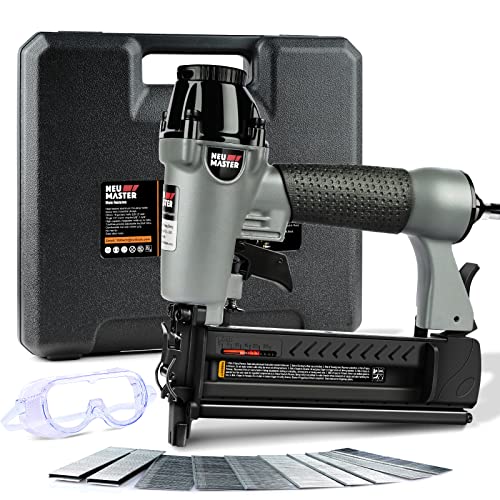
Furthermore, the cost of entry is remarkably low. If you want a versatile, budget-friendly option, a tool like the NEU Master Nail Gun, 2 in 1 Pneumatic Brad Nailer/Staple Gun ($39.99) gives you both nailing and stapling capabilities for less than the price of a tank of gas. Because these tools rely on simple physical valves and a piston driven by compressed air, there are no circuit boards to burn out or expensive lithium batteries to degrade. If you keep a pneumatic tool oiled, it will perform just as flawlessly decades from now as it did the day you unboxed it.
Finally, the 18-gauge wire used by brad nailers is incredibly thin. This means the nail leaves a pinprick hole that is barely noticeable, often requiring nothing more than a smear of paint or a tiny dab of putty to conceal. This thin profile is highly forgiving on delicate, easily split woods like cedar or thin MDF moldings.
Where Cordless Finish Nailer Wins
The primary victory for cordless finish nailers is absolute, untethered freedom. When you use a pneumatic tool, you are chained to a noisy air compressor that screeches to life at 75 to 85 decibels every time the pressure drops. You must also drag a stiff, dusty rubber or PVC hose across your clean hardwood floors, risking scuffs and tripping hazards.
With a cordless tool, you can walk into any room, slide in a battery, and start firing immediately. For premium, heavy-duty projects, a tool like the DEWALT DCN680B 20V MAX* XR® 18 GA Cordless Brad Nailer (Tool Only) ($299.99) delivers gas-free, battery-powered precision without the hassle of a compressor. While this specific model operates on the lighter 18-gauge platform, true cordless finish nailers (typically 15- or 16-gauge) provide massive mechanical holding power. A 15-gauge nail is thicker and has a distinct head that mechanically anchors heavy door jambs, thick baseboards, and exterior trim securely to the wall studs—something a delicate 18-gauge brad simply cannot do.
For DIYers who want a complete, ready-to-go system without spending a fortune, options like the SILVEL 2″ Cordless Brad Nailer, 2-in-1 21V Electric Brad Nailer ($125.99) come bundled with two 2.0Ah batteries, chargers, and safety gear. This all-in-one portability means you can easily toss the tool bag into your car trunk to help a neighbor or work on an outdoor fence without hunting for an electrical outlet to run a compressor.
Cost Over 5 Years
To truly understand the financial investment of pneumatic brad nailer vs cordless finish nailer ownership, you have to look beyond the initial purchase price of the tool body. Below is a realistic projection of what you will spend over five years of active home maintenance:
- Pneumatic Brad Nailer Setup: If you start from scratch, you will buy a quality pneumatic gun ($70), a 6-gallon pancake compressor ($120 to $150), and a 50-foot hybrid air hose with fittings ($30). Your initial investment is roughly $220 to $250. Over five years, your maintenance costs are near zero—perhaps $10 for a bottle of pneumatic tool oil. Because pneumatic tools do not use batteries, the tool will run perfectly in year five with no additional costs. Total 5-Year Cost: ~$260.
- Cordless Finish Nailer Setup: A high-end cordless nailer kit with a battery and charger typically runs between $250 and $350. While your initial setup is clean and simple, lithium-ion batteries have a finite lifespan. By year four or five, a heavily used battery will begin to lose its charge capacity, requiring a replacement battery pack ($80 to $130). Total 5-Year Cost: ~$380 to $480.
As we look at the tool landscape in 2026, battery technology has made massive strides in efficiency, meaning you get more fires per charge, but the physical degradation of lithium cells over hundreds of charge cycles remains an inevitable long-term expense.
Which One for Your Home
Small Apartment or Condominium
If you live in a home with limited storage space, a cordless nailer is the only logical choice. Storing a bulky, heavy pancake air compressor and coiled hoses in an apartment closet is a storage nightmare. A cordless tool pack fits neatly on a single shelf or in a drawer, ready to be pulled out for quick picture-framing or accent wall projects without disturbing your neighbors with compressor noise.
Family with Kids and Pets
Safety and noise are paramount when working around young children or pets. The sudden, loud bang of a pneumatic compressor cycling on can startle toddlers and terrify dogs. Additionally, a long air hose snaking through hallways presents a major tripping hazard. A cordless nailer allows you to work quietly and cleanly, keeping the work environment safe and calm.
Rental Property Owner
If you manage rental properties, you need to make rapid, on-the-go repairs. Dragging a compressor, extension cords, and hoses up three flights of stairs to fix a loose piece of baseboard is highly inefficient. A cordless tool allows you to walk into a unit, make three quick shots to secure the trim, and walk out in under two minutes.
Long-Term Home (Fixer-Upper)
If you have purchased a historic home or a fixer-upper that requires whole-house trim, paneling, and crown molding installation, go pneumatic. The sheer volume of nailing will make a heavy cordless gun feel like a barbell by the end of the day. A lightweight pneumatic gun will save your wrists, and the endless, instant power of an air compressor means you will never have to stop working to wait for a battery to charge.
FAQ
Can I use an 18-gauge brad nailer to hang a heavy exterior door?
No. 18-gauge brad nailers are designed for lightweight trim, molding, and craft projects. They lack the shear strength and holding power required to support the active weight of a heavy door. For hanging doors, you must use a 15-gauge or 16-gauge finish nailer, which fires thicker nails that penetrate deep into the structural 2×4 framing studs.
How long does a cordless nailer battery last on a single charge?
Most modern 2.0Ah to 4.0Ah batteries will easily fire between 500 and 1,000 nails per charge, depending on the hardness of the wood and the depth setting. For almost all DIY residential projects, a single fully charged battery will easily last through an entire day of work.
Do cordless finish nailers require expensive gas cartridges?
While some older cordless models relied on a combination of a battery and a pressurized gas cartridge (which required constant replacement), most modern cordless nailers are strictly battery-powered. They use flywheels or sealed compressed air chambers to drive the nail, eliminating the ongoing cost and chemical smell of gas cartridges.
Do I need to oil a cordless nailer like a pneumatic one?
No. Cordless nailers feature sealed, self-lubricating internal motors and should never be oiled. Adding pneumatic tool oil to a cordless nailer can coat the electronic sensors and ruin the motor. Always consult your specific tool manual for cleaning instructions.