Key takeaways
- Pro: Fully enclosed with multi-color capability at an accessible bundled price.
- Pro: Mature firmware and slicer ecosystem with minimal calibration surprises.
- Con: Original AMS adds bulk and a slower swap cycle than the newer unit.
What's inside
Choosing a 3D printer for a home office means balancing print quality, workflow friction, and budget. You want a machine that produces clean results on the first layer every time, supports multi-color or multi-material work if your projects demand it, and fits under a desk without dominating the room. Bambu Lab has reshaped this category by shipping enclosed, fast, and genuinely plug-and-play units, but the lineup now spans open-frame beginner beds to full enclosed systems with automatic material switching. Picking the right configuration for your actual workflow is the real challenge.
What separates a strong pick from a mediocre one is not headline speed or spec-sheet numbers. It is whether the printer’s ecosystem—filament loading, calibration, slicer software, and upgrade path—holds up over months of daily use. Owner feedback on reliability, noise, and AMS integration tells you far more than any single benchmark. The 2026 market also introduces meaningful pressure from competitors offering comparable core-XY speeds at lower prices, so brand loyalty alone should not carry your decision.
As an Amazon Associate we earn from qualifying purchases at no extra cost to you. Product prices and availability are accurate as of the date shown and are subject to change.




Quick Picks
| Product | Best for | Price |
|---|---|---|
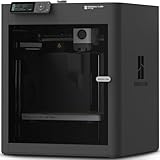
| Bambu Lab P1S Combo | Multi-color enclosed printing on a budget | $549 |
| Bambu Lab P2S Combo | Advanced multi-material work and upgrade headroom | $769 |
| Bambu Lab P1S | Single-material enclosed printing with future AMS add-on | $399 |
| Bambu Lab A1 | Beginners and kids who want an open frame | $299.99 |
| Bambu Lab A1 Combo + LED Kit | Multi-color printing without enclosure constraints | $419 |
| Bambu Lab A1 mini + LED Kit | Lowest entry point for casual or kids’ use | $249 |
| Bambu Lab P2S | Standalone enclosed machine that will accept AMS later | $569 |
| FLASHFORGE Adventurer 5M | High speed and low cost outside the Bambu ecosystem | $249 |
How We Picked
We weighed four criteria: reliability as reported by long-term owners, the maturity of the software and hardware ecosystem, price-to-capability ratio (including whether AMS or combo bundles justify their premium), and physical fit for a shared workspace such as noise level and footprint. A printer that prints fast but requires weekly tinkering scores lower than one that stays boringly consistent. We also flagged when a non-Bambu machine genuinely competes on these axes rather than just on sticker price.
The 8 Best Bambu Lab 3D Printer in 2026
Bambu Lab P1S Combo
The P1S Combo pairs the enclosed P1S with the original AMS, giving you four-color or four-material printing in a sealed chamber at a price that undercuts most enclosed multi-material alternatives. It suits makers who produce color prototypes, small-batch consumer goods, or educational kits from a home office without investing in a dedicated print farm. Owners consistently praise its out-of-the-box reliability and the quiet consistency of its CoreXY platform under the cover. The main limitation is the older AMS revision, which has a slightly slower filament swap time than the AMS 2 Pro and occupies more desk depth.
- Pro: Fully enclosed with multi-color capability at an accessible bundled price.
- Pro: Mature firmware and slicer ecosystem with minimal calibration surprises.
- Con: Original AMS adds bulk and a slower swap cycle than the newer unit.
Skip it if you print exclusively in single-color PLA or PETG and want to keep your setup minimal.
Bambu Lab P2S Combo
The P2S Combo represents Bambu Lab’s current flagship enclosed bundle, pairing the updated P2S chassis with the AMS 2 Pro for faster filament changes, improved purge management, and better multi-material reliability. It is aimed at users who already know they need four-plus spools and want the smoothest possible swap experience without building a custom solution. The P2S frame itself runs noticeably quieter than the P1S at high acceleration, and the upgraded hotend tolerates a wider material range out of the box. The trade-off is straightforward: nearly double the cost of a standalone P1S, which is hard to justify for occasional multi-color work.
- Pro: AMS 2 Pro delivers the fastest and cleanest filament swaps in Bambu’s current lineup.
- Pro: Wider material compatibility and quieter high-speed operation than the P1S.
- Con: Premium pricing is difficult to rationalize for hobbyists who rarely need multi-color output.
Skip it if your budget is firm under $600 and single-material prints cover most of your projects.
Bambu Lab P1S
The standalone P1S at $399 is the value anchor of Bambu Lab’s enclosed line. You get the same CoreXY platform, sealed chamber, and auto-calibration pipeline as the Combo, minus the AMS. For users who primarily print engineering-grade materials like PETG, ABS, or nylon—where enclosure matters far more than color—the P1S is the logical starting point. The AMS can be added later, so the upgrade path stays open without forcing an upfront premium. Owner reports highlight long print runs with minimal babysitting, which is exactly what a busy home office needs.
- Pro: Enclosed, fast, and reliable at a price that undercuts most competitors with similar features.
- Pro: AMS-compatible, so you can add multi-color capability without replacing the printer.
- Con: No multi-color functionality included at purchase; the AMS add-on raises the total cost.
Skip it if you need color mixing from day one and want to avoid a second purchase.
Bambu Lab A1
The A1 is Bambu Lab’s open-frame entry point, and at $299.99 it is the most approachable machine in the lineup for beginners, students, or families setting up a first 3D printer at a desk. The bed-slinger design simplifies mechanical layout and reduces cost, while the auto-calibration and Bambu Studio software keep the learning curve shallow. Owners who print PLA and TPU report smooth, repeatable results straight from the unboxing. The open frame means it cannot handle ABS, ASA, or nylon well, and ambient drafts or small children’s curiosity can affect print consistency more than on enclosed siblings.
- Pro: Lowest price in the Bambu Lab family with genuinely beginner-friendly setup.
- Pro: Compact footprint suits tight desks, shelves, or shared family workspaces.
- Con: Open frame limits material options to low-warp filaments like PLA and TPU.
Skip it if you plan to print engineering materials or need consistent results in a drafty room.
Bambu Lab A1 Combo + LED Lamp Kit
At $419, the A1 Combo adds the AMS lite to the open-frame A1 and includes an LED lamp kit that mounts to the printer for clearer bed visibility. This bundle targets hobbyists who want four-color output on a budget and do not need an enclosure. The AMS lite is smaller and lighter than the full AMS, making it more practical for desk setups where the A1 already sits. Owners appreciate the lamp for time-lapse recording and first-layer inspection. The limitation remains the same as the base A1: open-frame design restricts material choice and is susceptible to environmental interference.
- Pro: Multi-color printing at the lowest total cost in Bambu Lab’s current catalog.
- Pro: LED lamp kit adds practical utility for monitoring prints and recording time-lapses.
- Con: Open frame still blocks high-temperature materials and struggles in rooms with drafts or children.
Skip it if you need ABS, nylon, or any material that demands a heated enclosure.
Bambu Lab A1 mini + LED Lamp Kit
The A1 mini at $249 is the smallest and cheapest printer in Bambu Lab’s range, and the bundled LED lamp kit makes it a genuinely fun package for kids, first-time users, or anyone with extremely limited desk space. The build volume is notably smaller than the full A1, which restricts part size and means large projects must be split or scaled. For phone stands, keychains, small figurines, and classroom projects, it excels. Setup is nearly identical to the A1, and the same Bambu Studio ecosystem applies, so skills transfer directly to a larger machine later.
- Pro: Lowest price and smallest footprint in the entire Bambu Lab lineup.
- Pro: Same software ecosystem and calibration experience as the full-size A1.
- Con: Reduced build volume means larger prints require splitting, scaling, or simply will not fit.
Skip it if your projects regularly exceed the mini’s build plate or if you plan to print functional parts with structural demands.
Bambu Lab P2S
The standalone P2S at $569 gives you the current-generation enclosed platform without forcing an AMS purchase. For users who want the quieter operation, improved hotend, and wider material tolerance of the P2S but do not need multi-color from the start, this is the smart configuration. It also suits those who prefer to add the AMS 2 Pro separately or rely on Bambu’s newer single-spool multi-material workflow. Owners of the standalone P2S report it as the most refined single-material enclosed machine Bambu Lab has shipped, with fewer first-layer surprises than early P1S units. The premium over the P1S is modest but real.
- Pro: Most refined enclosed chassis in Bambu Lab’s current range with quieter high-speed operation.
- Pro: AMS 2 Pro-compatible for a clean future upgrade path without replacing the printer.
- Con: $170 more than the standalone P1S for improvements that may feel incremental at first use.
Skip it if budget is tight and the P1S already covers your material and speed needs.
FLASHFORGE Adventurer 5M
The Adventurer 5M is not a Bambu Lab product, but it earns a spot in this roundup because it undercuts or matches several Bambu machines on price while offering a fully auto-leveling bed, a 600mm/s max speed, a 280°C direct-drive hotend, and a CoreXY all-metal frame with a 220x220x220mm build volume. At $249 it competes directly with the A1 mini on cost but delivers a larger print area and higher temperature ceiling. The trade-off is a less polished software experience and thinner community support compared to Bambu’s ecosystem. It suits price-sensitive buyers who prioritize raw specs over refined workflow integration.
- Pro: CoreXY platform with 280°C hotend and large build volume at a very low price.
- Pro: Fully auto-leveling and detachable nozzle simplify maintenance between prints.
- Con: Slicer software and community resources lag behind Bambu Lab’s mature ecosystem.
Skip it if you value a turnkey, low-friction experience and plan to rely on Bambu Studio workflows.
Buying Guide
Enclosed vs. Open Frame
The single most decisive choice in this category is whether you need a sealed chamber. Enclosed printers like the P1S and P2S maintain a stable internal temperature, which prevents warping and layer separation on ABS, ASA, PETG, and nylon. Open-frame machines like the A1 and A1 mini excel with PLA and TPU but struggle in cold rooms or with high-warp materials. If your home office has air conditioning drafts or you plan to print functional engineering parts, an enclosure is not optional.
AMS Compatibility and Multi-Color Needs
Multi-color printing adds significant cost—roughly $150 to $200 in bundle premiums—and introduces mechanical complexity. The AMS lite on the A1 Combo swaps filament more slowly than the AMS 2 Pro on the P2S Combo, and the original AMS on the P1S Combo sits between them. Evaluate whether your actual projects use more than one color or material per print. If the answer is rarely, buy the standalone machine and keep the savings.
Build Volume and Footprint
A smaller build plate means shorter setup time and a gentler learning curve, but it forces you to split or rescale any part that exceeds the bed. The A1 mini suits desktop trinkets; the full A1 and enclosed P-series handle most household and prototyping tasks without compromise. Measure the available surface area on your desk before purchasing, because enclosed units with an AMS tower demand considerably more depth and width than the printer alone.
Our Verdict
The P1S Combo at $549 is the best overall pick for most home-office users who want enclosed, reliable, multi-color printing without spending flagship money. For the tightest budget, the A1 mini + LED Kit at $249 is the right first machine, especially for kids or small novelty projects. If you print mostly single-color engineering filaments and want the quietest, most refined enclosed experience, the standalone P2S at $569 wins—its improvements over the P1S are felt daily on long, high-speed prints.
FAQ
Do I need an AMS to use a Bambu Lab printer?
No. Every printer in this list functions as a standalone single-spool machine. The AMS is an optional multi-material system that you either buy bundled or add later, depending on your need for color or material switching.
Can the A1 mini handle PETG or ABS?
PETG is possible with enclosure accessories but inconsistent without a sealed chamber. ABS and other high-warp materials are not practical on the open-frame A1 mini due to draft sensitivity and lack of active heating in the build space.
Is the FLASHFORGE Adventurer 5M a good alternative to Bambu Lab?
It competes strongly on price and raw specs like speed and hotend temperature. Where it falls short is software polish, slicer integration, and the breadth of community troubleshooting resources that Bambu Lab’s ecosystem provides.
Which printer is quietest for a shared workspace?
The enclosed P2S is the quietest in normal operation thanks to its sealed chamber dampening stepper and fan noise. The A1 and A1 mini are louder at high speed, and the FLASHFORGE sits in between depending on acceleration settings.