Key takeaways
- 64MP stills deliver crop room that lower-megapixel units cannot match
- Two-pack pricing under $100 is aggressive for this resolution tier
- No cellular means you must physically retrieve the SD card for every photo review
Game cameras are one of those purchases where the cheapest option can quietly cost you more than a mid-range model. A trail cam that triggers too slowly misses the shot entirely; one with a battery that dies in three days forces a monthly hike to a remote setup. The gap between a unit that earns its keep season after season and one that collects dust in a garage is often a single specification — trigger speed, image resolution, or whether it sends alerts to your phone at all.
Comparing these eight models on published specs, listed prices, and what owners report over months of use reveals a market split into three tiers: budget non-cellular cameras that deliver surprisingly high megapixel counts, mid-range cellular units that trade resolution for convenience, and multi-pack bundles designed for people who need coverage across several sites without managing subscriptions. The right pick depends on whether you prioritize image detail, remote access, or cost per camera.
Our top picks

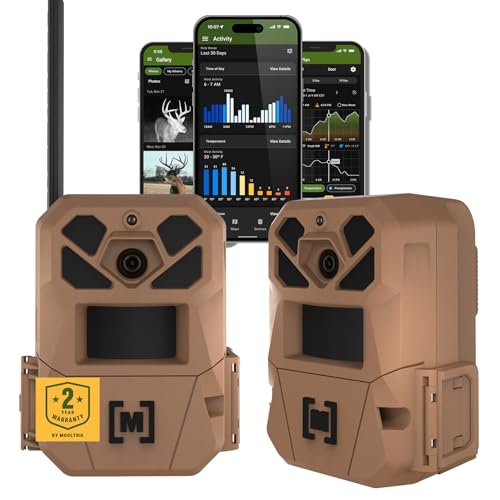


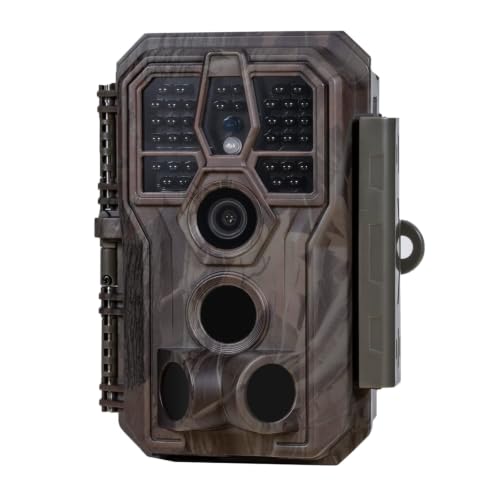


As an Amazon Associate we earn from qualifying purchases at no extra cost to you.
Quick Picks
| Product | Best for | Price |
|---|---|---|
| GardePro E5S 2-Pack | High-resolution scouting on a budget | $99.98 |
| Moultrie Edge 3 Cellular 2-Pack | Fast trigger speed with cellular alerts | $99 |
| SPYPOINT Flex-M Twin Pack | Reliable remote monitoring without WiFi | $89.99 |
| WOSODA 2-Pack (Non-Cellular) | Lowest entry price for decent image quality | $59.99 |
| WOSODA 2-Pack (with SD Card) | Plug-and-play setup for beginners | $69.99 |
| GardePro E5S Single | Maximum megapixels per dollar | $49.99 |
| TACTACAM Reveal X 3.0 | Compact cellular camera for discreet placements | $94.77 |
| WOSODA Mini 4-Pack | Wide-area coverage with tiny cameras | $169.99 |
How We Picked
We narrowed this list on four criteria that owners cite most in long-term feedback: trigger speed relative to the listed spec, image quality at night (not just daytime), true battery life in the field, and whether the price includes cellular connectivity or locks you into a separate subscription. A camera that checks all four boxes earns a spot regardless of brand recognition.
The 8 Best Game Cameras in 2026
GardePro E5S 2-Pack Non-Cellular Trail Camera
This bundle suits hunters and wildlife watchers who want the highest still-image resolution in the lineup without a monthly fee. Two 64MP cameras plus 1296P video cover multiple sites at once, and owners consistently note the sharpness of daytime images as a standout advantage over pricier cellular rivals.
- 64MP stills deliver crop room that lower-megapixel units cannot match
- Two-pack pricing under $100 is aggressive for this resolution tier
- No cellular means you must physically retrieve the SD card for every photo review
Skip this one if you check your cameras only a few times per season and want alerts pushed to your phone while you are at home.
Moultrie Edge 3 Cellular Trail Camera – 2-Pack
For buyers who want speed and connectivity in equal measure, this two-pack pairs a 0.5-second trigger with cellular transmission. Owners report catching full-body deer images where slower cameras produce only an ear or tail. The 40MP sensor is mid-range on paper but produces usable detail in field conditions.
- 0.5s trigger speed captures fast-moving subjects reliably
- Cellular connectivity removes the need for WiFi or physical card pulls
- Requires an ongoing data plan that adds cost over the camera itself
Skip this if your sites are in dead zones with poor LTE coverage; the cellular advantage evaporates without a signal.
SPYPOINT Flex-M Twin Pack Cellular Trail Cameras
SPYPOINT has built its reputation on no-WiFi cellular operation, and this twin pack continues that approach with dual-SIM LTE for redundant connectivity. At 28MP and 720p video it trails others on raw specs, but owners value the GPS tagging and IP65 rating for rugged deployments where reliability outranks resolution.
- Dual-SIM LTE provides a backup connection if one carrier has weak signal
- IP65 water resistance handles heavy rain and snow without a housing
- 720p video looks soft compared to 1080p or 1296P alternatives in this list
Skip this if video quality matters as much as stills; the 720p ceiling is the lowest among cellular options here.
WOSODA 2 Pack Trail Cameras with Night Vision (Non-Cellular)
At $59.99 for a pair, this is the cheapest 48MP option in the roundup and serves budget-conscious users who already have SD cards and a card reader. The 1080P video and night-vision IR perform adequately for trail-checking and property security without premium expectations.
- Lowest per-camera cost in the entire list
- 48MP stills and 1080P video outpace similarly priced competitors
- Build quality and button feel are functional rather than refined
Skip this if you operate in very cold conditions where cheaper battery chemistry loses capacity faster than premium units.
WOSODA 2 Pack Trail Cameras with SD Card
The ten-dollar premium over the base model buys included storage, which eliminates one common frustration for first-time game camera buyers: discovering after a trip to the field that the camera has no card inserted. Night vision, waterproofing, and 48MP specs mirror the base unit.
- SD card included removes a setup step and an extra purchase
- Same 48MP, 1080P hardware as the base model at a minimal markup
- No cellular or WiFi means the convenience of bundled storage is offset by manual retrieval
Skip this if you already own spare SD cards and want to save the extra $10.
GardePro E5S Non-Cellular Trail Camera (Single)
One 64MP camera for under $50 is the best resolution-per-dollar ratio in this group. It targets users who need a single site covered or want to test the platform before committing to a multi-camera setup. Video at 1296P sits between the 1080P and 4K tiers that owners describe as clearly sharper than most budget cams.
- 64MP stills for roughly $50 is unmatched in this roundup
- 1296P video exceeds the 1080P found on similarly priced rivals
- Single-camera pack means no redundancy if you need two sites monitored
Skip this if you need paired coverage; buying two singles still costs more than the two-pack above.
TACTACAM Reveal X 3.0 Cellular Trail Camera
This unit fills a niche for users who want cellular alerts in a compact, low-profile body. Owners note it is noticeably smaller than traditional trail cams, making it easier to mount in tight spaces or hide from curious eyes. Night vision and waterproofing are present, though TACTACAM publishes fewer detailed sensor specs than GardePro or Moultrie.
- Compact form factor allows discreet placements that bulkier cameras cannot
- Cellular connectivity with night vision and waterproofing in one package
- Published spec details are sparser, making cross-model comparison harder
Skip this if you need to verify megapixel count or trigger speed against other options before buying; the thin spec sheet leaves questions.
WOSODA Mini Trail Camera 4 Pack
Four miniature game cameras for $169.99 works out to roughly $42 per unit, each with 30MP stills, 1080P video, and an included SD card. The small profile and fast trigger time make these practical for covering property perimeters, garden paths, or multiple narrow trails where full-size boxes look out of place.
- Four-camera coverage for under $170 with SD cards included
- Tiny form factor is less conspicuous in residential or tight-woodland settings
- 30MP is the lowest resolution among the multi-packs here
Skip this if you need large-animal detail at distance; the smaller lens and sensor trade resolution for portability.
Buying Guide
Trigger Speed and Recovery Time
A camera’s trigger speed determines whether you get the animal in frame or a motion-blurred blur of tail. Sub-one-second triggers, like the Moultrie Edge 3’s listed 0.5 seconds, capture deer passing at a walk or trot. Recovery time — the gap between shots — matters equally; a fast trigger with a five-second recovery still misses a second animal following closely. Check owner forums for real-world trigger reports rather than relying solely on the manufacturer number.
Cellular vs. Non-Cellular: Cost Over Three Seasons
Cellular game cameras send images to your phone, eliminating physical retrieval trips. The trade-off is a monthly or per-image data plan that typically runs $10-$20 per camera per year. Over three seasons, a $99 two-pack with cellular can cost $60-$120 more than a $50 non-cellular pair once subscription fees stack up. For remote public-land setups, the subscription is worth it. For a backyard or a farm five minutes from your house, it rarely is.
Night Vision and Image Sensor Quality
Megapixel count governs daytime detail, but nighttime performance depends on IR LED count, wavelength (no-glow at 940nm versus low-glow at 850nm), and sensor sensitivity. A 64MP camera with weak IR will produce grainy night shots while a well-designed 30MP unit can deliver cleaner results. Owners of the WOSODA Mini 4-Pack report usable night images despite the lower spec, suggesting sensor tuning matters as much as raw numbers.
Our Verdict
The GardePro E5S Single at $49.99 is the top pick for image quality per dollar, delivering 64MP stills and 1296P video that outrank every other camera in this group on pure resolution. The budget pick is the WOSODA 2-Pack Non-Cellular at $59.99 for two cameras with 48MP sensors. If your hunting sites have no reliable LTE signal, however, the cellular options above lose their core advantage, and the Moultrie Edge 3 becomes the pick only for users in well-covered areas who value the 0.5-second trigger above all else.
FAQ
Do I need a cellular game camera?
Only if your mounting sites are far enough from home that checking the SD card regularly is impractical. For properties within a short drive, non-cellular models save the recurring subscription cost and still capture the same wildlife.
Is higher megapixels always better in game cameras?
Not always. A higher count helps with cropping and identifying distant animals, but sensor quality, lens optics, and processing also determine the final image. A well-tuned 30MP camera can look sharper than a poorly implemented 48MP unit at night.
What battery life should I expect from non-cellular trail cameras?
Owners typically report four to eight months on alkaline batteries at moderate trigger frequency, though cold weather and high-traffic locations shorten that window. Lithium or rechargeable packs extend runtime significantly.
Can I mix game cameras from different brands in one monitoring setup?
Yes, since non-cellular models all store images on standard SD cards readable by any device. Cellular cameras require their respective apps and subscriptions, so mixing brands means managing separate phone apps for each system.