Key takeaways
- Pro: Duplex scanning with a single pass through the feeder
- Pro: USB-powered, no external adapter required
- Con: Limited ADF capacity for high-volume batches
A portable document scanner solves a specific frustration: you are away from your desk, a contract or receipt needs digitizing right now, and your phone camera produces skewed, shadowed images that no one wants to file. The best units in this category feed paper through a compact mechanism, capture clean duplex images over USB, and deliver files that are ready to archive or email without a round of manual cropping.
What separates a worthwhile portable scanner from a shelf ornament comes down to three things: whether the paper path handles real-world thickness without jams, whether the software bundled with the device actually includes searchable OCR, and whether the unit draws enough power from a laptop USB port to skip a wall outlet. Owner feedback consistently highlights these as the deal-breakers, so our roundup for 2026 weighs published specs and long-term user reports rather than marketing claims alone.
Our top picks




As an Amazon Associate we earn from qualifying purchases at no extra cost to you.
Quick Picks
| Product | Best for | Price |
|---|---|---|
| Brother DS-640 | Reliable duplex capture on the go | $134.99 |
| Epson Workforce ES-50 | Lightweight everyday scanning | $146 |
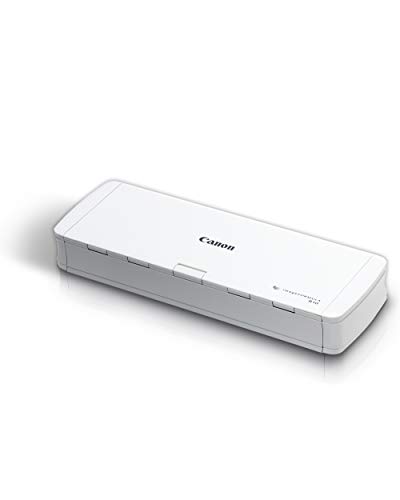
| Canon imageFORMULA R10 | Business travelers needing duplex and OCR | $183.90 |
| Plustek Mobile Scanner S410 Plus | Button-free workflow with OCR included | $109 |
| HP Small USB Scanner | Single-sided photo and document jobs | $139.99 |
| MUNBYN Portable Scanner | Handheld wand scanning on a tight budget | $56.89 |
| AOZBZ Portable Scanner | Quick photo digitizing without software | $56.99 |
| Canon Canoscan Lide 300 | Flatbed flexibility at a low price | $69.99 |
How We Picked
We filtered candidates by paper-path reliability (sheet-fed duplex units scored highest because owners report fewer jams than flatbreads on thicker stock), software completeness (a scanner without usable OCR forces a second purchase), power convenience (USB-only operation means no extra cable in a travel bag), and price-to-feature ratio. Handheld wand scanners were included only where they serve a genuinely different use case—scanning bound pages or surfaces a feeder cannot reach.
The 8 Best Portable Document Scanner in 2026
Brother DS-640
This compact sheet-fed scanner targets professionals who need duplex output without hauling a desktop unit. The DS-640 pulls power directly from USB, so a single cable handles both data and electricity. Owner feedback praises its automatic document feeder for handling mixed paper weights, a common weak point in budget competitors. The bundled software supports direct-to-email and cloud upload, cutting steps after capture. The trade-off is a relatively small ADF capacity that frustrates users with batch jobs. Skip this one if you regularly scan more than twenty pages at once or need a flatbed for books and photos.
- Pro: Duplex scanning with a single pass through the feeder
- Pro: USB-powered, no external adapter required
- Con: Limited ADF capacity for high-volume batches
Epson Workforce ES-50
Epson built the ES-50 for users who value weight savings above all else. It is among the lightest sheet-fed duplex options here, sliding easily into a laptop sleeve. The flatbed-plus-feeder hybrid design means you can capture a passport page or a receipt without reconfiguring anything. Owners consistently note the quiet motor and straightforward Windows driver installation as reliability wins. The downside is that Epson reserves its most polished OCR and document-management tools for higher-priced models, so the included software feels basic. Pass on this if searchable PDF output without a separate subscription is a hard requirement.
- Pro: Combines a flatbed surface with an automatic document feeder
- Pro: Exceptionally light for a duplex-capable unit
- Con: Bundled software lacks advanced OCR features
Canon imageFORMULA R10
The R10 is the premium pick in this group, aimed at consultants and mobile workers who scan contracts with two-sided signatures daily. USB power, duplex capture, and a genuinely simple setup process define the experience. Canon’s CaptureOnTouch software bundles OCR into the workflow, producing searchable files without extra purchases. The price is its steepest drawback—nearly double what the Plustek costs for similar core functions. Owners also mention a slightly bulkier profile compared to the Brother DS-640. Skip this if your budget caps at a hundred dollars or your scanning is purely single-sided.
- Pro: Duplex scanning with integrated OCR in the bundled software
- Pro: USB-powered with a straightforward plug-and-play setup
- Con: Highest price in the roundup, roughly seventy percent more than the Plustek
Plustek Mobile Scanner S410 Plus
Plustek positions the S410 Plus as the value play: a duplex sheet-fed scanner with OCR software included and a button-free start mode that eliminates the need to open a driver panel. Owners highlight the one-button workflow as a genuine time-saver for repetitive tasks like scanning ID cards or single-page invoices. Windows 7 through 11 compatibility is explicitly stated, which eases enterprise deployment. The trade-off is a plastic housing that feels less durable than the Canon or Brother, and the design does not include a flatbed. If you handle bound materials or fragile originals, this is the wrong tool.
- Pro: Button-free scanning with included OCR software
- Pro: Widest stated OS compatibility in this group
- Con: Build quality feels plasticky compared to similarly priced rivals
HP Small USB Scanner
HP targets the home-office user who occasionally scans photos and single-sided documents and does not want to wrestle with driver conflicts. The PS100 model includes HP WorkScan software and works on both PC and Mac. Its sheet-fed design keeps the footprint small enough for a crowded desk. Owners appreciate the plug-and-play experience but note the lack of duplex capability, meaning two-sided pages require manual flipping. Skip this if you regularly process multi-page contracts or receipts printed on both sides.
- Pro: Cross-platform compatibility with included WorkScan software
- Pro: Handles photo scanning alongside documents in one pass
- Con: Single-sided only; duplex requires manual page reversal
MUNBYN Portable Scanner
The MUNBYN wand scanner fills a niche that no sheet-fed unit can reach: scanning pages inside a bound book, a framed photo behind glass, or a document taped to a wall. At 900 DPI and with a 16 GB SD card included, it produces serviceable JPG and PDF files without a computer. Owners praise its portability and zero-software workflow. The obvious limitation is alignment—handheld wands demand a steady, straight stroke, and curved or wrinkled paper produces distortion. Avoid this if your primary use is stacks of loose A4 documents that a feeder would handle in seconds.
- Pro: Scans bound pages and surfaces that feeders cannot accept
- Pro: Self-contained with SD card storage and no software dependency
- Con: Requires a steady, straight hand motion for clean results
AOZBZ Portable Scanner
Functionally a twin to the MUNBYN, the AOZBZ offers the same 900 DPI handheld wand experience in a silver finish, outputting JPG and PDF to a 16 GB SD card. It appeals to users who want a second wand scanner for a different desk or travel bag without duplicating the MUNBYN’s aesthetic. Owner feedback mirrors its sibling: great for quick photo digitizing, less reliable for long-text alignment. Skip this if you need searchable text output, since neither unit bundles OCR software.
- Pro: Compact enough for a jacket pocket or desk drawer
- Pro: No driver installation needed; scan and eject the card
- Con: No OCR; outputs image-only files by default
Canon Canoscan Lide 300
The Lide 300 bends the definition of “portable” slightly—it is a slim flatbed that weighs under five pounds—but its USB power and compact lid make it a reasonable companion for home offices with limited desk space. Owners highlight the Auto Scan mode for handling stacked pages and the built-in copy and send shortcuts. The trade-off is speed: flatbeds cannot match a feeder’s throughput on multi-page jobs. If your workflow is a handful of photos or single originals at a time, this is a flexible choice.
- Pro: Flatbed design accommodates photos, fragile items, and bound pages
- Pro: USB-powered with Auto Scan and shortcut buttons
- Con: Slow for multi-page batches compared to sheet-fed alternatives
Buying Guide
Duplex vs. Single-Sided
Duplex means the scanner captures both sides of a page in one pass, halving your job time on contracts and two-sided receipts. Units like the Brother DS-640 and Canon R10 offer true one-pass duplex. Single-sided scanners (HP PS100, Plustek S410 Plus in basic mode) force you to reprint or flip pages manually. If you process more than a dozen two-sided documents per week, duplex is not a luxury—it saves minutes every session.
Software and OCR
Raw image files are useless if you cannot search them. Look for scanners that bundle OCR software capable of producing searchable PDFs or editable text files. The Plustek S410 Plus and Canon R10 include OCR out of the box. Wand scanners like the MUNBYN and AOZBZ do not, so you will need third-party software or accept image-only output. Check whether the OCR supports your language before buying.
Power and Portability
A USB-powered scanner draws both data and electricity from your laptop, eliminating a second cable and a wall adapter. This matters most for travel and for desks with scarce outlets. Flatbed units like the Lide 300 are portable by weight but still need a clear, flat surface. Wand scanners need neither a surface nor a computer, but they demand hand steadiness. Match the power and form-factor profile to where you actually work.
Our Verdict
The Brother DS-640 is the top pick for most buyers: reliable duplex, USB power, and a proven paper path at a fair price. The Plustek S410 Plus earns the budget pick by delivering duplex and OCR for well under a hundred and twenty dollars, though its build feels less premium. If you routinely scan bound books or wall-mounted originals, the MUNBYN wins because no feeder-equipped scanner can reach those surfaces at all.
FAQ
Do I need a portable scanner if I have a smartphone?
Phone cameras struggle with consistent lighting, perspective correction, and batch throughput. A dedicated scanner produces uniform, straight-cropped pages at a fixed resolution and feeds stacks without you repositioning each sheet. For a single receipt, the phone works; for ten-page contracts, it does not.
How many pages per minute can I expect from these units?
Sheet-fed duplex models in this price range typically handle a small batch of standard-weight paper quickly, while handheld wands depend entirely on your stroke speed and steadiness. None of these are production scanners, but they comfortably outperform manual page-by-page phone photography.
Is 900 DPI overkill for document scanning?
For text documents, 200 to 300 DPI is sufficient for readable OCR and clear printing. The 900 DPI on wand scanners matters if you are digitizing fine photos or small typefaces, where extra resolution gives you a cleaner reproduction. For contracts and receipts, you will never notice the difference.
Can these scanners handle plastic cards like IDs?
The Plustek S410 Plus and Epson ES-50 explicitly accommodate thick media including ID cards through their feeders or flatbed surfaces. Slim sheet-fed units like the Brother DS-640 may struggle with rigid plastic. Check the maximum media thickness spec before scanning anything non-paper.