Key takeaways
- Pro: USB-powered with no separate adapter needed.
- Pro: Accepts cards and odd-sized media that other portables reject.
- Con: No wireless option; tethered to one device at a time.
Most people who search for a doc scanner are trying to solve the same physical problem: a growing stack of paper that should not be paper anymore. Tax documents from three years back, a contract that needs to be searchable, receipts that a phone camera misaligns or crops. A dedicated scanner handles these tasks by feeding pages consistently, applying OCR to produce searchable text, and exporting files in a format your workflow actually consumes.
What separates a worthwhile unit from a mediocre one is narrower than the spec sheet suggests. Paper handling reliability matters more than raw speed: a scanner that jams on mixed weights is a scanner you stop using. Duplex capability, software that does not require a manual to operate, and a form factor that matches your actual volume are the differentiators. Prices on this list range from under seventy to nearly four hundred dollars, so choosing well means matching the machine to the job rather than buying the most capable unit available.
Our top picks




As an Amazon Associate we earn from qualifying purchases at no extra cost to you.
Quick Picks
| Product | Best for | Price |
|---|---|---|
| Brother DS-640 | Travel and small batches | $134.99 |
| Epson WorkForce ES-50 | Ultra-compact single-sided scanning | $146 |
| ScanSnap iX2500 | Whole-home wireless scanning | $379.99 |
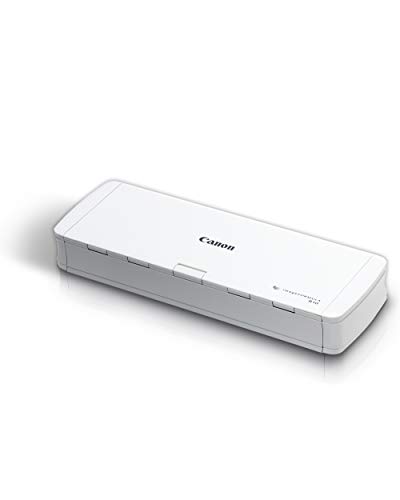
| Canon imageFORMULA R10 | USB-powered portability with duplex | $183.90 |
| Canon CanoScan LiDE 300 | Flatbed tasks and occasional documents | $69.99 |
| Epson WorkForce ES-580W | Wireless duplex on a desktop | $354.99 |
| ScanSnap iX1300 | Reliable family wireless scanning | $279.99 |
| Epson WorkForce ES-400 II | High-volume duplex desktop | $352.95 |
How We Picked
We narrowed this category using four criteria: paper-handling reliability (mixed sizes, card stock, worn pages), duplex throughput for double-sided documents, software and OCR quality including ease of initial setup, and form factor with connectivity options appropriate to the intended use. Owner feedback was weighed heavily for real-world jam frequency and software stability, since published specs rarely capture those failure modes.
The 8 Best Doc Scanner in 2026
Brother DS-640 Compact Mobile Document Scanner
The DS-640 targets people who scan in the field or at a kitchen counter and need a device that draws power from a single USB connection. Owner reviews consistently highlight its ability to handle mixed media including business cards and plastic IDs, which most compact units skip. The duplex feed works reliably on standard paper weights.
- Pro: USB-powered with no separate adapter needed.
- Pro: Accepts cards and odd-sized media that other portables reject.
- Con: No wireless option; tethered to one device at a time.
Skip this one if you regularly scan more than twenty to thirty pages per session, as the small tray capacity becomes a bottleneck.
Epson WorkForce ES-50 Compact Mobile Document Scanner
This is the smallest unit on the list, designed for people who scan occasionally and value portability above almost everything else. One-button operation means a grandparent can start a scan without opening a manual. It fits in a laptop sleeve without adding noticeable weight to a bag.
- Pro: Extremely light and genuinely pocketable.
- Pro: One-touch scanning with minimal configuration.
- Con: Single-sided only, requiring manual page flipping for duplex work.
If your documents are frequently double-sided, this model will feel like extra work within a week.
ScanSnap iX2500 Wireless High-Speed Document Scanner
The iX2500 is the flagship of this roundup, built for households or small offices that scan multiple times per week and want wireless freedom. Its software is widely praised for cloud integrations and batch processing without requiring technical setup. Duplex speed is among the fastest on this list.
- Pro: Fast, reliable duplex scanning with minimal jams.
- Pro: Best-in-class software ecosystem and cloud workflow options.
- Con: Highest price on this list at nearly $380.
Skip it if your annual volume is under a few hundred pages; you would be paying for speed and convenience you will not use.
Canon imageFORMULA R10 Portable Document Scanner
The R10 fills a gap for mobile professionals who need duplex scanning without carrying a power brick. Its USB-only design keeps weight low and eliminates the risk of a forgotten adapter at a client site. Setup is straightforward, and the feed mechanism handles crumpled pages better than expected for its size.
- Pro: Duplex scanning in a USB-powered form factor.
- Pro: Compact footprint that fits almost anywhere.
- Con: No wireless connectivity for shared use.
If multiple people need to scan from different devices, the single-USB limitation is a real constraint.
Canon CanoScan LiDE 300 Scanner
The LiDE 300 is a flatbed, which places it in a different workflow category than the ADF units above. It excels at bound books, photos, fragile receipts, and odd shapes that cannot be fed through a roller. At the lowest price on this list, it is the most accessible entry point for people who need flatbed versatility more than batch speed.
- Pro: Handles books, photos, and non-standard media that ADF scanners cannot.
- Pro: Lowest cost of any product here.
- Con: No automatic document feeder; scanning stacks of loose pages is slow.
Skip it if your primary task is digitizing reams of loose double-sided pages on a regular basis.
Epson WorkForce ES-580W Wireless Color Duplex Desktop Scanner
The ES-580W is a desktop duplex scanner with wireless and USB connectivity, aimed at people who want ScanSnap-level convenience in the Epson software ecosystem. Color output is solid, and the wireless setup works across multiple devices without re-pairing. Owner feedback notes a learning curve with the included utility software compared to ScanSnap’s more polished interface.
- Pro: Wireless plus USB for flexible placement and device sharing.
- Pro: Reliable color duplex on standard office paper.
- Con: Desktop footprint means it is not a portable option.
If you need to scan away from your desk, look at the portable models above instead.
ScanSnap iX1300 Wireless Double-Sided Color Document Scanner
The iX1300 delivers core ScanSnap functionality at a lower price than its sibling. It handles duplex wireless scanning for a family that processes school forms, medical records, and household documents weekly. Paper feed reliability is a known strength of the iX line, and setup is genuinely quick.
- Pro: Dependable duplex feed with excellent paper handling.
- Pro: Intuitive software with minimal configuration required.
- Con: Noticeably slower throughput than the iX2500 at higher volumes.
Heavy users scanning dozens of pages daily will want the faster iX2500 or the Epson desktop options.
Epson WorkForce ES-400 II High-Speed Color Duplex Desktop Scanner
The ES-400 II combines a flatbed with an automatic document feeder, making it the most versatile desktop option here for mixed scanning tasks. High-volume duplex throughput suits a home office that processes contracts, invoices, and archives simultaneously. Color quality is consistent across both the ADF and the flatbed glass.
- Pro: Flatbed plus ADF in a single unit.
- Pro: High throughput for a device in this price bracket.
- Con: Bulkier and heavier than pure-portable alternatives.
If your scanning is low-volume and you value desk space, a more compact model serves better.
Buying Guide
Duplex vs. Single-Sided: Why It Matters
Duplex scanning captures both sides of a page in a single pass. For tax documents, contracts, and medical records, this means fewer manual flips and a lower chance of missing the back of a page. Single-sided units force you to re-feed the stack, which is slow and error-prone once you exceed a dozen pages. If your documents are ever double-sided, prioritize duplex capability regardless of budget.
Paper Capacity and Throughput
ADF tray capacity determines whether you can load an entire document in one go or must monitor the feed constantly. Compact scanners typically hold under twenty sheets; desktop duplex units range from thirty to fifty. Throughput, expressed in images per minute, matters only if you scan more than about a hundred pages per week. For most home users, capacity is the more meaningful spec.
Software and OCR: The Real Workflow Test
Hardware specs are largely comparable within each price tier. Software is where the experience diverges. ScanSnap’s interface is widely regarded as the simplest to configure, while Epson and Canon utilities offer more granular control at the cost of a steeper learning curve. OCR quality determines whether your searchable PDF actually returns results or fills with garbled text on degraded originals. Prioritize units whose software reviews specifically mention OCR accuracy.
Our Verdict
The ScanSnap iX2500 is the top pick for most home offices: it combines wireless flexibility, fast duplex scanning, and software that removes friction from the entire workflow. For a budget pick, the Canon CanoScan LiDE 300 at just under seventy dollars provides flatbed versatility that no other scanner on this list matches for bound or irregular items. The Epson WorkForce ES-400 II wins outright if your tasks require both flatbed and high-volume ADF in a single machine, because no other unit here combines those two functions at that throughput level.
FAQ
Can I just use a phone camera instead of a doc scanner?
A phone can capture a single page quickly, but it struggles with batch workflows, consistent lighting, and searchable OCR output. For anything beyond a one-off photo of a receipt, a dedicated doc scanner produces cleaner, searchable, consistently formatted files.
Do I need wireless connectivity for a doc scanner?
Wireless matters when multiple devices or people share one scanner, or when you prefer not to route a cable across a desk. If you scan from a single laptop, USB is faster and simpler, making wireless an optional convenience rather than a requirement.
What is the difference between a flatbed and an ADF scanner?
A flatbed requires you to lift a lid and place each page on glass manually, which suits bound books, photos, and fragile originals. An ADF pulls pages through a roller automatically, making it far better for stacks of loose sheets. Some units combine both approaches.
How long should a good doc scanner last?
With moderate home use, the paper rollers and feed mechanism are the first components to wear. Owners of well-built units report three to five years of reliable service before maintenance or roller replacement becomes necessary, assuming the scanner is stored in a dust-free environment.