Choosing among deer cameras is rarely about finding a single winner. It is about matching a camera’s strengths to how you hunt or scout. A cellular model that texts you photos from a distant property solves a completely different problem than a pair of non-cellular units you check weekly in your own backwoods. The worst outcomes come from buying the wrong category entirely: a subscription-free camera when you need remote alerts, or a cellular unit with mediocre night vision when your stand sits in deep timber.
Owner feedback consistently separates sharp shooters with fast triggers from sluggish boxes that miss the big buck at dusk. Image resolution matters, but only when paired with a trigger that fires within half a second. Weather sealing and build quality determine whether a camera survives a second season or cracks at the first hard frost. This roundup compares the specs, prices, and recurring themes from owners across eight popular models to help you shortlist without overpaying.
Our top picks


As an Amazon Associate we earn from qualifying purchases at no extra cost to you.
Quick Picks
| Product | Best for | Price |
|---|---|---|
| Moultrie Edge 3 (2-Pack) | Fast-trigger cellular scouting on a budget | $99 |
| SPYPOINT Flex-M (Twin Pack) | Feature-rich cellular with GPS and dual-SIM | $89.99 |
| WOSODA 2 Pack (Non-WiFi) | High-resolution non-cellular wildlife monitoring | $69.99 |
| WOSODA Mini 4 Pack | Multi-angle coverage with tiny stealth form factor | $169.99 |
| TACTACAM Reveal X 3.0 | Solo cellular setup with no brand lock-in | $94.77 |
| WOSODA 2 Pack (Non-Cellular) | Lowest per-unit cost for hobby scouting | $59.99 |
| SPYPOINT Flex-M2 (Twin Pack) | Upgraded resolution cellular pair | $99.99 |
| Stealth Cam Browtine Bundle | Simple non-cellular setup with included accessories | $89.99 |
How We Picked
We focused on four criteria that owners repeatedly flag in reviews and forum threads: trigger speed measured in seconds, image resolution for identifying antler points at distance, cellular versus non-cellular connectivity (because subscription costs change the total ownership price dramatically), and enclosure durability rated against water and dust ingress. Products that scored well on all four made the list; those that sacrificed one dimension without a clear offset did not.
The 8 Best Deer Cameras in 2026
Moultrie Edge 3 Cellular Trail Camera – 2-Pack
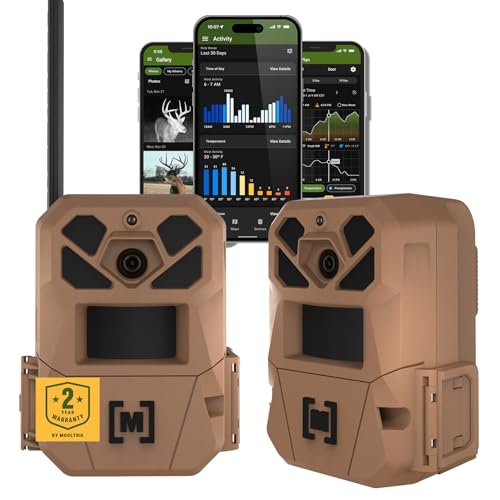
The Moultrie Edge 3 targets hunters who want cellular alerts without paying SPYPOINT prices. At 40 megapixels per two-pack unit for $99, the value proposition is hard to ignore. Owners praise the 0.5-second trigger for catching deer before they turn away, and the cellular upload works on any carrier. The main complaint is that the Moultrie app interface feels dated compared to SPYPOINT’s, and some users report slower photo delivery in areas with marginal LTE coverage. If you already use Moultrie feeders or prefer their ecosystem, this pair integrates smoothly. Skip it if you need GPS tagging or dual-SIM redundancy for properties with patchy single-carrier signal.
SPYPOINT Flex-M Twin Pack Cellular Trail Cameras
SPYPOINT’s Flex-M remains the default recommendation for cellular deer cameras because the app experience, GPS location pinning, and dual-SIM LTE switching are genuinely useful on remote land. The twin pack at $89.99 puts cellular monitoring within reach of casual hunters. Night vision is solid with IR illumination that owners describe as invisible to game. The 28-megapixel stills are adequate but trail the higher-resolution competitors. The primary drawback is the mandatory subscription plan; owners who only check photos weekly find the recurring cost steep relative to non-cellular alternatives. Skip this if you refuse monthly fees, but keep it on your shortlist if remote alerts save you a drive to the property.
WOSODA 2 Pack Trail Cameras (Non-WiFi)
At $69.99 for two 48-megapixel cameras, WOSODA undercuts most non-cellular competitors on raw resolution. The 1080P video captures usable wildlife footage, and the IP-rated housing handles rain and snow without fogging per owner reports. These are solid pickers for someone who checks their cards monthly and does not need remote notifications. The trade-off is reliability at the margins: some owners note inconsistent trigger speeds in cold weather and a plasticky latch that loosens over seasons. If your budget is tight and you scout within walking distance of your vehicles, the WOSODA pair delivers strong specs per dollar. Skip cellular features entirely if you want a no-subscription setup.
WOSODA Mini Trail Camera 4 Pack
The WOSODA Mini four-pack at $169.99 is built for hunters who want four discreet, small-form-factor cameras covering multiple angles around a single food plot or bedding area. The 30-megapixel sensor and 1080P video are respectable, and the compact size makes mounting near trail edges nearly invisible. Owners highlight fast trigger times as the standout feature for a budget mini cam. The trade-off is a smaller battery compartment, which means more frequent SD card and battery swaps. Night-range IR is shorter than full-size units, so these excel in open corridors rather than deep timber. Skip if you need maximum detection range from a single position; keep if stealth and multi-point coverage matter more.
TACTACAM Reveal X 3.0 Cellular Trail Camera
The Reveal X 3.0 occupies a niche for buyers who want cellular deer camera capability without being locked into SPYPOINT’s plan structure. At $94.77 per unit, it sits between the Moultrie and SPYPOINT pricing tiers. Night vision and waterproofing are rated well by owners, and the TACTACAM app allows flexible data plans. The single-unit pricing means a two-camera setup costs roughly double, which erodes the value gap with twin packs above. Some users report occasional upload failures in areas where Moultrie and SPYPOINT cameras also struggle. Skip this if you plan a multi-camera deployment on one property; it shines when you need one reliable cellular box at a specific pinch point.
WOSODA 2 Pack Trail Cameras (Non-Cellular Non-WiFi)
At $59.99 for a two-pack, this is the cheapest entry point in the roundup. The 48-megapixel sensor and 1080P video match the pricier WOSODA siblings, making it a pure value play for non-cellular scouting. Owners who already have a cellular unit for critical sites buy these as backup or secondary positions. The build quality is the obvious compromise: heavier plastic housing, basic IR LEDs, and an SD card slot that some users report as tight. Skip this if the camera sits exposed to vandalism or heavy weather; keep it if you need cheap coverage of low-priority trails and already check cards on foot regularly.
SPYPOINT Flex-M2 Twin Pack Trail Camera
The Flex-M2 upgrades the Flex-M to 32 megapixels, a meaningful jump for identifying individual bucks from antler spread in photo thumbnails. GPS tagging and dual-SIM LTE carry over unchanged, and the $99.99 twin-pack price lands almost identically to the Flex-M at $89.99 while offering more resolution. Owner feedback notes that the M2’s app is essentially identical, so existing SPYPOINT users will feel at home. The subscription requirement is the same persistent drawback. If you are choosing between Flex-M and Flex-M2 for a new setup, the extra three dollars per unit for higher megapixels is the easy call. Skip if SPYPOINT’s plan pricing has already pushed you away from cellular entirely.
Stealth Cam Browtine 16MP Durable Trail Camera Bundle
The Browtine bundle includes a trail camera with accessories such as straps or SD cards depending on the retailer’s configuration, which softens the learning curve for first-time buyers. The 16-megapixel sensor is the lowest resolution in this lineup, and owner feedback reflects that: photos lack fine detail for antler-point identification at range. Where the Browtine earns points is durability and simplicity. The housing is rugged, the menu is straightforward, and the price sits under $90. If you are buying your first deer camera and want a no-frills unit with accessories bundled in, this lowers the barrier to entry. Skip it if resolution matters for management decisions or if you want cellular connectivity.
Buying Guide
Trigger Speed and Detection Range
A deer crossing your food plot at fifteen yards gives you roughly one to two seconds between detection and exit. Trigger speeds above 0.7 seconds produce blurred images or missed subjects entirely. Look for published specs at or below 0.5 seconds, and read owner reports about performance in cold temperatures where trigger mechanisms slow down. Detection range matters less than trigger speed for most stand setups, since deer are usually within twenty yards when you want a clean photo.
Cellular Versus Non-Cellular: Total Cost of Ownership
A cellular deer camera eliminates scouting drives but introduces a monthly or annual data subscription that often costs more over three seasons than a non-cellular unit plus fuel. If your property is within cell coverage and you check photos remotely more than twice a week, cellular pays for itself in saved trips. If you already drive past your camera site weekly, a non-cellular model keeps total cost lower. Factor the subscription into the sticker price before comparing units across categories.
Image Quality and Night Vision
Megapixels alone do not guarantee a sharp photo; sensor size, lens quality, and IR wavelength all affect clarity. No-glow IR (940nm) is invisible to deer and most predators but produces darker images than low-glow (850nm). For identifying antler points on a buck at dusk, higher megapixels combined with good lens optics matter more than IR type. Read owner samples before purchasing, since spec sheets rarely capture real-world sharpness in low light.
Our Verdict
The top pick is the SPYPOINT Flex-M2 Twin Pack: 32 megapixels, GPS, dual-SIM LTE, and the most polished cellular platform in the category at a twin-pack price that undercuts most single-unit cellular competitors. The budget pick is the WOSODA 2 Pack Non-Cellular at $59.99, which delivers 48-megapixel stills without any subscription and suits hunters who scout on foot. One condition flips the ranking: if you refuse any recurring monthly fee but still want cellular-style alerts, the Moultrie Edge 3 offers the fastest trigger in the roundup at a competitive price.
FAQ
Do deer cameras work without WiFi?
Yes. Non-cellular trail cameras record to an SD card and require you to physically retrieve the card. Cellular deer cameras use LTE networks to upload photos directly to your phone, so WiFi at the camera site is never needed.
What resolution do I need for deer management?
For identifying antler points and body condition, 28 to 32 megapixels is the practical floor. Below that, photos become ambiguous in thumbnail view. Higher megapixels help if you scout multiple properties and need to sort many images quickly.
Are cellular trail cameras worth the subscription?
They save time and fuel when your camera sites are distant or on property you visit infrequently. The subscription typically runs ten to twenty dollars monthly per camera. If you already walk past the camera weekly, a non-cellular unit delivers identical photos at a lower total cost.
How many deer cameras do I need for a typical property?
Most landowners start with two to four cameras covering the primary food source, a pinch point near bedding, and one or two travel corridors. Adding more cameras reveals movement patterns faster, which is why multi-packs like the WOSODA Mini four-pack exist at a price advantage over individual units.