Key takeaways
- Seating clearance: Allow 36 inches from the table edge to the wall or other furniture to pull out a folding chair. 48 inches is ideal if people need to walk behind seated guests.
- Room fit: In a 10×12 ft room, a single 6 ft table placed lengthwise leaves about 24 inches on the narrow ends and 36-42 inches on the long sides – enough for 6 chairs but not for a second table. In a 12×20 ft room, you can fit two 6 ft tables end-to-end (12 ft total) with 48 inches of clearance on all sides.
- Doorway and storage: Most interior doorways are 30-32 inches wide, so you must carry the table on its side to move it between rooms. For storage, you need a wall space at least 74 inches long and 32 inches deep if stored flat, or 30 inches wide x 74 inches tall if stored vertically.
- Table height standard: 29 inches is the standard dining and banquet height. Pair it with folding chairs that have a 17-18 inch seat height for 11-12 inches of knee clearance underneath.
What's inside
The right 6 ft folding table depends on how you plan to use it: choose heavy-duty blow-molded plastic with a steel frame for frequent moving and easy cleaning, solid wood or wood-top with steel legs for a permanent look at home, and all-steel or aluminum for maximum weight capacity at events.
As an Amazon Associate we earn from qualifying purchases at no extra cost to you.


6 Ft Folding Table Size: Will It Fit Your Space?
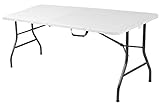
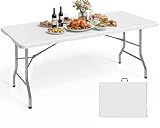
A standard 6 ft folding table measures 72 inches long x 30 inches wide x 29 inches high. Folded, most models are about 72 x 30 x 3.5 inches. That size seats 6 adults (3 per side) comfortably or 8 if you put one person at each end, but 8 is tight for place settings wider than 20 inches.
Before you buy, measure for clearance and traffic flow:
- Seating clearance: Allow 36 inches from the table edge to the wall or other furniture to pull out a folding chair. 48 inches is ideal if people need to walk behind seated guests.
- Room fit: In a 10×12 ft room, a single 6 ft table placed lengthwise leaves about 24 inches on the narrow ends and 36-42 inches on the long sides – enough for 6 chairs but not for a second table. In a 12×20 ft room, you can fit two 6 ft tables end-to-end (12 ft total) with 48 inches of clearance on all sides.
- Doorway and storage: Most interior doorways are 30-32 inches wide, so you must carry the table on its side to move it between rooms. For storage, you need a wall space at least 74 inches long and 32 inches deep if stored flat, or 30 inches wide x 74 inches tall if stored vertically.
- Table height standard: 29 inches is the standard dining and banquet height. Pair it with folding chairs that have a 17-18 inch seat height for 11-12 inches of knee clearance underneath.
Plastic vs. Wood vs. Metal: The Core Trade-Offs
Most 6 ft folding tables use one of three top materials paired with a steel or aluminum frame. The top material determines weight, feel, durability, and price far more than the frame alone.
| Feature | Blow-Molded Plastic (Polyethylene) with Steel Frame | Plywood / MDF Wood-Top with Steel Frame | All-Metal (Steel or Aluminum Top + Frame) |
|---|---|---|---|
| Typical Weight | 33-45 lbs | 48-65 lbs | 55-78 lbs for steel; 35-48 lbs for aluminum |
| Static Weight Capacity (evenly distributed) | 600-1,000 lbs | 300-500 lbs | 700-1,200 lbs (steel) |
| Portability | Best – light, one person can carry | Moderate – heavier, awkward for one person | Heavy steel is hardest to move; aluminum is light but costly |
| Water & Stain Resistance | Excellent – waterproof, wipe-clean | Poor to fair – needs coasters, sealant, avoid outdoor use | Excellent – powder-coated steel resists spills |
| Heat Resistance | Low – can warp over 150 deg F, no hot pans directly | Moderate – can scorch or leave rings | High – best for hot dishes and catering |
| Look & Noise | Utilitarian, hollow sound | Warm, residential, solid feel | Industrial, can be loud and cold to touch |
| Typical Price Range (2026) | Usually $70-$150 | Usually $120-$280 | Usually $150-$350 for steel; $250-$450 for aluminum |
| What Fails First | Leg braces and plastic edge dents | Edge banding, veneer peeling, leg screws loosening | Paint chipping, hinge rust if coating scratched |
When Plastic Makes Sense
High-density polyethylene (HDPE) blow-molded tops are the default for events, garages, and craft work. They are lightweight, stack well, and handle spills, kids, and outdoor humidity without damage. The downside is flex: cheaper models can bow in the center under heavy loads above 100 lbs concentrated in one spot, and the hollow top can feel less premium for a dining room.
When Wood Is Worth the Weight
A wood-top folding table – usually plywood with hardwood veneer or MDF with laminate – feels like real furniture. It is far more rigid for writing, sewing, or puzzles, and it dampens sound better than plastic. The trade-off is maintenance. Engineered wood swells if water sits on seams, and laminate can chip on the drop edges. Solid wood folding tables exist but are rare and typically over $300; most “wood” models are engineered wood, which is heavier than plastic by 15-25 lbs.
When All-Metal Is the Right Call
Commercial catering and workshop tables often use 16-18 gauge powder-coated steel tops and legs. They support the highest loads, resist heat from chafing dishes, and do not stain. The drawbacks are weight, noise, and comfort – metal conducts heat and cold, and objects slide and clatter more easily. Aluminum tops solve the weight issue but cost 40-60% more than steel.
Portability and Setup Realities
Weight and leg design matter more than marketing claims about “easy carry.” Here are the numbers that affect daily use:
| Spec | Lightweight Plastic | Mid-Weight Wood-Top | Heavy-Duty Steel |
|---|---|---|---|
| Average Box Weight (shipped) | 36-42 lbs | 52-62 lbs | 65-82 lbs |
| Folded Thickness | 3-3.5 inches | 3.5-4.5 inches | 4-5.5 inches |
| Setup Time (one person) | 30-60 seconds | 45-90 seconds | 60-120 seconds, may need two people |
| Center Height Clearance (knees) | 26.5 inches | 26-27 inches | 27-27.5 inches |
| Latch Type | Gravity locks or slide locks | Locking wishbone braces | Heavy spring bolts or gravity locks |
If you will move the table weekly, look for three features: a center handle cutout in the top, leg braces with automatic gravity locks instead of manual slide rings, and non-marring foot caps. Tables over 50 lbs are difficult to carry up stairs alone; consider a folding-table dolly if you own four or more.
Durability tip: The first parts to wear are not the tops but the hinges and leg braces. Cross-brace style legs wobble less than single wishbone legs. Powder-coated steel frames with welded joints last longer than frames assembled with rivets alone. For plastic tops, check the edge thickness – tables with a 2-inch thick edge and steel perimeter channel resist denting better than thin-edge models.
Decision Matrix: Match Your Situation to the Right Type
Use your primary use case to narrow the choice, then pick material based on the trade-offs above.
| If Your Situation Is… | Best Choice | Why |
|---|---|---|
| Small apartment, occasional extra dining for holidays | Blow-molded plastic, 6 ft, white or gray granite | Stores vertically in a closet, light enough to carry alone, easy to clean after guests |
| Home craft room, sewing, or home office desk | Wood-top (plywood/laminate) with height-adjustable steel legs (22-32 inch range) | Rigid, flat surface with no flex for cutting mats and machines; adjustable height prevents back strain |
| Kids, pets, and frequent spills | Blow-molded plastic with powder-coated steel frame | Waterproof top, rounded corners, stain-proof and can be used indoors or on a patio |
| Renter who hosts game nights or potlucks monthly | Mid-range plastic with 700+ lb capacity | Good balance of price, weight, and durability without damaging floors |
| Catering, bake sales, or hot-food events | All-steel or aluminum rectangular banquet table | Highest heat and weight tolerance, NSF-style easy-sanitize surface |
| Permanent dining look in a small home | Wood-top folding table with wood-grain laminate | Blends with dining furniture but still folds flat when you need floor space |
What to Check Before You Buy
Beyond material, five construction details separate a reliable 6 ft table from a wobbly one:
- Frame gauge: Look for 16-18 gauge steel legs and 18-20 gauge apron channels. Thinner 22-gauge frames bend faster under lateral pressure.
- Top thickness and support: A true commercial plastic table has a 1.75-2 inch thick top with internal honeycomb and a steel frame that runs the full perimeter underneath, not just at the legs.
- Weight rating method: Static evenly-distributed capacity (e.g., 800 lbs) is not the same as center-point load. For dining, ask about center-point capacity; good plastic tables handle 150-200 lbs in the center without noticeable bowing.
- Feet and floor protection: Large 1.5-inch diameter foot caps with rubber or polyethylene glide better on hardwood and prevent rust rings on carpet.
- Warranty and parts: In the $100+ range, many manufacturers offer a 1-5 year warranty on the frame. Check whether replacement leg braces are sold separately – they are the most common repair.
Avoid tables with exposed MDF edges if you plan any outdoor or garage use; even humidity can cause swelling within one season. For any table over 48 lbs, test whether you can comfortably lift it to chest height – that is the motion needed to load it into an SUV or onto a wall hook.
Care and Longevity by Material
Plastic tops clean with mild soap and water; avoid abrasive cleaners that dull the textured surface and make future stains harder to remove. Wood tops should be wiped immediately after spills and protected with felt pads under any objects that stay on the surface for weeks, which can trap moisture. All-metal tables benefit from a quick dry after cleaning to prevent rust at hinge points, especially if the powder coating is chipped. Store any folding table flat or vertically on its edge, never leaning on the hinges, which can bend the braces over time.
Frequently Asked Questions
Is a 6 ft table too big for a small apartment? Not if you plan for seating clearance. You need a room at least 9 feet wide to seat people on both long sides with 36 inches of pull-out space. If your room is narrower, consider a 4 ft or 5 ft folding table instead, or use the 6 ft table against a wall as a desk and pull it out only when entertaining.
Can a 6 ft folding table hold a sewing machine and fabric? Yes. Even light-duty plastic tables rated at 600 lbs handle a 25-35 lb sewing machine plus 20 lbs of fabric with no issue. For cutting fabric, choose a wood-top model because the firmer top prevents the bobbing that can affect rotary cutting accuracy.
Do all 6 ft folding tables fold in half? No. Standard 6 ft tables fold only at the legs and stay 72 inches long. Bi-fold or fold-in-half models (often 72 x 30 but folding to 36 x 30) exist and are easier to fit in a car trunk, but they have a center seam, weigh 5-8 lbs more, and typically cost $20-$40 more. If trunk transport is critical, search specifically for “fold-in-half” construction.