Key takeaways
- Width: 36 inches is the minimum for a laptop and one open book side by side; 48 inches lets you spread notes, a lamp, and a second screen.
- Depth: 24 inches for most students; 30+ inches only if you push a monitor back and want writing space in front.
- Height: most folding tables sit at 28–29 inches, which matches standard desks — but only if your chair seat is 17–18 inches high. A mismatch of more than 2–3 inches from the ideal 10–12-inch gap causes hunching within an hour.
What's inside
The best folding table and chair for study is a 40–48-inch-wide table at least 24 inches deep, rated for 200+ lb, paired with a folding chair whose seat sits 17–18 inches off the floor — that pairing preserves the 10–12-inch gap between seat and desktop that keeps your shoulders relaxed while writing. Everything else is matching those dimensions to your room size and how often you’ll fold it away.
As an Amazon Associate we earn from qualifying purchases at no extra cost to you.
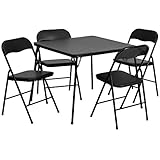


Table dimensions that actually work for studying
A laptop alone fits on a 20-inch-deep surface, but real studying means a laptop plus an open textbook or notebook, which needs the full 24 inches. Go below that and your book hangs off the front edge or crowds the keyboard.
- Width: 36 inches is the minimum for a laptop and one open book side by side; 48 inches lets you spread notes, a lamp, and a second screen.
- Depth: 24 inches for most students; 30+ inches only if you push a monitor back and want writing space in front.
- Height: most folding tables sit at 28–29 inches, which matches standard desks — but only if your chair seat is 17–18 inches high. A mismatch of more than 2–3 inches from the ideal 10–12-inch gap causes hunching within an hour.
Kids under about 5 feet tall need a lower surface — adjustable-height models like the Lifetime 4-foot table (which locks at roughly 24, 29, and 36 inches) solve this better than a fixed-height card table.
Folding mechanisms compared
How a table folds determines where it can live when you’re not studying. These are the four types you’ll actually find, with realistic folded sizes.
| Mechanism | Open size (typical) | Folded size | Trade-off |
|---|---|---|---|
| Fold-in-half suitcase style (Lifetime 4-ft) | 48 × 24 × 29 in | ~24 × 24 × 4 in, carry handle | Center seam flexes slightly; keep monitors near the legs, not the hinge |
| Legs-fold-flat (Origami desk, Cosco-style) | 39–48 × 20–24 in | Full length, ~2–3 in thick | Seamless top for writing; needs a closet or gap beside a dresser to store |
| Wall-mounted drop-leaf (IKEA NORBERG) | ~29 × 24 in | Projects only ~3–4 in from wall | Requires drilling into studs; fixed location |
| Gateleg (IKEA NORDEN) | ~60 × 31 in fully open | ~10 in deep console | Heaviest (~50+ lb); a permanent furniture piece, not truly portable |
For renters and dorm rooms, the fold-in-half design wins on portability — it carries like a suitcase and slides under most beds (you need about 4.5 inches of under-bed clearance). The legs-fold-flat style is the better pick if the table will stay set up for weeks at a time, because the uninterrupted top is noticeably more stable for writing.
What to look for in the chair
The chair matters more than the table for comfort, and it’s where folding furniture cuts the most corners.
- Seat height: 17–18.5 inches pairs correctly with a 28–29-inch table. Measure your existing table before buying a chair.
- Seat depth: 15–16 inches suits most adults; deeper seats on cheap chairs often have no back support behind them.
- Weight capacity: basic resin-and-steel chairs (IKEA GUNDE style) rate around 225–250 lb; padded steel chairs (Meco, Cosco) typically handle 300 lb; commercial models like Flash Furniture’s HERCULES line or National Public Seating rate 400–500 lb. Buy one tier above what you need — ratings assume static sitting, not leaning back.
- Padding reality: vinyl-padded seats feel better for the first 90 minutes but the foam flattens and the vinyl cracks after a few years of daily use. A hard wood or resin seat (IKEA TERJE style) plus a separate $15–$25 cushion outlasts it.
- Storage: a folding chair collapses to roughly 2–4 inches thick and weighs 6–11 lb — light enough to hang on a wall hook.
Honest caveat: if you regularly study more than 4 hours a day or deal with back pain, a folding chair is a compromise. Choose the most padded option rated 300+ lb, add a lumbar pillow, and stand every 45 minutes — or accept that this category isn’t built for marathon sessions.
Materials: what you give up for foldability
| Material | Writing surface | Weight | Expected lifespan | What fails first |
|---|---|---|---|---|
| HDPE blow-molded top + steel legs | Lightly pebbled — pen lines jitter on a single sheet; use a desk pad | 19–25 lb (4-ft table) | 10+ years | Corner bumpers, latch springs |
| MDF/laminate top | Smooth and stable, best for handwriting | 30–45 lb | 3–7 years | Edge banding chips, hinge screws loosen |
| Steel chair with vinyl pad | Comfortable ~90 min, then foam compresses | 9–11 lb | 3–5 years daily use | Vinyl cracks at seat crease |
| Wood folding chair (beech/birch) | Firm, supportive; add cushion after ~45 min | 7–9 lb | 10+ years | Foot caps pop off, joints need re-gluing |
The HDPE-versus-laminate choice is the real decision: HDPE tables are half the weight and shrug off spilled coffee and damp basements, but laminate tops feel like an actual desk. If your folding table will be set up 90% of the time, laminate is worth the extra 15 lb.
Fit it to your room before you buy
The table’s footprint is only half the equation — the chair zone is bigger than people expect.
- Pull-out clearance: allow 30 inches behind the table edge to slide the chair out and sit; 36 inches if that space is also a walkway. Squeezing past a seated person needs about 24 inches.
- Total depth: a 24-inch-deep table plus chair zone means the setup claims roughly 4.5–5 feet from the wall while in use.
- In a 10 × 12 ft room: a 48 × 24 table along the 10-foot wall leaves 6 feet of wall for shelves, and the chair zone reaches only mid-room — you’ll still have 6+ feet clear to the opposite wall. Comfortable.
- In a studio: a wall-mounted drop-leaf or a 36-inch table parked inside a closet alcove works; hang the folded chair on a hook behind the door.
- Doorways and stairs: a folded 4-ft table carries flat at ~24 inches wide and clears any standard 28–32-inch door on edge. A full-length unfolded 48-inch table needs tilting and a second person on stair landings.
Picks by situation
| Your situation | Table pick | Chair pick |
|---|---|---|
| Studio apartment / shared bedroom | Fold-in-half stored under bed, or wall-mounted drop-leaf | Slim resin or wood folder, ~3 in thick (GUNDE or TERJE style) |
| Kids’ homework (ages ~7–12) | Adjustable-height 4-ft table set to its lowest position | Lightweight resin chair under 8 lb, 225+ lb rated |
| Long sessions / mild back pain | 24-in-deep laminate top, legs-fold style for stability | Thick padded steel chair, 300+ lb, plus lumbar cushion |
| Two monitors + heavy textbooks | Legs-fold or commercial table, 300+ lb rating — avoid center-seam designs | Heavy-duty steel chair rated 400+ lb |
| Renter who moves yearly | Fold-in-half with carry handle, under 25 lb | Nesting/stackable chairs under 10 lb each |
Price-wise, expect roughly $40–$100 for a decent folding table, $10–$30 per basic chair, $25–$60 for padded or wood versions, and $80–$150 for wheeled foldable desks. A workable study setup lands around $80–$160 total.
Assembly, moving, and what wears out
Almost everything in this category arrives essentially assembled — you unfold the legs and you’re done; some foldable desks need casters screwed in (five minutes, one wrench). Boxed weights are the real moving constraint: a 4-ft fold-in-half table ships around 22–26 lb, a foldable desk 35–45 lb, and a four-pack of steel chairs 40+ lb. Anything over ~30 lb up a flight of stairs wants a second set of hands.
What wears first, in order: plastic feet caps (pop off and scratch floors — felt pads are the fix), cross-brace rivets on chairs (retighten hardware once a year), the pinch-latch spring on fold-in-half tables, and vinyl seat covers. The frame itself almost never dies. If a table wobbles out of the box, check that the leg-locking ring clicked fully home — that’s the cause nine times out of ten.
FAQ
Is a 34-inch card table big enough for studying?
For a laptop plus one book, yes — the 34-inch square gives generous depth. It gets cramped once you spread multiple textbooks or add a second screen, and most card tables rate under ~100 lb of distributed weight, so keep heavy gear off them.
My table is 29 inches but my chair sits low — is that a problem?
More than a 12-inch seat-to-desktop gap strains shoulders. Fix it with a firm seat cushion to raise yourself 1–2 inches, or choose an adjustable-height table rather than tolerating the mismatch.
How do I stop a folding table from wobbling?
Confirm both leg locks clicked, replace missing feet caps, and put it on a firm surface — thick carpet makes every folding table sway slightly. For fold-in-half models, position heavy items over the leg ends rather than the center hinge.