Key takeaways
- Inspect the hedge for wire, fencing, stones, and hidden objects before switching on.
- Wear eye protection, sturdy footwear, and hearing protection if recommended by the manufacturer. Keep hands away from the blade and use both handles as designed.
- For corded tools, route the cable away from the cutting path. For cordless tools, remove the battery before clearing a jam or cleaning the blade.
- Trim small amounts at a time, keeping the blade angle and stance controlled. Avoid reaching from a ladder with a powered hedge trimmer; use a suitable pole tool or hire help for difficult access.
- After use, clean away sap and debris, inspect for damaged teeth, and lubricate the blade as the manual directs. A dirty or dull blade cuts less cleanly and can increase vibration.
Best electric hedge trimmers: the right pick depends on your hedge
The best electric hedge trimmers are light enough to control at the height you need, with a blade and tooth gap suited to your hedge’s growth. For small, regularly maintained shrubs, choose a compact cordless trimmer; for long runs of soft growth, a corded model avoids battery breaks; and for large or tall hedges, prioritize reach and manageable weight over the longest blade. Electric trimmers are for routine trimming—not thick branches or major reductions.
Choose by hedge size and trimming job
| Your situation | Useful specification | Why it fits | Main trade-off |
|---|---|---|---|
| Small shrubs, short sessions, or a compact yard | 16–20 in blade; roughly 4–6 lb tool weight | Shorter blades are easier to steer around corners and keep level. | More passes on a long hedge. |
| Medium hedge trimmed a few times each season | 20–24 in blade; 5–8 lb; cordless battery around 2–4 Ah | A practical balance of coverage, mobility, and runtime. | Battery capacity and cutting pace affect how much you finish per charge. |
| Long, accessible hedge with a nearby outlet | 20–24 in corded blade; outdoor-rated extension cord | Continuous power suits extended work without charging pauses. | The cord needs constant attention and limits where you can work. |
| Tall hedge or broad top that needs overhead work | Pole trimmer, ideally with an adjustable head; check total reach and tool weight | Lets you work from the ground rather than stretching from a ladder. | Pole tools can feel heavier and less precise at full extension. |
| Older, woody growth or branches beyond the tool’s rating | Pruning shears, loppers, or a suitable pruning saw | These tools cut thicker stems without forcing a hedge trimmer. | Manual cutting takes longer, but reduces the risk of jams and damage. |
Specifications that make a practical difference
Blade length: coverage versus control
A longer blade cuts a wider strip with each pass, helpful on a straight, waist-high hedge. It also extends farther from your hands, making it harder to control around corners, narrow gaps, and uneven shrubs. A 16–20-inch blade is often easier for detail work; a 20–24-inch blade can save time on broad, accessible hedges. Don’t choose by length alone: a trimmer you can hold steadily is more useful than extra reach you cannot safely manage.
Our top picks
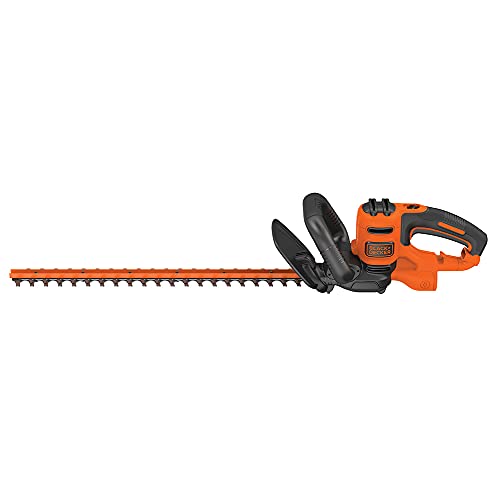

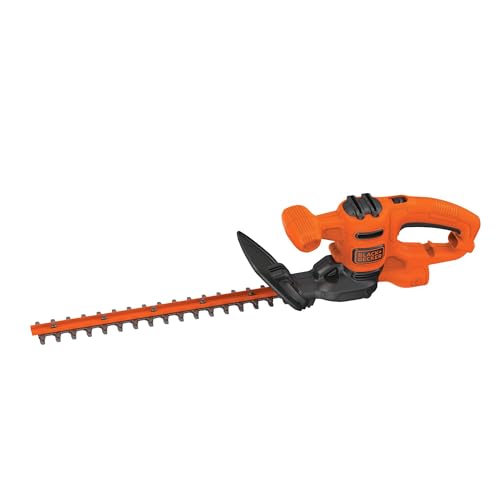

As an Amazon Associate we earn from qualifying purchases at no extra cost to you. Ratings are shown as listed on Amazon.
Tooth spacing and cutting capacity
Tooth spacing indicates the size of stems that can fit between the blades, but it is not a guarantee that the tool will cleanly cut a branch of that diameter. Check the manufacturer’s stated maximum cutting capacity, often listed in inches or millimeters, and leave a margin: a hedge with many stems close to that limit can make a small trimmer stall or snag. For fine, soft growth, closer teeth can produce a neat finish. For coarser growth, wider spacing and a higher cutting capacity may help, but woody branches still belong to loppers or a saw.
Corded or cordless power
A corded trimmer supplies power as long as it is plugged in and generally suits a yard where the hedge is within safe cord reach. Use an outdoor-rated extension cord of the gauge and length specified by the tool maker, keep it behind you, and protect it from the blade. A cord can snag on shrubs or cross a walkway, so it is a poor fit for a complex garden or a hedge far from an outlet.
Cordless models offer freedom of movement and are convenient for several small trimming jobs. Runtime varies with battery capacity, hedge density, blade condition, and how continuously you cut. If you already own compatible batteries from a tool system, that can make a cordless purchase more economical. For a large hedge, consider whether you have a spare charged battery rather than assuming one charge will be enough.
Weight, balance, vibration, and reach
Tool weight matters most when you hold the trimmer at arm’s length or above shoulder level. Compare the stated weight with battery installed, if applicable, and look for a front-to-rear balance that lets you guide the blade without gripping harder than necessary. Two models at the same weight can feel different because of handle placement and battery location.
Lower vibration and well-designed handles can make longer sessions more comfortable, but they do not eliminate fatigue. Take short breaks and switch hands only if the controls and manufacturer’s instructions allow it. For tall hedges, compare pole length, head angle, and total assembled weight—not just advertised maximum reach. A reach figure describes access, not how comfortably or precisely you can trim at full extension.
Match the tool to the hedge, not just the yard
| Hedge condition | Better choice | Check before buying |
|---|---|---|
| Low, narrow, and trimmed regularly | Light cordless trimmer with a 16–20 in blade | Battery compatibility, weight with battery, and cutting capacity. |
| Long and level, with a safe outlet nearby | Corded trimmer with a 20–24 in blade | Extension-cord requirements and a cord-retention feature. |
| Dense or slightly overgrown, but still within capacity | Trimmer with wider tooth spacing and a suitable stated cutting limit | Whether the stems actually fit the rating; remove thicker branches separately. |
| Tall hedge or awkward top edge | Purpose-built pole hedge trimmer | Reach, adjustable head positions, and total weight when extended. |
Safe use and care that extend blade life
- Inspect the hedge for wire, fencing, stones, and hidden objects before switching on.
- Wear eye protection, sturdy footwear, and hearing protection if recommended by the manufacturer. Keep hands away from the blade and use both handles as designed.
- For corded tools, route the cable away from the cutting path. For cordless tools, remove the battery before clearing a jam or cleaning the blade.
- Trim small amounts at a time, keeping the blade angle and stance controlled. Avoid reaching from a ladder with a powered hedge trimmer; use a suitable pole tool or hire help for difficult access.
- After use, clean away sap and debris, inspect for damaged teeth, and lubricate the blade as the manual directs. A dirty or dull blade cuts less cleanly and can increase vibration.
What to spend
Basic corded and compact cordless hedge trimmers commonly sit around $50–$150, while stronger cordless models and pole trimmers often fall around $150–$350 or more, depending on battery inclusion and power platform. These are broad market ranges, not a promise of a particular model’s current price. Compare the complete kit: a bare tool may require a separate battery and charger, and a longer blade is not automatically worth paying more for if your hedge is small.
Bottom line
For small, frequently trimmed shrubs, prioritize low weight and control. For long straight hedges, choose a longer blade and decide whether corded power or a spare cordless battery better suits the site. For tall growth, look for a pole tool with useful head adjustment and manageable extended weight. Match tooth spacing and cutting capacity to the stems you actually have, and use pruning tools for branches beyond the trimmer’s rating.