Key takeaways
- Stable layout: Three wheels or properly fitted stabilizers can make low-speed riding easier for beginners.
- Speed control: A real low-speed mode is preferable for first rides.
- Brakes and controls: Check that the child can reach and understand the stopping control.
- Construction: Look for secure fasteners, covered wiring, sturdy wheels, and no sharp edges or pinch points.
- Protective gear: Use a correctly fitted helmet and appropriate shoes; add other protective equipment suited to the riding area.
- Supervision: Keep rides away from streets, driveways with vehicle traffic, stairs, pools, and steep slopes.
Best Kids Ride-On Motorcycles: Which Type Fits Your Child?
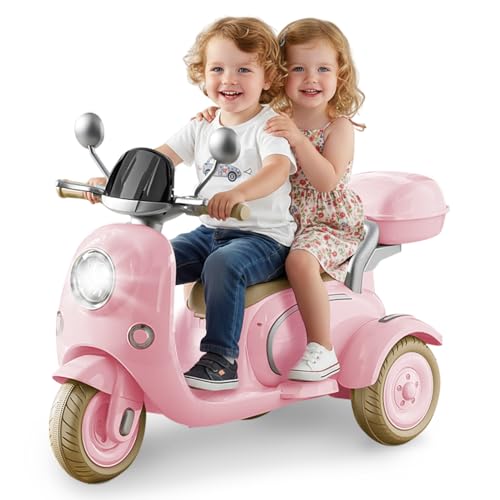
The best kids ride on motorcycles match a child’s age, size, and riding surface—not just a headline speed. For toddlers or first-time riders, choose a low-speed, three-wheel model with a wide base; for older, experienced children, consider a faster two-wheel design only if it has suitable brakes, a well-fitting helmet, and plenty of supervised space.
Specifications vary by model, so treat the ranges below as screening guidelines rather than guarantees. Before buying, check the manufacturer’s age and weight limits, measured runtime, charging instructions, and permitted surfaces for the exact model.
Our top picks



As an Amazon Associate we earn from qualifying purchases at no extra cost to you. Ratings are shown as listed on Amazon.
Quick Comparison by Riding Situation
| Child and use | Motorcycle type to look for | Typical speed range | Best surface | Check before buying |
|---|---|---|---|---|
| About 18 months–3 years; new rider | Three-wheel, low-seat ride-on with simple controls | About 1–2 mph | Flat, dry pavement or smooth indoor flooring | Low center of gravity, footrest reach, and close adult supervision |
| About 3–5 years; growing confidence | Three-wheel or stabilizer-equipped electric model | About 2–4 mph | Level driveway, patio, or smooth path | Working speed control, braking method, and weight limit |
| About 5–8 years; experienced rider | Powered model designed for older children | About 4–8 mph, depending on model | Private, open, level riding area | Age rating, effective brakes, protective gear, and adult oversight |
These are broad market ranges, not a promise that every motorcycle in an age group will suit every child. A child must be able to sit securely, reach the controls, and stop the vehicle as intended. Do not choose a faster model to “grow into.”
What Matters Most When Comparing Models
Age and weight limits
Use the stated age range as an initial filter, then check the maximum rider weight. A child near the limit may get shorter runtime and slower acceleration, and the seat or footrests may feel cramped. Allow room for normal growth, but stay within the manufacturer’s limit at all times. Also check whether the age rating assumes an adult nearby.
Speed settings and stopping
Multiple speed settings are useful when they genuinely limit the motorcycle’s top speed, rather than only changing acceleration. A slow setting can help a beginner practice starting, steering, and stopping. Confirm how the vehicle stops: some use a foot pedal, others a handlebar control, and some stop when the child releases the accelerator. The child should be able to operate the control reliably.
For younger riders, stability and predictable stopping matter more than a high top speed. A two-wheel ride-on can be harder to balance and may be unsuitable for a beginner, even if its age label seems appropriate.
Battery runtime and charging time
Many small electric ride-ons provide roughly 45–90 minutes of riding per charge, while larger or faster models can vary considerably. Runtime depends on rider weight, speed, hills, surface, temperature, and how often the child starts and stops. A stated runtime is usually an estimate under particular conditions, not a guaranteed play session.
Charging commonly takes about 8–12 hours for small sealed lead-acid battery systems; some models use different batteries and specify different times. Follow the supplied charger instructions, charge in a dry, ventilated area, and avoid leaving the vehicle charging unattended unless its manual explicitly permits it. Check whether a replacement battery is available before buying.
Safety features and fit
- Stable layout: Three wheels or properly fitted stabilizers can make low-speed riding easier for beginners.
- Speed control: A real low-speed mode is preferable for first rides.
- Brakes and controls: Check that the child can reach and understand the stopping control.
- Construction: Look for secure fasteners, covered wiring, sturdy wheels, and no sharp edges or pinch points.
- Protective gear: Use a correctly fitted helmet and appropriate shoes; add other protective equipment suited to the riding area.
- Supervision: Keep rides away from streets, driveways with vehicle traffic, stairs, pools, and steep slopes.
A toy ride-on is not road transportation. Follow the manual and local rules, and do not let a child ride where cars or pedestrians cannot be safely avoided.
Match the Motorcycle to the Surface
| Surface | Suitability | What to watch for |
|---|---|---|
| Smooth, level indoor floor | Good for small, slow ride-ons if the manufacturer allows indoor use | Hard plastic wheels may be noisy or leave marks; clear furniture and rugs |
| Flat concrete or paved patio | Usually the most predictable outdoor surface | Keep clear of edges, gravel, parked cars, and slopes |
| Short, even grass | Only if the model specifies grass use and has enough traction and power | Grass increases rolling resistance and reduces battery runtime |
| Gravel, sand, mud, or uneven ground | Generally a poor fit for small toy motorcycles | Wheels can slip or bog down; bumps can destabilize a young rider |
Room Fit, Storage, and Wear
For indoor riding, measure both the motorcycle and the usable route—not just the room’s overall dimensions. In a 10 × 12 ft room, a compact ride-on may fit, but a child still needs space to turn and stop. As a practical starting point, clear a route at least 3 ft wide and leave about 4 ft of open space for turning; move coffee tables, floor lamps, and breakable decor out of the riding area. These clearances are planning suggestions, not safety certification.
Check the model’s overall length and turning space against doorways, hallways, and its storage spot. A ride-on that fits through the front door may still be awkward to carry up stairs. Ask for the boxed weight if you need to move it before assembly, and note whether the battery can be removed for charging or storage.
With repeated use, tires or plastic wheels, switches, wiring connections, and battery capacity are common points to monitor. Inspect the vehicle regularly for loose hardware, cracked plastic, exposed wires, or reduced braking response. Store it out of rain and follow the manual’s guidance for long periods without use.
Buying Picks by Situation
- For a first ride-on: Choose a three-wheel model with a low top speed, simple controls, and a weight limit comfortably above the child’s current weight.
- For shared indoor and outdoor use: Favor a compact model with a clearly stated surface rating, manageable dimensions, and wheels suited to the floors where it will be used.
- For longer outdoor sessions: Compare battery capacity and charging time, but prioritize a manufacturer-approved surface and realistic runtime over claims of high speed.
- For an older, confident child: Consider a faster model only when the child can reach and use its controls, the space is private and open, and an adult can supervise.
Final Checklist Before You Buy
Compare the exact model’s age and weight limits, dimensions, speed settings, stopping method, battery runtime, charging time, and approved surfaces. Confirm that the child fits the seat and controls, that you have a safe place to ride and store it, and that replacement batteries or parts are obtainable. The best choice is the one the child can control safely on the surface you actually have—not necessarily the fastest or most elaborate motorcycle.