Key takeaways
- A 5 quart stainless bowl with tilt-head access.
- Includes dough hook, flat beater, and wire whip.
- Connects to KitchenAid’s wide hub accessory range.
A stand mixer does the heavy work of creaming butter, whipping whites, and kneading dough so your arms do not, and the six machines here cover three different designs: overhead tilt-head models, a bottom-drive bowl, and a rotating-bowl dough system. Choosing well means matching the bowl size and mixing motion to what you bake, not chasing the highest wattage. Always switch a mixer off and unplug it before changing beaters or cleaning, and keep hands and spatulas out of a moving bowl.
Quick Verdict: The KitchenAid Artisan KSM150PSWH is our Best Overall choice because its 5 quart stainless bowl, tilt head, and bundled dough hook, beater, and whip cover most home baking across 10 speeds. This is an editorial pick based on published specs as of October 2026, not in-house testing. Check the current price and confirm the white variant on the listing before you buy.
As an Amazon Associate we earn from qualifying purchases.
By DIY Ideas 4 Home Editorial Team
The Best Stand Mixers Reviewed
We compared currently listed US machines using each maker’s product page, the model use guide where reachable, and authorized retailer listings for the exact color. The measures that matter are the bowl capacity, the mixing architecture, the included attachments, the speed range, and the footprint. Listed prices here span about $149.99 to $799.95 as of October 2026. Watts describe motor input, not kneading torque, so we do not rank dough performance on wattage, and vendor cookie or loaf maximums are marketing conditions rather than guarantees for every recipe.
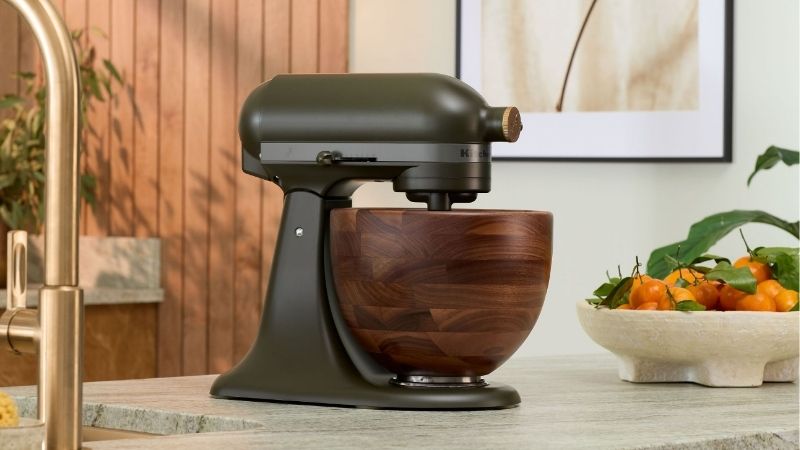
| Product | Best For | Key Spec | Listed Price (as of October 2026) | Watch Out For |
|---|---|---|---|---|
| KitchenAid Artisan KSM150PSWH | Best Overall | 5 qt bowl; tilt head; 10 speeds; 3 tools | $499.99 | Needs clearance above to tilt the head |
| Hamilton Beach Stack & Scrape 63380 | Best Budget | 4 qt bowl; bowl scraper; 7 speeds; 300 W | $149.99 | Smaller bowl than 5 to 7 quart rivals |
| Cuisinart Precision Master SM-50NAS | Best for Mid-Tier Value | 5.5 qt bowl; planetary; 500 W; 12 speeds | $319.95 | Not sold in CO, ME, or MN per maker |
| Bosch Universal Plus MUM6N10UC-DE | Best for Large Dough | 6.5 qt bowl; bottom drive; 500 W; pulse | $499.00 | Bottom-drive workflow differs from tilt-head |
| KitchenAid Classic K45SSWH | Best for a Simple Classic | 4.5 qt bowl; tilt head; 10 speeds; 4 tools | $299.99 | Promotional price; maker list is higher |
| Ankarsrum Assistent Original AKM6230 | Best Premium | 7 L rotating bowl; roller, hook, whisks | $799.95 | Learning curve differs from a tilt-head |
KitchenAid Artisan KSM150PSWH: Best Overall Tilt-Head Mixer
Best For: Everyday home bakers who want one familiar machine and access to the widest accessory ecosystem.
The Artisan leads because it balances capacity, included gear, and the vast hub accessory range around it. Its 5 quart bowl handles most cakes, cookies, and moderate bread without the bulk of the Bosch or the learning curve of the Ankarsrum. The two honest caveats are price and clearance: it costs more than sub-$320 rivals, and the tilt head needs open space above the machine to lift, so a low shelf can block it.
KitchenAid’s product page for the KSM150PSWH lists a manufacturer-stated 5 quart stainless bowl, a tilt head, a 10-speed control, and a bundle of dough hook, flat beater, and wire whip, at a listed $499.99 as of October 2026 for the white model. That white SKU is the one to lock, since a cheaper Onyx promotion names a different color at a lower figure that should not be applied here. Five accessories are listed with the current machine.
The Artisan measures 13.91 inches tall, 8.66 inches wide, and 14.09 inches deep, and weighs about 22.8 pounds, so it is a substantial fixture that is best left on the counter rather than lifted often. Remember the head tilts back, so leave headroom above it. The bowl and coated flat beater are easy to hand wash, and the hub cover hides the port where the brand’s many optional attachments connect.
Pros:
- A 5 quart stainless bowl with tilt-head access.
- Includes dough hook, flat beater, and wire whip.
- Connects to KitchenAid’s wide hub accessory range.
Cons:
- Higher list price than sub-$320 alternatives here.
- Tilt head needs clearance above to open fully.
Who Should Buy It: Buy the Artisan for versatile everyday baking; choose the Bosch Universal Plus if you regularly knead large, heavy dough batches.
Hamilton Beach Stack & Scrape 63380: Best Budget
Best For: New or occasional bakers who want a capable stand mixer without a premium outlay.
The 63380 makes stand mixing affordable and adds a clever twist: an integrated scraper on the bowl. That built-in scraping sweeps the sides as it mixes, which cuts how often you stop to scrape by hand, unlike the plain bowls on pricier machines. The compromises are size and strength: its 4 quart bowl is smaller than the 5 to 7 quart rivals, and the scraper is one more piece to clean after a batch.
Hamilton Beach’s product page for the 63380 lists a manufacturer-stated 4 quart bowl, orbital mixing with a bowl scraper mechanism, 7 speeds with a slow first gear and a mixing guide, a 300 watt motor, and a tilt-back head, at a listed $149.99 as of October 2026. It is the active model, so do not substitute the cheaper 63390 that showed out of stock, since the two are different products with different features.
The 63380 measures 13.25 inches tall, 8.5 inches wide, and 13.25 inches deep, a compact body that suits smaller kitchens and lighter storage. Its 300 watt input is fine for batters and lighter doughs, though it is not aimed at the heavy bread loads the Bosch targets. The scraper detaches for cleaning, and the tilt-back head gives easy bowl access; wash the beaters per the guide and keep the base dry.
Pros:
- Lowest price here at $149.99 as of October 2026.
- Integrated rotating bowl scraper reduces hand scraping.
- 7 speeds with a slow first gear for gentle starts.
Cons:
- A 4 quart bowl is smaller than 5 to 7 quart rivals.
- The scraper is an extra moving piece to clean.
Who Should Buy It: Pick the 63380 for an affordable first mixer; step up to the KitchenAid Artisan if you want a larger bowl and the hub accessory range.
Cuisinart Precision Master SM-50NAS: Best for Mid-Tier Value
Best For: Bakers who want a large bowl and a full attachment set without paying flagship prices.
The Precision Master is the value sweet spot in the middle of this group. It pairs a generous 5.5 quart bowl with a complete set of tools and a power hub, undercutting the KitchenAid Artisan while offering a bigger bowl than the Classic. The tradeoffs are weight and availability: it is heavier to move than a bottom-drive machine, and the maker notes it is not sold in a few states, which buyers there must plan around.
Cuisinart’s product page for the SM-50 lists a manufacturer-stated 5.5 quart bowl, a planetary tilt-back design, a 500 watt motor, 12 speeds, an attachment power hub, and included whisk, dough hook, paddle, and splash guard, with a dishwasher-safe bowl and accessories, at a listed $319.95 as of October 2026. The page states the mixer is not available for sale in Colorado, Maine, or Minnesota, so confirm shipping to your state and lock the White Linen variant.
The SM-50NAS measures 14.17 inches long, 7.87 inches wide, and 14.13 inches tall, and weighs about 18.10 pounds, a solid planetary machine that still lifts more easily than the heaviest rivals. The bowl and supplied tools are dishwasher-safe per the maker, which eases cleanup, and the hub accepts optional attachments. Keep clearance for the tilt-back head, and secure the bowl before running the higher of its 12 speeds.
Pros:
- A 5.5 quart bowl with 12 speeds and a power hub.
- Includes whisk, dough hook, paddle, and splash guard.
- Dishwasher-safe bowl and supplied accessories.
Cons:
- Not available for sale in Colorado, Maine, or Minnesota.
- At 18.10 pounds it is heavier to move than a bottom-drive unit.
Who Should Buy It: Choose the Precision Master for a big bowl at a fair price; pick the Ankarsrum Assistent if you want a premium dough system with a rotating bowl.
Bosch Universal Plus MUM6N10UC-DE: Best for Large Dough
Best For: Serious bread bakers who knead large, heavy doughs and want a low, wide machine built around that task.
The Universal Plus takes a different path from the tilt-head crowd. Its motor sits beneath the bowl in a bottom-drive layout, with a center post that works large dough efficiently, which is why bread bakers gravitate to it over an overhead machine. The adjustments it asks for are real: the center-post bowl and lower drive feel unfamiliar if you grew up on a KitchenAid, and its wide base needs horizontal counter space even though it stays low.
NutriMill’s product listing, as the authorized US Bosch distributor, describes a manufacturer-stated 6.5 quart plastic mixing bowl with a dough hook and whisks, a 500 watt motor, four speeds plus pulse, suction feet, and stored cord, at a listed $499.00 as of October 2026. This exact MUM6N10UC-DE includes the white plastic bowl, so the pricier stainless-bowl figures and any specific maximum-dough claim from other bundles should not be carried onto it.
The Universal Plus measures 15.5 inches wide, 11.5 inches deep, and 10.75 inches tall, and weighs about 12.75 pounds, so it is the widest yet lightest and lowest machine here. The suction feet steady it during heavy kneading, and the cord stores in the base for tidy counters. Its low profile means no overhead clearance is needed, unlike the tilt-heads, though you should give the wide footprint room to sit flat.
Pros:
- A 6.5 quart bowl with an efficient bottom-drive design.
- Four speeds plus pulse, with steadying suction feet.
- Low profile needs no overhead clearance to operate.
Cons:
- Wide footprint despite its low height.
- Center-post bowl differs from a familiar tilt-head workflow.
Who Should Buy It: Pick the Universal Plus for frequent heavy dough; choose the Hamilton Beach 63380 if a small, cheap mixer for light batters is all you need.
KitchenAid Classic K45SSWH: Best for a Simple Classic
Best For: Light to moderate bakers who want the familiar KitchenAid tilt-head in a smaller, cheaper package.
The Classic is the pared-back KitchenAid for people who do not need the Artisan’s extra capacity. It keeps the same recognizable tilt-head shape and hub compatibility in a smaller 4.5 quart bowl at a lower price, which is the point of difference against its bigger sibling. The caveats are size and pricing clarity: the smaller bowl suits modest batches, and its attractive figure is a promotion, with the maker list sitting higher.
KitchenAid’s product page for the K45SSWH lists a manufacturer-stated 4.5 quart stainless bowl, a flat beater, dough hook, and wire whip, a 10-speed tilt head, and four included accessories with hub compatibility, at a promotional $299.99 as of October 2026 against a higher $399.99 list. Because that promotion can change, confirm the live price and the white K45SSWH variant on the page rather than assuming the sale figure will hold.
The Classic stands about 13.9 inches tall and 14.12 inches deep, at roughly 27 pounds, so it occupies a similar overhead-clearance footprint to the Artisan despite the smaller bowl. The tilt head needs the same room to lift, and the bowl and coated beater hand wash easily. It connects to the same hub attachments as other KitchenAid models, so you can grow the system later even with the entry machine.
Pros:
- Familiar KitchenAid tilt-head in a 4.5 quart size.
- 10 speeds with flat beater, dough hook, and wire whip.
- Compatible with the same hub attachments as larger models.
Cons:
- Smaller 4.5 quart bowl than the Artisan 5 quart.
- The $299.99 figure is a promotion, with a higher maker list.
Who Should Buy It: Choose the Classic for a simpler, smaller KitchenAid; pick the Cuisinart Precision Master if you want a larger bowl and more speeds for similar money.
Ankarsrum Assistent Original AKM6230: Best Premium
Best For: Dedicated bread bakers who want a durable, high-capacity rotating-bowl machine and will learn its method.
The Assistent is the specialist flagship, and it mixes in a way unlike every other pick. Instead of a beater sweeping a fixed bowl, the 7 liter bowl itself rotates against a roller and hook, a design built for large, stiff doughs and long life. Its reasons for caution are the price and the method: it is the most expensive machine here, and its setup and controls take real learning compared with a plug-and-go tilt-head.
Ankarsrum’s product page for the Assistent Original lists a manufacturer-stated 7 liter stainless rotating mixing bowl, a dough roller, hook, and whisk kit, an included 3.5 liter separate beater bowl, variable-speed control, and a 7-year warranty in the US description, at a listed $799.95 as of October 2026. The maker page points to its retailers rather than a direct buy button, so confirm a named seller’s stock, and note the Black Diamond is a different, out-of-stock SKU.
The Assistent measures 14.1 inches tall, 10.6 inches wide, and 15.7 inches deep, and weighs about 19 pounds, a wide machine that earns its counter space with capacity. Its 7 liter bowl is close to 7.4 US liquid quarts as a unit conversion, not a maker-stated quart rating, and it uses a different bowl than the Bosch. The roller and hook assemble in a specific order, so follow the guide, and the long warranty reflects its repair-friendly build.
Pros:
- A 7 liter rotating bowl suited to large, stiff doughs.
- Includes a 3.5 liter beater bowl and whisk kit.
- Backed by a 7-year warranty in the US description.
Cons:
- Highest price in this six-model group.
- Assembly and controls differ from a planetary tilt-head.
Who Should Buy It: Choose the Assistent for serious bread baking and longevity; pick the KitchenAid Artisan if you want a simpler everyday machine with a huge accessory range.
How to Choose a Stand Mixer
A mixer is a long-term kitchen fixture, so match it to what you bake and the space you have rather than the biggest wattage number. Before choosing from these six, settle the bowl size you need, the mixing design that suits your doughs, and how much counter and overhead room you can give it. Remember that watts measure motor input, not the torque that actually kneads dough.
Start With Bowl Capacity
Bowl size shapes what you can make in one batch. The capacities here run from the Hamilton Beach 4 quart and KitchenAid Classic 4.5 quart up through the Artisan 5 quart, the Cuisinart 5.5 quart, the Bosch 6.5 quart, and the Ankarsrum 7 liter. A larger bowl helps with big bread or double batches, but an oversized bowl can struggle to mix very small amounts well.
Capacity is also not interchangeable with dough limit. A 7 liter Ankarsrum bowl is close to 7.4 US quarts as a conversion, yet its rotating design handles dough differently from a 6.5 quart Bosch, so the raw number does not tell the whole story. Match the bowl to your most common batch, then confirm the machine’s design suits the doughs you make most.
Understand the Mixing Architecture
How a mixer moves matters as much as its size. Tilt-head planetary machines, like the KitchenAid and Cuisinart, sweep a beater around a fixed bowl, which is intuitive and great for batters. The Bosch bottom-drive and the Ankarsrum rotating bowl route torque differently and shine with large, heavy dough, at the cost of a less familiar routine.
Think about your baking before the mechanism. If you make cakes, cookies, and the occasional loaf, a planetary tilt-head is the easy, versatile choice. If bread is your main output and you knead big batches often, a bottom-drive or rotating-bowl design can handle that work more comfortably, which is why those layouts exist alongside the classic tilt-head.
Weigh Speed Settings and Power
Speed ranges vary across these machines, from the Bosch four speeds plus pulse to the KitchenAid 10 speeds and the Cuisinart 12. More speeds give finer control over folding and whipping, but the count alone does not make a mixer stronger. A slow first gear, like the Hamilton Beach offers, is handy for starting dry ingredients without a flour cloud.
Do not read wattage as kneading power. A 500 watt motor is not automatically stronger at dough than a 300 watt one, because motor type, gearing, and the drive design all shape the real torque at the beater. Treat wattage as one feature among several, and judge dough capability from the machine’s design and maker guidance rather than a single number.
Measure Footprint and Clearance
Mixers are big, so plan the space honestly. Tilt-head models like the Artisan and Classic need room above the machine to lift the head, while the low Bosch needs no overhead clearance but spreads wide across the counter. Measure both the width and the height under your cabinets before you commit to a design.
Weight affects where it lives, too. A heavier machine like the Artisan is best left out on the counter rather than lifted in and out of a cabinet, while a lighter unit is easier to store. Factor in cleaning and safety as well: unplug before changing tools, keep fingers out of a moving bowl, and check which parts are dishwasher-safe.
Frequently Asked Questions
These questions cover capacity, mixer types, the wattage myth, and cleaning, so you can match a machine to the baking you actually do.
Is a 5-quart stand mixer big enough for bread dough?
For most home bread, yes. A 5 quart bowl like the KitchenAid Artisan handles standard loaves and moderate batches comfortably, and the 4.5 quart Classic manages smaller ones. If you routinely knead very large or very stiff doughs, a bigger bowl and a dough-focused design like the Bosch 6.5 quart or the Ankarsrum 7 liter will cope better. Follow the maker’s speed limits for heavy dough, since kneading too fast can strain a motor not built for that load.
What is the difference between tilt-head and bowl-lift mixers?
They differ in how the bowl and beater meet. A tilt-head mixer, like the KitchenAid models here, tilts the motor head back so you can reach the bowl, which needs clearance above the machine. The Bosch in this group instead uses a bottom-drive design with the motor beneath the bowl, a low layout suited to large dough. Each has tradeoffs: tilt-heads are intuitive for everyday baking, while bottom-drive and rotating-bowl machines favor heavy, high-volume kneading.
Does a higher watt stand mixer knead dough better?
Not necessarily. Wattage measures the electrical input to the motor, not the torque delivered to the beater, and motor type, gearing, and drive design all affect real kneading strength. A 500 watt machine is not guaranteed to out-knead a 300 watt one. Judge dough capability by the mixer’s design and the maker’s guidance for heavy mixing rather than the watt figure alone, and respect the recommended speeds so you do not overwork the motor.
Can you put stand mixer bowls and beaters in the dishwasher?
Only the parts the maker lists as dishwasher-safe. The Cuisinart Precision Master, for example, describes its bowl and supplied accessories as dishwasher-safe, but coated beaters and some bowls on other machines are meant for hand washing to protect their finish. Always check your exact model guide before loading anything, unplug the mixer before cleaning the base, and never immerse the motor housing, which keeps both the finish and the electronics intact.
Final Thoughts
For the best all-around home machine, the KitchenAid Artisan KSM150PSWH remains our Best Overall pick because its 5 quart bowl, bundled beater, hook, and whip, and vast hub ecosystem suit the widest range of baking. One factor can change the call: if you knead large, heavy bread doughs week after week, the bottom-drive Bosch Universal Plus or the rotating-bowl Ankarsrum will serve that work better, while a tight budget points to the Hamilton Beach 63380. Measure your counter and overhead clearance, match the bowl and mixing design to your doughs, and confirm the live price and the exact color before you order a stand mixer.