Key takeaways
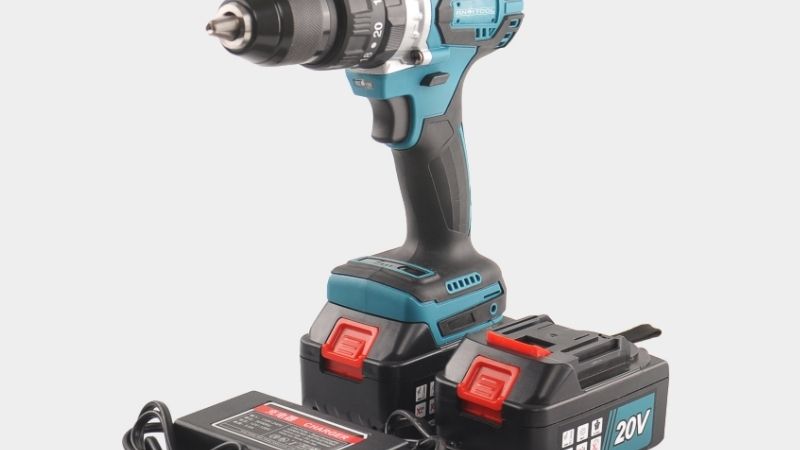
- Two 2.0 amp-hour batteries and charger included
- Up to 750 in-lb rated torque, 2,100 RPM high gear
- 1/2 inch metal chuck and 24-position clutch
A good cordless drill kit is the one whose battery platform, chuck and two-speed gearbox match the holes and screws you actually drive, and the smartest comparison starts with what comes in the box rather than a headline torque figure.
Quick Verdict: For most DIY users, the RYOBI 18V ONE+ HP PBLDD01K is the pick because it ships with two 2.0 amp-hour batteries and a charger and spins to 2,100 RPM in high gear. If you want the shortest head for tight cabinets, the DEWALT ATOMIC 20V MAX DCD794D1 is the better fit. This is an editorial pick based on published specifications as of October 2026, not in-house testing. Confirm the kit contents and current price on the listing before you buy.
As an Amazon Associate we earn from qualifying purchases.
By DIY Ideas 4 Home Editorial Team
The Best Cordless Drills Reviewed
We selected these six drill-driver kits based on published specifications and manufacturer documentation rather than in-house testing, as of October 2026, comparing battery pack counts, chuck size and two-speed RPM on the same nominal platforms. Complete kits here run from about 79 to 199 dollars at major retailers, and because brands rate maximum torque in different ways, we do not crown a single strongest tool.
| Product | Best For | Key Spec | Listed Price (as of October 2026) | Watch Out For |
|---|---|---|---|---|
| RYOBI 18V ONE+ HP PBLDD01K | Versatile DIY, two batteries | 0 to 2,100 RPM high gear | $159.00 | Tool weight not published |
| Milwaukee M18 3601-22CT | Overhead work, 2-pack kit | 5.7 in head; 550 in-lb | $199.00 | Highest kit price here |
| DEWALT ATOMIC DCD794D1 | Tight cabinets, short head | 5.88 in head; 404 UWO | $179.00 | UWO is not in-lb; one battery |
| Makita 18V LXT XFD131 | Higher-capacity single battery | 3.0 Ah pack; 440 in-lb | $179.00 | Stock can lapse to backorder |
| Bosch GSR18V-400B12 | 20 clutch settings, light body | 1.95 lb bare; 400 in-lb | $79.00 | Price is location-sensitive |
| Kobalt 24V KDD 2024A-03 | Side handle, 24V platform | 0 to 2,000 RPM; 850 in-lb | $99.00 | Two Lowe’s prices conflict |
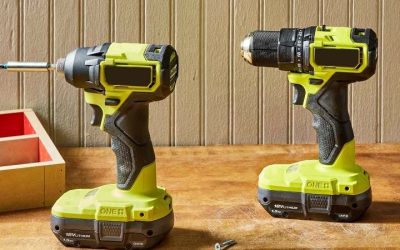
RYOBI 18V ONE+ HP PBLDD01K: Best Overall DIY Kit
Best For: A DIY owner who wants two batteries, brushless power and a wide platform for holes and screws alike.
What makes it the all-round pick is the box itself: two packs mean one is always charging, and against single-battery rivals that convenience matters more day to day than any claimed torque edge, which is why it leads for general home use.
RYOBI’s product page lists 0 to 500 RPM in low gear and 0 to 2,100 RPM in high, up to 750 in-lb of brand-rated torque and a 24-position clutch, with the brushless PBLDD01K kit, two 2.0 amp-hour batteries and a charger priced at $159.00 as of October 2026. The two 2.0 amp-hour packs are 4.0 amp-hours of nameplate capacity across separate batteries, not one 4.0 amp-hour pack or double the runtime.
By the Home Depot listing the bare tool weighs 3.32 pounds and stands about 7.1 inches tall, with a 1/2 inch ratcheting metal chuck and the ONE+ 18 volt platform behind it. Replacement ONE+ packs are easy to find, and the tool carries a three-year warranty, though its exact head length is not published.
Pros:
- Two 2.0 amp-hour batteries and charger included
- Up to 750 in-lb rated torque, 2,100 RPM high gear
- 1/2 inch metal chuck and 24-position clutch
Cons:
- Bare tool head length is not published
- Two packs do not double runtime under load
Who Should Buy It: Buy this for flexible DIY with a spare battery always ready; for the shortest nose in tight cabinets, the DEWALT ATOMIC 20V MAX DCD794D1 is the pick.
Milwaukee M18 3601-22CT: Best For Overhead Work
Best For: Someone working overhead or in a crouch who wants a short, light drill and two jobsite batteries.
Its draw is the shortest published head paired with a two-pack kit, so it suits ceiling boxes and ladder work where a stubby nose and a ready spare battery beat raw speed, which the RYOBI actually exceeds on paper.
Milwaukee’s product page states 0 to 550 RPM low and 0 to 1,700 RPM high, 550 in-lb of rated torque and a 1/2 inch all-metal chuck, and Home Depot lists the 3601-22CT kit with two 2.0 amp-hour REDLITHIUM packs and a dual-voltage charger at $199.00 as of October 2026. This is the standard drill, not the 3602 hammer-drill.
The tool measures 5.7 inches in head length and weighs 3.2 pounds with the included 2.0 amp-hour pack, or 2.3 pounds as a bare tool by the press release. That compact nose is its advantage, though its 1,700 RPM high gear sits below the RYOBI’s 2,100 RPM.
Pros:
- Short 5.7 inch head for overhead access
- Two REDLITHIUM packs and dual-voltage charger
- 550 in-lb rated torque, 1/2 inch metal chuck
Cons:
- Highest listed kit price of the six
- 1,700 RPM high gear trails faster rivals
Who Should Buy It: Buy this for overhead and tight-access work; if you would rather pay less for a two-battery kit, the RYOBI 18V ONE+ HP PBLDD01K undercuts it.
DEWALT ATOMIC DCD794D1: Best For Tight Cabinets
Best For: A finish or cabinet worker who needs the drill nose to fit into shallow boxes and corners.
It wins on reach into cramped spots, so it suits someone fitting hardware inside a cabinet carcass where length, not battery count, is the obstacle, accepting a single included pack to get there.
DEWALT’s product page lists 0 to 450 RPM low and 0 to 1,650 RPM high and rates output as 404 unit watts out, which is not an in-lb torque figure, with the DCD794D1 kit, one 2.0 amp-hour battery and a charger at $179.00 as of October 2026. Because UWO cannot be converted to in-lb, this drill cannot be sorted against the others on torque.
The tool head measures 5.88 inches front to back, and while the retailer cites 2.75 pounds, the battery-included basis is unclear. It uses a 1/2 inch ratcheting chuck, carries a three-year limited warranty, and ships with one pack rather than the two in the RYOBI and Milwaukee kits.
Pros:
- Compact 5.88 inch front-to-back head
- 404 unit watts out under DEWALT method
- 1/2 inch ratcheting chuck, three-year warranty
Cons:
- Only one 2.0 amp-hour battery included
- UWO rating cannot be ranked against in-lb
Who Should Buy It: Buy this for tight cabinet work; if you want two batteries in the box, the Milwaukee M18 Compact Brushless 3601-22CT includes a spare.
Makita 18V LXT XFD131: Best For a Bigger Single Battery
Best For: A buyer who prefers one higher-capacity pack over juggling two smaller ones.
It answers a different need from the two-battery kits, pairing a single 3.0 amp-hour pack with a mature 18 volt system, so it suits someone who would rather run longer on one battery than swap packs mid-task.
Makita’s product page states 0 to 500 RPM low and 0 to 1,900 RPM high and 440 in-lb of rated torque, with the XFD131 kit, one 3.0 amp-hour battery and a charger listed at $179.00 at Acme Tools as of October 2026. That single 3.0 amp-hour pack is 50 percent more nameplate capacity than a 2.0 amp-hour pack at the same 18 volt platform, though not 50 percent more holes under load.
The drill head measures 6-5/8 inches front to back and the tool weighs 3.6 pounds with its battery, a stated basis rather than a bare figure. Stock can swing to backorder on the exact page, so availability should be checked before ordering.
Pros:
- One 3.0 amp-hour pack, higher nameplate capacity
- 0 to 1,900 RPM two-speed gearbox
- 440 in-lb rated torque on the LXT platform
Cons:
- Exact page can show backorder stock
- Only one battery versus the two-pack kits
Who Should Buy It: Buy this for longer single-battery runtime; if you want two packs at a similar price, the RYOBI 18V ONE+ HP PBLDD01K is the alternative.
Bosch GSR18V-400B12: Best For Fine Clutch Control
Best For: A user driving delicate screws who wants a 20-setting clutch and the lightest bare body here.
Its appeal is control and a featherweight tool, so it suits careful screwdriving into trim or electronics enclosures where finesse beats power, accepting a single battery to keep the price and weight down.
Bosch’s product page lists 0 to 500 RPM low and 0 to 1,900 RPM high, 400 in-lb of rated torque, a 20-position clutch and a 36 watt-hour pack, with the GSR18V-400B12 kit and one 2.0 amp-hour battery observed at $79.00 on Lowe’s as of October 2026. That $79 is a retailer offer rather than a fixed manufacturer price.
As a bare tool it measures 6.3 inches long, 2.9 inches wide and 8 inches high and weighs 1.95 pounds without the battery, the lightest here on that basis. Because that figure excludes the pack, it should not be called lighter than the battery-attached Milwaukee or Makita.
Pros:
- Fine 20-position clutch and 1/2 inch metal chuck
- Light 1.95 pound bare-tool weight
- 400 in-lb rated torque, 1,900 RPM high gear
Cons:
- Observed $79 price varies by location
- Single 2.0 amp-hour pack, no spare in the kit
Who Should Buy It: Buy this for careful screwdriving and a light body; if you need a side handle and more rated torque, the Kobalt Next-Gen 24V KDD 2024A-03 adds both.
Kobalt 24V KDD 2024A-03: Best For the 24V Platform
Best For: A buyer invested in Kobalt who wants a side handle and the brand’s higher torque claim.
It stands apart on its separate 24 volt platform and included auxiliary handle, so it suits someone already on Kobalt batteries who wants extra control for bigger bits, with the caveat that platform numbers do not rank linearly against 18 volt tools.
Kobalt’s product listing claims up to 850 in-lb of torque and 0 to 2,000 RPM in high gear, with a 23-plus-1 clutch, a Jacobs 1/2 inch ratcheting chuck and an 85 watt charger, and Lowe’s shows roughly $99.00 as of October 2026, though another indexed Lowe’s page reads $79.00 for the same model. Treat the $99 as the conservative display and recheck at checkout.
The tool measures 6.7 inches long, 2.9 inches wide and 8.5 inches high and weighs 2.9 pounds, though the battery basis is not stated. It includes a side handle and ships with a 2.0 amp-hour pack, but its 24 volt batteries do not interchange with the 18 volt brands here.
Pros:
- 850 in-lb brand-claimed maximum torque
- Side handle, 23-plus-1 clutch, Jacobs chuck
- Five-year tool warranty on the 24V platform
Cons:
- Two Lowe’s listings show conflicting prices
- 24V packs do not fit 18V tool families
Who Should Buy It: Buy this for the Kobalt platform and a side handle; if you want a lighter body with a fine clutch, the Bosch 18V GSR18V-400B12 is the more delicate tool.
How to Choose a Cordless Drill
A drill is only as useful as its kit and its fit to your work, so weigh these four points before the torque headline.
Buy a Complete Kit and Compare the Battery Platform
Confirm the box includes batteries and a charger, then compare pack count and amp-hours on the same nominal voltage. Two 2.0 amp-hour packs total 4.0 amp-hours across separate batteries, which is not one 4.0 amp-hour pack, and amp-hours measure capacity, not drilling force, so read them as runtime, not power.
Match Chuck, Clutch and Torque Mode to the Work
A 1/2 inch chuck accepts common bits, a multi-position clutch protects screw heads, and brand torque ratings are quoted on different scales. DEWALT reports 404 unit watts out while others list in-lb, so those numbers cannot be lined up, and a 1/2 inch chuck does not guarantee a 1/2 inch hole in every material.
Read Two-Speed RPM and Weight Correctly
Compare high-gear no-load RPM, such as 2,100 on the RYOBI against 1,650 on the DEWALT, and treat weight by its stated basis. A bare-tool 1.95 pound figure is not comparable to a with-battery 3.6 pound figure, and no-load RPM is not the speed you get under load in hardwood.
Plan Safer Drilling and Spare Batteries
Remove the battery before changing bits, clamp the work, wear impact-rated eye protection and check for hidden wiring and pipes before drilling into a wall. OSHA guidance on hand and power tools covers these basics; use only packs and chargers the maker lists as compatible, and budget for a spare battery since capacity fades over years of use.
Frequently Asked Questions
These are the questions first-time drill buyers ask most often.
Is a 20V MAX drill stronger than an 18V drill?
Not automatically. A 20V MAX label like DEWALT’s describes an 18 volt nominal platform measured at peak, so it does not inherently outperform an 18V tool. Real difference comes from the motor, gearbox and battery, not the voltage name on the box.
Do two batteries make the drill faster?
No. A second pack extends how long you can work before recharging, but it does not change drilling speed or torque. Two 2.0 amp-hour packs give you a ready spare, not a single larger battery or double the power.
Can any cordless drill hammer into concrete?
No. These are drill-drivers, not hammer-drills, so they are poor at masonry even with a masonry bit. For concrete or brick you want a dedicated hammer-drill or rotary hammer, and these standard models should stay on wood, metal and plastic.
What does the clutch number mean?
It sets how much torque the drill applies before it slips, so a higher clutch count gives finer control over screw depth. A 24-position clutch like the RYOBI’s lets you dial in a setting that seats a screw without stripping it or sinking it too far.
Final Thoughts
Across these six, the RYOBI 18V ONE+ HP PBLDD01K stays the best all-round DIY pick for its two-battery kit and fast high gear, though cabinet installers will prefer the short-nosed DEWALT DCD794D1 and delicate screwdriving favors the light, fine-clutch Bosch GSR18V-400B12; before ordering, match the platform to any batteries you already own and confirm the kit contents and price on the listing.