Key takeaways
- Four DRIVE CONTROL modes including self-tapping
- 3,900 maximum no-load RPM, 2,000 in-lb rated
- Compact 4.47 inch head with tri-LED lighting
An impact driver is the 1/4 inch hex tool you reach for when a drill-driver bogs down on long screws and lag bolts, and the pick comes down to control modes, battery platform and price rather than the biggest torque number on the spec sheet.
Quick Verdict: For most users, the Milwaukee M18 FUEL 2953-20 is the pick because it offers four drive-control modes and a 3,900 maximum no-load RPM at a brand-rated 2,000 in-lb. If you need the shortest tool for narrow access, the DEWALT ATOMIC DCF850B is the better fit. This is an editorial pick based on published specifications as of October 2026, not in-house testing. Confirm the bare-tool price and your battery platform on the listing before you buy.
As an Amazon Associate we earn from qualifying purchases.
By DIY Ideas 4 Home Editorial Team
The Best Impact Drivers Reviewed
We selected these six bare-tool impact drivers based on published specifications and manufacturer documentation rather than in-house testing, as of October 2026, comparing control modes, no-load RPM and rated torque on each brand’s own terms. Bare tools here span roughly 42 to 249 dollars at major retailers, and because torque protocols are not standardized, we treat those ratings as descriptive rather than a strongest-in-test ranking.
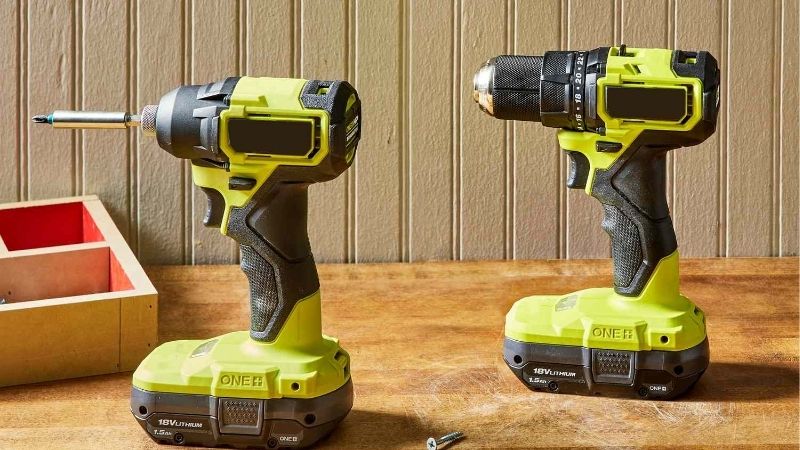
| Product | Best For | Key Spec | Listed Price (as of October 2026) | Watch Out For |
|---|---|---|---|---|
| Milwaukee M18 FUEL 2953-20 | Versatile professional fastening | 3,900 RPM; 4 modes | $179.00 | Battery and charger not included |
| DEWALT ATOMIC DCF850B | Cabinet corners, narrow access | Under 4 in head | $169.00 | Exact head length not published |
| Makita 18V LXT XDT20Z | Sheet metal, fine mode selection | 3,600 RPM; metal modes | $249.00 | Top listed price here |
| RYOBI ONE+ HP PBLID02B | ONE+ owners, lower entry price | 2,900 RPM; 2,200 in-lb | $41.65 | Special-buy price is temporary |
| RIDGID 18V R862311B | Deck lag fasteners | 2,300 in-lb; 4,200 BPM | $116.10 | Service plan needs registration |
| Bosch 18V GDR18V-1950CN | Repeat screws, auto slowdown | 3,400 RPM; 4.45 in head | $199.00 | Weight data is malformed |
Milwaukee M18 FUEL 2953-20: Best Overall Impact Driver
Best For: A user on the M18 platform who wants four control modes for mixed fastening across wood and metal.
It leads on versatility rather than a single spec, pairing the highest no-load speed here with a self-tapping screw mode, so it handles a varied punch list better than tools that give you fewer ways to tune the output.
Milwaukee’s product page rates it at 2,000 in-lb of maximum torque and 3,900 maximum no-load RPM with four DRIVE CONTROL modes including a self-tapping screw setting, and Home Depot lists the 2953-20 bare tool at $179.00 as of October 2026. Those ratings come from Milwaukee’s own method, not a shared bench test.
The tool weighs 2.2 pounds as a bare tool and measures 4.47 inches in head length, with tri-LED lighting around the collet. As a bare tool it needs a separate M18 battery and charger, and its brushless mechanism has no slip clutch, so delicate screws still call for a light trigger finger.
Pros:
- Four DRIVE CONTROL modes including self-tapping
- 3,900 maximum no-load RPM, 2,000 in-lb rated
- Compact 4.47 inch head with tri-LED lighting
Cons:
- Battery and charger must be bought separately
- No slip clutch for delicate fasteners
Who Should Buy It: Buy this for varied fastening on M18 batteries; for the shortest tool in cramped corners, the DEWALT ATOMIC DCF850B reaches further in.
DEWALT ATOMIC DCF850B: Best For Narrow Access
Best For: Someone driving screws in cabinet corners and cramped framing bays where a long tool will not fit.
Its selling point is a very short body, so it suits close-quarters work where even the Milwaukee’s compact head is too long, trading a precise published length for real-world reach.
DEWALT’s product page lists 0 to 1,000, 2,800 and 3,250 RPM across three speed settings including a Precision Drive mode and rates output at 1,825 in-lb, with the DCF850B bare tool at $169.00 at Ace Hardware as of October 2026. The 20V MAX label is a peak figure for an 18 volt nominal pack.
DEWALT describes the tool as under 4 inches front to back rather than giving an exact head length, and no precise bare-tool weight is published, so it cannot claim a measured size record. Precision Drive eases the start of a fastener before the normal impact modes engage.
Pros:
- Under 4 inch front-to-back head for access
- Precision Drive mode eases fastener starts
- 1,825 in-lb rated torque, three speed settings
Cons:
- No exact head length or weight published
- Battery and charger sold separately
Who Should Buy It: Buy this for the tightest access work; if you want a fourth mode and a published head length, the Milwaukee M18 FUEL 2953-20 is more fully specified.
Makita 18V LXT XDT20Z: Best For Sheet Metal
Best For: A user fastening sheet metal who wants dedicated self-drilling modes and fine speed control.
It stands out for its metal-screw programs rather than headline torque, so it suits HVAC and gutter work where overdriving a self-tapper is the real risk, accepting the highest price here for that control.
Makita’s product page lists 3,600 maximum no-load RPM, four speed ranges, an assist mode, two tightening modes for metal screws and a reverse auto-stop, rating torque at 1,590 in-lb, and Acme Tools lists the XDT20Z bare tool at $249.00 as of October 2026. The older XDT19Z is discontinued, and this XDT20Z is its active replacement.
The tool measures 4.5 inches front to back and is stated at 3.3 pounds with a battery that is sold separately, a mixed basis the brand itself notes. A ring LED lights the work, and the metal-screw tightening modes stop driving before the head strips.
Pros:
- Four speed ranges plus an assist mode
- Two tightening modes for metal screws
- Reverse auto-stop and ring LED lighting
Cons:
- Top listed price of the six bare tools
- 1,590 in-lb rating trails the other brands
Who Should Buy It: Buy this for sheet-metal fastening with fine control; if you want higher rated torque for deck work, the RIDGID 18V Brushless R862311B is stronger on paper.
RYOBI ONE+ HP PBLID02B: Best For ONE+ Owners
Best For: An existing RYOBI ONE+ owner who wants a capable brushless driver at a low entry price.
Its appeal is value within a platform the buyer already owns, so it suits someone adding a driver to a ONE+ battery collection rather than starting fresh, with a promotional price that sweetens the deal when it is live.
RYOBI’s product page rates it at 2,200 in-lb and 2,900 maximum no-load RPM with three manual speeds plus an assist mode and 4,000 impacts per minute, and the PBLID02B bare tool was observed at a $41.65 special buy against a $119.00 regular display as of October 2026. That special price is promotional and may revert without notice.
The driver measures 5.62 inches deep, 2.98 inches wide and 7.56 inches high and weighs 2.55 pounds by the Home Depot listing for the battery-free tool. The current PBLID02B should not be confused with the newer PBLID04B, which carries different torque and speed figures.
Pros:
- 2,200 in-lb rated torque, 4,000 impacts per minute
- Three manual speeds plus an assist mode
- Low special-buy entry price for ONE+ owners
Cons:
- The $41.65 special buy is temporary
- 2,900 RPM ceiling trails faster rivals
Who Should Buy It: Buy this if you already own ONE+ batteries; for four fastening modes on a pro platform, the Milwaukee M18 FUEL 2953-20 is the step up.
RIDGID 18V R862311B: Best For Deck Lag Fasteners
Best For: A deck builder on RIDGID batteries driving long lag screws into framing lumber.
It leans on the highest brand-claimed torque in this set, so it suits heavy fastening where a buyer wants maximum nameplate grunt on the RIDGID platform, keeping in mind that these ratings are not a shared test.
RIDGID’s product page rates the tool at 2,300 in-lb of maximum torque and 2,900 maximum no-load RPM with three speed settings and 4,200 beats per minute, and Home Depot lists the R862311B bare tool at $116.10 as of October 2026. The 2,300 in-lb figure is a brand maximum, not a measured head-to-head result, and cannot be read as wheel-lug removal force.
RIDGID lists the product weight at 2.3 pounds, though the measuring basis is not established. The tool accepts RIDGID 18 volt packs, and its advertised lifetime service agreement depends on registering within 90 days of purchase rather than applying automatically.
Pros:
- 2,300 in-lb highest brand-claimed torque here
- 4,200 beats per minute, three speed settings
- Accepts RIDGID 18V battery packs
Cons:
- 2,900 RPM ceiling matches the slower RYOBI
- Lifetime service needs 90-day registration
Who Should Buy It: Buy this for lag-heavy deck work on RIDGID packs; for repeat screws with automatic slowdown, the Bosch 18V GDR18V-1950CN adds that control.
Bosch 18V GDR18V-1950CN: Best For Repeat Screws
Best For: A user driving many identical screws who wants automatic slowdown to avoid stripping.
Its draw is repeatability, pairing defined speed steps with auto-stop behavior, so it suits production screwdriving where consistency matters more than peak torque, which several rivals rate higher.
Bosch’s product page lists three speed and torque steps at 800, 2,300 and 3,400 RPM with Auto Stop and Auto Slow Down modes and rates torque at 1,950 in-lb, and Lowe’s lists the GDR18V-1950CN bare tool at $199.00 as of October 2026. Bosch’s own includes section mislabels the tool as a GDS variant, but the 1/4 inch hex drive confirms this is the GDR.
Bosch gives a 4.45 inch head length, while Lowe’s lists a 3 pound weight without a stated basis and the brand table carries a malformed weight entry, so weight here cannot be compared. The auto modes slow the driver near the end of a fastener to protect the head.
Pros:
- Three defined speeds at 800, 2,300 and 3,400 RPM
- Auto Stop and Auto Slow Down modes
- Compact 4.45 inch maker-stated head length
Cons:
- Weight data is malformed, no clean basis
- Costs more than Milwaukee at lower rated RPM
Who Should Buy It: Buy this for consistent repeat screwdriving; if you want the highest no-load speed and four modes, the Milwaukee M18 FUEL 2953-20 is the more flexible tool.
How to Choose an Impact Driver
An impact driver is chosen by how it controls fasteners and which batteries you own, so work through these four points before torque ratings sway you.
Confirm 1/4 Inch Hex and Your Battery Platform
Every tool here takes 1/4 inch hex bits and runs on an 18 volt family, so pick the one that matches batteries you already own, because a bare tool with no pack and charger is only cheap if you can power it. Switching platforms means buying into a new battery ecosystem.
Match Control Modes to the Fastening
Count the usable modes: a self-tapping or metal-screw program protects thin stock, while a precision or assist mode eases a fastener start. The Milwaukee offers four modes and the Makita adds metal-screw tightening, which matters more for mixed work than a single high torque number.
Read Torque, RPM and Impacts Correctly
Brands rate maximum torque in in-lb on different protocols, so 2,300 in-lb and 1,590 in-lb are not a controlled ranking, and impacts or beats per minute are not the same as spindle RPM. Read no-load RPM such as 3,900 or 2,900 as a ceiling, not the speed under load, and never read in-lb driving torque as wheel-lug breakaway force.
Budget for the Bare Tool and the Ecosystem
These are tool-only prices, so add the cost of a starter battery and charger if you are new to the platform. Lock the trigger and remove the battery before changing bits, wear eye protection meeting ANSI Z87.1, use impact-rated 1/4 inch hex bits, and remember an impact driver is not a calibrated torque wrench, so critical joints need the fastener maker’s specification.
Frequently Asked Questions
These are the questions shoppers ask most often before buying an impact driver.
Is an impact driver the same as a drill?
No. An impact driver uses rotational impacts to drive screws and bolts through a 1/4 inch hex collet, while a drill uses a three-jaw chuck and a clutch for holes and delicate screws. Many users own both because each handles a different job.
Can an impact driver remove car lug nuts?
Not reliably. These tools rate torque in in-lb for fasteners, not the ft-lb breakaway an impact wrench with a 1/2 inch square anvil delivers, so a 2,300 in-lb driver is not a lug-nut tool. Use a proper impact wrench for wheels.
Does a higher in-lb rating mean faster driving?
Not by itself. Maximum torque ratings come from each brand’s own method, so they do not line up as a speed ranking, and real driving speed depends on the fastener, the material and the battery. Control modes often matter more than the headline number.
Do these come with batteries?
No. Every pick here is a bare tool, so the listed price excludes a battery and charger. If you do not already own compatible packs, factor in a starter kit before comparing prices across brands.
Final Thoughts
Across these six, the Milwaukee M18 FUEL 2953-20 stays the most versatile pick for its four modes and high no-load speed, though tight-access work favors the stubby DEWALT DCF850B and sheet-metal jobs the mode-rich Makita XDT20Z; before ordering, match the tool to batteries you already own and confirm the bare-tool price on the listing.