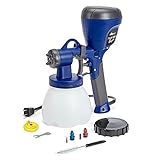
Key takeaways
- Best overall for decks: Chapin 1352 3-gallon heavy-duty sprayer with brass fan tip and brass wand.
- Best purpose-built deck model: Chapin Clean ‘N Seal 25020 2-gallon with three fan nozzles and a curved wand.
- Best for oil-based stain and solvent sealers: Chapin 1990 2-gallon with Viton seals, or the Smith Performance S100 with a stainless tank.
- Best value with extra nozzles: Deck & Home 190399 2-gallon with Viton seals and four nozzle options.
- Best for long runs on large fences and decks: Solo 425 backpack, but only after fitting a Viton seal kit if you spray oil-based products.
- Best for no hand pumping: Sylsmart 4.2-gallon battery backpack, for water-based, thin products.
For most deck projects, the Chapin 1352 3-gallon and the Chapin Clean ‘N Seal 25020 2-gallon are the two pump sprayers worth shortlisting, while the Chapin 1990 and Smith Performance S100 suit buyers who want documented Viton seals for oil-based sealers and solvent-heavy stains. Pick by seal material first, then tank size, then nozzle control.
Deck sealer and stain are not weed killer. Oil-based stains, penetrating sealers and solvent-based water repellents attack the rubber seals in cheap garden sprayers, and a pump that leaks at the shut-off valve in the middle of a board is a messy way to learn that. This guide explains which seal materials, tank sizes and nozzles matter, then compares eight sprayer options by buyer criteria with concrete thresholds.
Our top picks


As an Amazon Associate we earn from qualifying purchases at no extra cost to you.
Quick picks
- Best overall for decks: Chapin 1352 3-gallon heavy-duty sprayer with brass fan tip and brass wand.
- Best purpose-built deck model: Chapin Clean ‘N Seal 25020 2-gallon with three fan nozzles and a curved wand.
- Best for oil-based stain and solvent sealers: Chapin 1990 2-gallon with Viton seals, or the Smith Performance S100 with a stainless tank.
- Best value with extra nozzles: Deck & Home 190399 2-gallon with Viton seals and four nozzle options.
- Best for long runs on large fences and decks: Solo 425 backpack, but only after fitting a Viton seal kit if you spray oil-based products.
- Best for no hand pumping: Sylsmart 4.2-gallon battery backpack, for water-based, thin products.
How we chose
This guide is built from research, not first-hand evaluation. We compared manufacturer specifications, product listings and published buyer guidance, and we cross-checked claims where sources disagreed. Where a seal material could not be confirmed from more than one source, the article says so and tells you to check the box or manual before filling the tank with oil-based product. The criteria below are the ones that decide whether a sprayer survives a season of stain and sealer.
- Seal and gasket material: Viton (also called FKM) resists solvents, mineral spirits and oil-based stains. EPDM resists water-based sealers and many alkaline cleaners. Buna-N (nitrile) and standard rubber can swell and leak with oil stain.
- Tank size: 1 gallon suits small steps and railings; 2 gallons covers a typical 12 by 12 foot deck section per fill; 3 to 4 gallons suits long fences and big decks.
- Nozzle control: A fan tip lays down flat, even coats on boards. An adjustable cone suits railings and spindles. Foam tips are for cleaners, not sealer.
- Wand length and material: 18 inches or longer reduces bending; brass resists solvents better than cheap plastic.
- Pressure and clog resistance: Manual pumps top out around 60 PSI. That is fine for translucent sealers and thin stains but weak for thick, heavily pigmented products.
- Cleanability: Wide tank mouth, removable filter and a serviceable pump rod.
Seal materials compared
| Seal material | Good with | Avoid with | Typical sign of failure |
|---|---|---|---|
| Viton (FKM) | Oil-based stain, solvent sealers, mineral spirits, water-based products | Few common deck products | Rare; hardening after years of neglect |
| EPDM | Water-based sealers and stains, cleaners, many herbicides | Petroleum-based and oil-based products | Swelling, sticky pump piston |
| Buna-N (nitrile) | Light oils, some water-based products | Strong solvents, some oil stains | Swelling and leaks at the shut-off |
| Standard rubber or unspecified | Plain water only | Any stain or sealer | Cracking, weeping at the cap |
Sprayer-by-sprayer comparison
| Model | Tank | Seals | Nozzles and wand | Best use |
|---|---|---|---|---|
| Chapin 1352 Heavy Duty | 3 gal | Chemical-resistant (type not confirmed) | Brass fan tip, 18 in. brass wand | Large decks, translucent stain |
| Chapin Clean ‘N Seal 25020 | 2 gal | Not confirmed for every unit | Three fan nozzles, curved wand | Deck sealer, thin stain |
| Chapin 1990 | 2 gal | Viton | Brass adjustable wand | Oil-based stain, fences |
| Smith Performance S100 | Stainless tank | Viton | Brass nozzle | Solvent sealers, frequent use |
| Deck & Home 190399 | 2 gal | Viton | Four nozzles (adjustable, two fan, foam) | Mixed jobs, budget |
| Chapin SureSpray 20004 | 1 gal | Polyethylene body, seal type not confirmed | Adjustable cone, long hose | Rails, steps, touch-ups |
| Solo 425 backpack | Backpack class | Needs Viton upgrade kit for oil stain | Wand with adjustable tip | Long continuous spraying |
| Sylsmart battery backpack | 4.2 gal | Not confirmed | Five nozzles, 41 in. telescopic wand | Water-based, thin products |
Read the table as a starting point. Manufacturers revise gaskets between production runs, so confirm the seal material printed in the manual or on the packaging for the exact unit you receive.
Best for decks and stains: detailed picks
Chapin 1352 Heavy Duty 3-Gallon
Spec line: 3-gallon tank · brass fan-tip nozzle · 18-inch brass wand · chemical-resistant seals · 60 PSI maximum
Best for: Homeowners staining a full deck or long fence in one session who want fewer refills and a metal wand that tolerates solvents.
Skip if: You plan to spray thick, heavily pigmented products or paint; 60 PSI is a ceiling that these materials may exceed.
- Pros: larger tank cuts refills; brass tip holds its pattern; fits translucent stains and sealers.
- Cons: heavier when full; seal type should be verified before oil-based use.
Chapin Clean ‘N Seal 25020 2-Gallon
Spec line: 2-gallon poly tank · three fan nozzles for fine, medium and coarse patterns · curved 18-inch wand · manual pump up to 60 PSI
Best for: Deck-only owners who want a sprayer designed for flat boards, with a curved wand that keeps the nozzle low and angled.
Skip if: You use oil-based stain and cannot confirm Viton seals on your unit; sources disagree on seal material across the Clean ‘N Seal line.
- Pros: three nozzle sizes let you match product thickness; curved wand reduces overspray on the boards.
- Cons: limited to translucent products; not for thick paint.
Chapin 1990 2-Gallon
Spec line: 2-gallon poly tank · open head · brass adjustable wand · Viton seals
Best for: Oil-based stain on fences and decks where seal compatibility is the main worry. Viton seals plus a rinse at the end of each day is the combination most often recommended for a multi-season lifespan.
Skip if: You want a fan tip for broad coverage on boards; the adjustable brass tip is more of a cone pattern.
- Pros: documented Viton seals; open head makes filling and cleaning easier; brass wand.
- Cons: costs more than basic garden sprayers; a cone pattern needs a steady hand to avoid lap marks.
Smith Performance S100
Spec line: stainless-steel tank · brass nozzle · full Viton seal pack
Best for: People who spray solvent-based sealers every year and want a metal tank that will not craze or swell.
Skip if: You seal one small deck every few years; the premium is hard to justify for occasional use.
- Pros: stainless tank resists solvents; Viton throughout; built for repeated use.
- Cons: heavier and costlier than poly tanks; a metal tank should be rinsed and dried before storage.
Deck & Home 190399 2-Gallon
Spec line: 2-gallon tank · Viton seals throughout · four nozzles (adjustable, two fan, foam) · standard wand
Best for: Buyers who want Viton seals and nozzle variety in an entry-level to mid-range package, and who also clean decks with the foam tip.
Skip if: You want a purpose-built stain applicator; the model is not designed specifically for stain.
- Pros: Viton seals; nozzle variety; works for cleaner, sealer and stain.
- Cons: generic wand; foam tip is useless for sealer.
Chapin SureSpray 1-Gallon (20004)
Spec line: 1-gallon poly tank · adjustable cone nozzle · 34-inch hose
Best for: Stair risers, railings, balusters and touch-up work where a small tank keeps weight low.
Skip if: You are sealing more than about 100 square feet; refilling will slow you down.
- Pros: light and maneuverable; long hose reaches awkward spots.
- Cons: small tank; seal material not confirmed for solvent products.
Solo 425 Backpack
Spec line: backpack tank class · lever pump · adjustable wand tip · Viton upgrade kit needed for oil-based stain
Best for: Long, continuous spraying of fences or multi-level decks where a shoulder-carried tank frees both hands.
Skip if: You will not install the Viton seal kit and still plan to use oil-based stain; stock seals are the weak point.
- Pros: comfortable for big jobs; steady pressure with a lever pump.
- Cons: awkward to clean; the upgrade kit adds cost.
Sylsmart 4.2-Gallon Battery Backpack
Spec line: 4.2-gallon tank · battery-powered pump · five interchangeable nozzles · 41-inch telescopic wand
Best for: Water-based stains, sealers and cleaners over a large area when you want to avoid pumping.
Skip if: You use oil-based or solvent products; seal compatibility is not confirmed, and battery runtime can interrupt a coat.
- Pros: no hand pumping; telescopic wand; many nozzles.
- Cons: runtime limits; heavier when full; needs charging before the job.
Match the sprayer to the product
| Product you are applying | Seal requirement | Nozzle | Tank guidance |
|---|---|---|---|
| Oil-based penetrating stain | Viton | Fan or adjustable brass | 2 to 3 gal |
| Water-based deck sealer | EPDM or Viton | Fan, medium or coarse | 1 to 3 gal |
| Solvent-based water repellent | Viton, metal wand | Fan | 2 gal |
| Concrete sealer, acrylic | Viton preferred | Fan or cone | 1 to 2 gal |
| Paint or thick opaque stain | Not for manual pump sprayers | Airless sprayer | Not applicable |
Worked example: how many fills for a deck?
Suppose you are sealing a 12 by 16 foot deck, which is 192 square feet, plus a railing. Most deck sealers list coverage of roughly 150 to 300 square feet per gallon on weathered wood; use the number on your can. Assume 200 square feet per gallon for a porous, older deck.
- Deck surface: 192 square feet divided by 200 square feet per gallon is about 0.96 gallon for one coat.
- Railing and balusters: add roughly 25 percent for spindles and edges, which brings the total to about 1.2 gallons per coat.
- Two coats on bare wood: about 2.4 gallons.
- Do not fill a 2-gallon sprayer to the brim. Pump sprayers work best at about 75 percent fill, so a 2-gallon tank holds roughly 1.5 gallons of working volume.
- Result: with a 2-gallon sprayer you need two fills per coat; with a 3-gallon sprayer (about 2.25 gallons of working volume) you can often finish one coat in a single fill.
That is why the 3-gallon Chapin 1352 suits full decks, while the 1-gallon SureSpray belongs on railings and touch-ups only.
Which buyer are you?
You seal one deck every two or three years
Buy a mid-range 2-gallon poly sprayer with confirmed Viton or EPDM seals matching your product. The Deck & Home 190399 or the Chapin Clean ‘N Seal 25020 fits, as long as you verify the seal for oil-based use. Do not pay for a stainless tank you will use twice.
You maintain a large deck, fence and pergola every year
Spend more on durability. A Chapin 1990, Smith Performance S100 or a Solo 425 with a Viton kit gives you repairable parts and a tank built for repeated solvent exposure. Replacement seal kits keep the sprayer alive for many seasons.
You use only water-based products
EPDM seals are acceptable, and a battery backpack can take the work out of pumping. Keep a dedicated sprayer so residue from one product never meets another.
You also want to spray weed killer or cleaners
Use separate sprayers. Herbicide residue can harm stained wood and plants, and stain residue can clog a weed sprayer. Label each tank with permanent marker.
Safety and prep guidance
- Read the sealer label. Solvent-based products are flammable; keep ignition sources away and spray in open air.
- Wear chemical-resistant gloves, eye protection and a respirator rated for organic vapors when spraying solvent-based products.
- Release pressure through the relief valve before opening the tank.
- Dispose of oily rags according to local guidance. Rags soaked with some oil-based finishes can self-heat; lay them flat outdoors to dry or store them in a sealed water-filled metal container.
- Keep children and pets away from wet surfaces until the product has cured.
- Do not spray in wind; overspray drifts onto siding, plants and vehicles.
Care and cleanup
- Spray remaining product back into the original container or a labeled disposal container.
- Fill with the cleaning liquid named on your product label: water for water-based, mineral spirits for oil-based.
- Run clean liquid through the hose, wand and nozzle until it comes out clear.
- Remove the nozzle and filter and soak them.
- Lubricate the pump piston seal lightly with silicone-based lubricant once a season. Avoid petroleum grease on EPDM.
- Store with the lid slightly loose and the pressure released.
Frequently asked questions
Can I use a regular garden sprayer for deck stain?
Only if the seals are rated for your product. Garden sprayers often use EPDM or nitrile seals that can swell and leak with oil-based stain, so check the manual first.
Use a sprayer you can label for stain only, and never switch back to herbicide in the same unit.
What seal material is best for oil-based sealers?
Viton is the safest choice for oil-based stain and solvent sealers because it resists solvents that swell EPDM and nitrile.
Brass or stainless wands and tips add durability. A stock sprayer with unspecified seals is a gamble.
Is a pump sprayer or a brush better for deck stain?
A pump sprayer is faster on large areas, but you must back-brush the product into the wood for even penetration and to avoid puddles.
On railings and tight gaps, brushing gives more control. Many deck builders spray, then brush the wet coat.
What size tank do I need for a deck?
For a deck up to about 200 square feet, a 2-gallon tank handles a coat in two fills. Above that, a 3-gallon or backpack tank saves time.
Smaller 1-gallon tanks suit railings and steps. Fill to about 75 percent for good pumping.
Can I spray thick paint or opaque stain with a manual pump sprayer?
No. Manual pumps top out near 60 PSI, which is too low for thick or heavily pigmented materials. They clog and spit.
Opaque finishes need an airless or HVLP sprayer designed for coatings.
How do I stop a pump sprayer from clogging?
Strain thick sealers, use the filter screen, and choose a coarser fan nozzle. Rinse the nozzle after each session and never leave product in the tank.
Stir sealer before pouring, since settled solids are the most common cause of clogs.
How long do pump sprayer seals last?
With correct compatibility, a clean-out after each use and yearly lubrication, several seasons is realistic. Mismatched seals can fail within hours.
Replacement seal kits for many models are inexpensive, so keep a spare.
Should I use a battery sprayer instead?
Battery sprayers remove hand pumping and keep pressure steady, which helps on big jobs. They suit water-based, thin products best.
Check seal compatibility and plan for battery runtime; carry a spare charged battery for large projects.
Bottom line
Match the seals to the product, then the tank to the surface. A 3-gallon Chapin 1352 or a 2-gallon Clean ‘N Seal 25020 covers most decks with translucent products. If you work with oil-based or solvent products, move to a Viton-sealed option such as the Chapin 1990, Deck & Home 190399 or Smith Performance S100, and clean the sprayer after every session. Verify seal material on the exact unit before the first fill.