Key takeaways
- 15-amp motor paired with an 18-inch low-kickback bar
- On-saw PowerSharp sharpening in a few seconds
- Chain brake, automatic oiler, and tool-free tensioning
An electric chainsaw really splits into two different jobs: a plug-in 120-volt saw that never runs down mid-cut, and a battery saw that goes wherever a cord cannot follow.
Quick Verdict: For most homeowners cutting within reach of an outdoor outlet, the Oregon CS1500 is the pick because it drives an 18-inch bar with a 15-amp motor and sharpens its own chain in seconds. If you already own a battery platform, the EGO POWER+ CS1800 is the better fit. This is an editorial pick based on published specifications as of October 2026, not in-house testing. Confirm the bar length and chain type on the listing before you buy.
As an Amazon Associate we earn from qualifying purchases.
By DIY Ideas 4 Home Editorial Team
The Best Electric Chainsaws Reviewed
We chose these six saws based on published specifications and manufacturer documentation rather than in-house testing, weighing the power source, the guide-bar length, and the model-specific safety hardware each maker lists, as of October 2026. Corded homeowner saws in this group run roughly $99 to $139, while bare cordless tools and complete kits range from about $279 to $400, so the right answer depends as much on what you already own as on the saw itself.
| Product | Best For | Key Spec | Listed Price (as of October 2026) | Watch Out For |
|---|---|---|---|---|
| Oregon CS1500 | Cutting near an outlet | 15 A, 18 in bar | $133.87 | Needs an outdoor cord |
| BLACK+DECKER CS1518 | Lowest up-front price | 15 A, 18 in bar | $99.00 | Listed at 15.7 lb |
| CRAFTSMAN CMECS600 | Simple 16-inch corded cutting | 12 A, 16 in bar | $139.00 | Shorter reach than 18 in |
| EGO POWER+ CS1800 | Owners of EGO batteries | 56 V, 18 in bar | $279.00 | Bare tool, no battery |
| DEWALT FLEXVOLT DCCS670B | FLEXVOLT battery owners | 60 V MAX, 16 in bar | $299.00 | Needs a FLEXVOLT pack |
| Greenworks CS60L515 | A one-box cordless kit | 60 V, 18 in bar, 5 Ah | $399.99 | Highest up-front cost |
Oregon CS1500: Best For Outlet-Side Cutting
Best For: Homeowners bucking firewood or clearing storm limbs within reach of a grounded outdoor outlet.
Among the corded saws here, the Oregon takes the top spot because it builds in a sharpening system the others leave to a file and a bench, so the chain stays keen without stopping work. The trade-off is simple: you stay tethered to an extension cord the whole time.
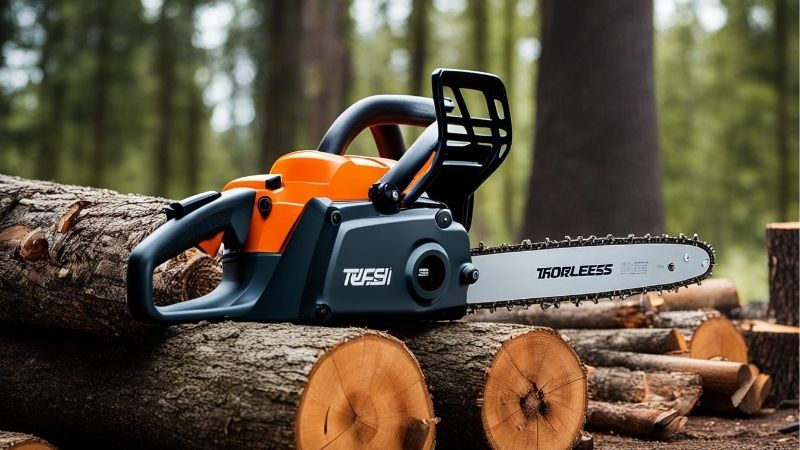
The Oregon CS1500 product page lists a 15-amp motor turning an 18-inch guide bar at a manufacturer no-load chain speed of 48 feet per second, with a manual chain brake, an automatic oiler, and tool-free tensioning, priced at $133.87 at Home Depot as of October 2026.
Oregon publishes a 17.02-pound shipping weight that it measures with the carton rather than as the bare saw, so treat it as a mid-size corded tool and keep a correctly rated outdoor cord away from the chain and wet ground. The PowerSharp replacement chain is specific to this system, which is a recurring cost worth planning for.
Pros:
- 15-amp motor paired with an 18-inch low-kickback bar
- On-saw PowerSharp sharpening in a few seconds
- Chain brake, automatic oiler, and tool-free tensioning
Cons:
- Stays tied to an outdoor extension cord while cutting
- Maker and retailer disagree on maximum cut diameter
Who Should Buy It: Choose the Oregon when you cut near power; if you need to work past any cord, move to the EGO POWER+ CS1800 or the Greenworks CS60L515 kit instead.
BLACK+DECKER CS1518: Best For a Low Price
Best For: Budget-minded owners who want a full 18-inch corded saw for occasional cleanup without a big outlay.
This saw matches the Oregon on bar length and amperage but undercuts it sharply on price, and that gap is the whole reason to consider it. What you give up is the on-tool sharpening, so chain upkeep falls back on ordinary filing or shop sharpening.
The CS1518 product page lists a 15-amp motor, an 18-inch Oregon bar and chain, automatic oiling, and tool-free tensioning, with the saw offered at $99.00 at Walmart as of October 2026, about $34.87 below the Oregon.
BLACK+DECKER lists the saw at 20.7 inches long, 13.1 inches wide, and 10.4 inches high, with a stated 15.7-pound product weight whose inclusions the maker does not define, so handle it as a full-size tool and route an outdoor-rated cord carefully behind you.
Pros:
- Full 18-inch bar at the lowest sticker here
- Automatic oiling and tool-free chain tensioning
- Low-kickback Oregon bar and chain fitted
Cons:
- No built-in sharpening, unlike the Oregon
- Listed 15.7-pound weight lacks stated conditions
Who Should Buy It: Pick this for the lowest entry price; if you want self-sharpening instead, the Oregon CS1500 is worth the extra, and battery users should look at the DEWALT FLEXVOLT DCCS670B.
CRAFTSMAN CMECS600: Best For 16-Inch Corded Work
Best For: Owners who prefer a lighter, shorter corded saw for branches and small rounds rather than big trunks.
The CRAFTSMAN is the 16-inch alternative in this group, so it is the natural choice when an 18-inch saw feels like more bar than the job needs. Its 12-amp motor draws less current than the 15-amp corded pair, which is a design choice, not a measured speed difference.
The CMECS600 owner manual and listing describe a 12-amp motor, a 16-inch low-kickback bar, an auto-oiling window, tool-free tensioning, and a front hand guard that doubles as the chain brake, with the saw priced at $139.00 at Lowe’s as of October 2026.
The guide bar measures 16 inches long, giving noticeably less reach than the 18-inch saws, and CRAFTSMAN does not publish a bare operating weight for this model, so rely on the bar length rather than any assumed mass when you compare it.
Pros:
- 16-inch low-kickback bar suited to lighter tasks
- Front hand guard acts as the chain brake
- Auto-oiling window and tool-free adjuster
Cons:
- Shorter 16-inch reach than the 18-inch saws
- No published bare-tool operating weight
Who Should Buy It: Choose this for lighter corded cutting; if you want more reach, the BLACK+DECKER CS1518 gives an 18-inch bar for less, and the Greenworks CS60L515 adds cordless freedom.
EGO POWER+ CS1800: Best For EGO Battery Owners
Best For: Anyone already invested in the 56-volt EGO platform who wants cordless reach around the yard.
The EGO makes the most sense as a cordless upgrade for people who own the batteries already, since the sticker buys only the tool. Against the corded saws, it trades the cord for runtime limits tied to whichever pack you slot in.
The CS1800 owner manual lists a brushless motor on the 56-volt ARC Lithium system, an 18-inch bar, an 11,000-rpm motor speed, tool-free tensioning, and a maker claim of up to 300 cuts in a 4×4 with a 5.0-amp-hour pack, with the bare tool at $279.00 at Lowe’s as of October 2026.
EGO gives a net saw weight of 9.7 pounds without the battery pack or sheath and a 7-fluid-ounce oil tank, so it stays manageable, but remember the $279 price includes no battery or charger to reach that rated runtime.
Pros:
- 56-volt platform with an 18-inch bar
- 9.7-pound net weight without the battery
- Tool-free tensioning and front work lights
Cons:
- Price buys no battery or charger
- The 300-cut figure needs a 5.0-amp-hour pack
Who Should Buy It: Buy this if you own EGO packs; first-time cordless buyers who want a battery in the box should pick the Greenworks CS60L515, and corded shoppers the Oregon CS1500.
DEWALT FLEXVOLT DCCS670B: Best For FLEXVOLT Owners
Best For: DEWALT users with FLEXVOLT batteries who want a compact 16-inch cordless saw.
This saw is aimed squarely at people already in the FLEXVOLT system, because the bare tool assumes you supply the high-capacity pack. Its 16-inch bar keeps it lighter and more manageable than the 18-inch cordless options here.
The DCCS670B product page lists a brushless motor on the 60-volt MAX system, which DEWALT footnotes as 54 volts nominal, a 16-inch low-kickback bar, automatic oiling, tool-free tensioning, and a chain brake, with the bare tool at $299.00 at Home Depot as of October 2026.
The guide bar measures 16 inches long, and DEWALT does not publish a bare-tool operating weight for this model, so size it by the bar; note that an ordinary 20-volt pack will not run a 60-volt MAX saw, so you need the correct FLEXVOLT battery.
Pros:
- 16-inch bar on the 60-volt MAX system
- Chain brake, auto oiling, tool-free tensioning
- Three-year limited DEWALT warranty
Cons:
- No battery or charger supplied here
- Needs a FLEXVOLT pack, not a 20-volt one
Who Should Buy It: Pick this if you hold FLEXVOLT batteries; buyers starting fresh should take the Greenworks CS60L515 kit, while the CRAFTSMAN CMECS600 covers simple corded jobs.
Greenworks CS60L515: Best For a Complete Kit
Best For: First-time cordless buyers who want the battery, charger, and saw in a single box.
The Greenworks is the only pick here that arrives ready to cut out of the carton, which is exactly why a newcomer might pay more for it. The higher sticker reflects the included power pack and charger, not a premium on the saw alone.
The CS60L515 operator manual describes a 60-volt battery system, a 2.5-kilowatt brushless motor, an 18-inch bar, automatic oiling, and a working chain brake, and the maker lists the complete 5.0-amp-hour kit with charger at $399.99 at the Greenworks store as of October 2026.
Greenworks lists the saw at 9.5 pounds without stating whether that weight includes the battery, and specifies a 0.050-inch chain gauge with 62 drive links, so confirm the pack condition on the manual rather than assuming the lightest figure applies.
Pros:
- Battery and rapid charger included in the kit
- 18-inch bar on a 2.5-kilowatt brushless motor
- Working chain brake documented in the manual
Cons:
- Highest up-front price in this group
- Listed 9.5-pound weight lacks stated conditions
Who Should Buy It: Choose this to start cordless with everything included; if you already own packs, the EGO POWER+ CS1800 or DEWALT FLEXVOLT DCCS670B saves money by skipping the battery.
How to Choose an Electric Chainsaw
The decision comes down to where you cut, how much bar you need, the safety hardware the maker documents, and what the tool will cost to keep running. Work through these four in order and the shortlist narrows quickly.
Match the Power Source to Where You Cut
A corded saw holds steady power as long as you can reach an outlet, which suits cutting within about 100 feet of the house; a 15-amp motor draws more current than a 12-amp one, though that is not a measured cutting-speed gain. A battery saw frees you from the cord but adds the cost of a pack and charger if you do not already own them, so prioritize this criterion if your work is far from power.
Pick a 16-Inch or 18-Inch Bar by Task
An 18-inch bar gives about 2 inches more reach than a 16-inch bar, a 12.5 percent difference in bar length that does not translate into a 12.5 percent larger safe log. Match the bar to the wood you expect: 16 inches handles branches and small rounds comfortably, while 18 inches helps on thicker trunks. Shorter bars are also lighter to control, which matters if you cut for long stretches.
Check the Chain Brake and Oiling
Every saw here lists a chain brake and automatic bar-oiling, both of which reduce routine risk and upkeep, but no brake makes one-handed cutting safe. The CDC advises that chainsaws, including electric models with low-kickback chains, can kick back, so wear eye and face protection, hearing protection, cut-resistant chaps, gloves, and sturdy footwear, use both hands, keep cuts at waist height or below, and never cut near overhead power lines or free a branch under tension without training. Leave hazardous felling or elevated tree work to a competent tree professional.
Plan for Chains, Sharpening, and Batteries
Factor in the ongoing costs: the Oregon uses a system-specific PowerSharp chain, battery saws need the correct pack voltage, and every chain eventually needs sharpening or replacing. A saw that is cheap up front can cost more over a season if its consumables are proprietary, so weigh the whole ownership picture, especially if you are buying into a battery platform for the first time.
Frequently Asked Questions
These are the questions buyers ask most often when choosing between corded and cordless home saws.
Is a corded or cordless electric chainsaw better?
Neither is universally better; it depends on distance from an outlet. Corded saws give constant power for work near the house, while cordless saws trade runtime limits for the freedom to roam the yard. If most of your cutting happens far from power, a battery saw earns its higher cost.
What size bar do I need for home use?
For general homeowner cleanup, a 16-inch or 18-inch bar covers most branches and small trunks. A longer bar adds reach but also weight, and bar length is not a promise of the maximum safe cutting diameter, so pick the size that matches your typical wood.
Do electric chainsaws need bar oil?
Yes. Every saw in this group lists an automatic oiler that lubricates the bar and chain during use, and you must keep the oil reservoir filled with bar-and-chain oil. Running a saw dry accelerates chain and bar wear and raises the risk of a bind.
Can I cut a tree the same diameter as the bar?
Not safely as a rule. A guide bar length is not a guaranteed maximum trunk diameter, and makers and retailers sometimes disagree on cut-diameter figures, as they do for the Oregon here. Stay well within the saw capacity and get professional help for large or leaning trees.
Final Thoughts
For most homeowners cutting near power, the Oregon CS1500 remains the pick on the strength of its 18-inch bar and built-in sharpening, while anyone working past a cord should move to the EGO POWER+ CS1800 if they own batteries or the Greenworks CS60L515 kit if they do not; whichever you choose, confirm the exact bar length and the required battery or chain on the current listing before you order.