Our Top Picks
 PEET Original Portable Electric Boot & Shoe Dryer2.5 lbs9.5 x 9.5 x 22 Inches2.7 PoundsCheck on Amazon
 FORLIM Shoe & Boot Dryer for Work Boots11.5*7.2*3.611.57 x 7.2 x 3.66 inches2.27 poundsCheck on Amazon
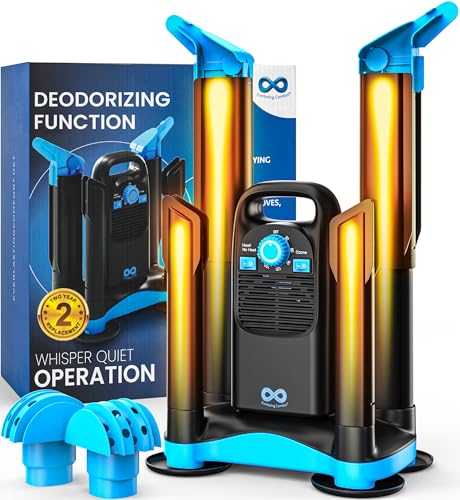 Upgraded Boot Dryer for Work Boots with Ozone2 Pairs15.75 x 9.06 x 23.7 inches7.4 PoundsCheck on Amazon
The best shoe dryers are the ones that match how wet your footwear gets and where you can safely leave a small heated appliance running for a few hours. Ten listings sit in this roundup, covering fanless warmers, forced-air units with timers, a four-port garment and gear dryer, and a few budget models with thin titles. Everything below is drawn from listing titles, which are seller claims, so confirm speeds, warranties and “safe on all materials” wording before you buy. For a quiet overnight warmer, start with the PEET or JobSite entries. For adjustable airflow and timers at a low outlay, the two FORLIM units are the obvious starting points.
Top picks at a glance
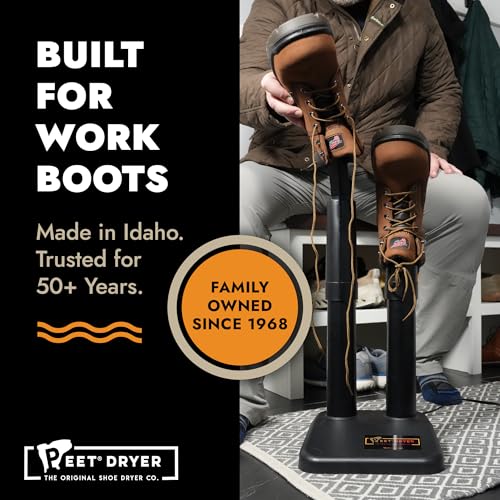
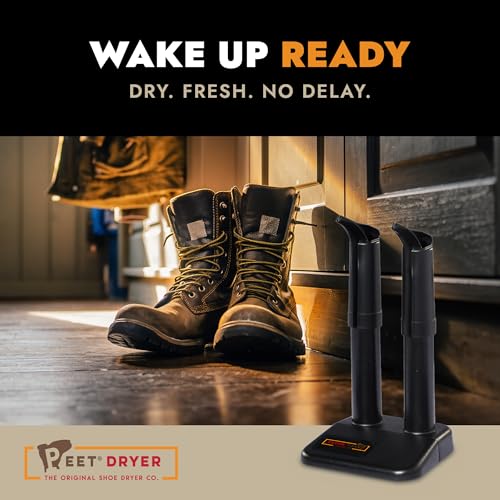
PEET Original Portable Electric Boot & Shoe Dryer, Silent & Always-On | Dries Boots, Shoes & Sneakers Overnight, Safe on All Materials, For Work, Hiking & Hunting Gear, Made in USA, 25-Yr Warranty




As an Amazon Associate we earn from qualifying purchases. Product prices and availability are accurate as of the date/time indicated.
FORLIM Shoe & Boot Dryer for Work Boots, Forced Air, 2-Hour Timer, Black | Telescopic Ports Reach Toe Boxes; 180° Rack Fits Sneakers, Gloves, Ski Gear, Cleats, Workers, Families, Hunters, Rain, Snow


As an Amazon Associate we earn from qualifying purchases. Product prices and availability are accurate as of the date/time indicated.

KOODER Boot Dryer,Shoe Dryer,Foot Dryer ! Eliminate bad odor and dry shoes!


As an Amazon Associate we earn from qualifying purchases. Product prices and availability are accurate as of the date/time indicated.
Upgraded Boot Dryer for Work Boots with Ozone Deodorizer - Fast Drying Compact Easy-to-Use Shoe Warmer Adjustable Tube Design - Fast Drying Shoes Dryers for Sneakers & Gloves, Ski Gears (2 Pair)


As an Amazon Associate we earn from qualifying purchases. Product prices and availability are accurate as of the date/time indicated.

Dr. Prepare Boot Dryer Shoe Dryer, Glove Dryer & Boot Warmer with Heat Blower, Portable Adjustable Rack and Timer, Folding Design & Quick Drying for Shoes, Gloves, Hats, Socks, Ski Boots


As an Amazon Associate we earn from qualifying purchases. Product prices and availability are accurate as of the date/time indicated.
| Model | Key point from the title | Price tier | Best for |
|---|---|---|---|
| PEET Original Portable Electric Boot & Shoe Dryer | Silent, always-on, overnight drying, 25-year warranty claimed | Mid-range | Daily work boots, quiet rooms |
| FORLIM Forced Air, 2-Hour Timer | Forced air, telescopic ports, 180-degree rack | Budget | Boots plus gloves on a tight budget |
| DryGuy 4-Port Electric Dryer | Heat plus fan, four ports, 1-3 hour dry time | Premium | Families and gear-heavy households |
| KOODER Boot Dryer | Odor and drying claim, little else stated | Budget | Occasional light use |
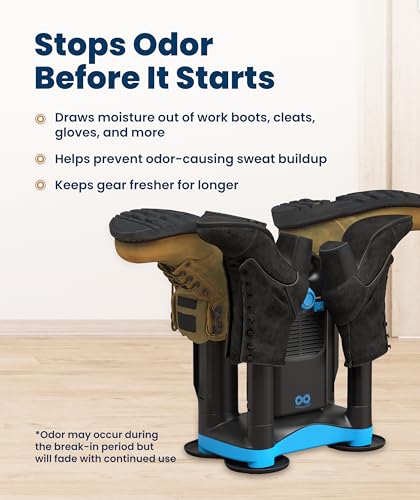
| Everlasting Comfort Upgraded Boot Dryer | Ozone deodorizer, adjustable tubes, “2 Pair” | Premium | Smelly boots, two-pair homes |
| FORLIM 3 Temp Modes, 24H Delay | Three temperatures, 24-hour delay, 99-minute timer | Budget | Mixed materials needing control |
| JobSite Boot Dryer, 36W | Fanless, silent, 36 watts | Mid-range | Bedroom or hallway overnight use |
| LLWAN Boot Dryer with Timer | Timer, extendable, travel-friendly wording | Budget | Light seasonal use |
| XCMAN Portable Dryer | Fan and heater, ultra silent, 12V DC/AC converter | Mid-range | Quiet forced-air drying |
| Dr. Prepare Boot and Glove Dryer | Heat blower, folding adjustable rack, timer | Budget | Gloves, hats and socks |
How shoe dryers are evolving
Older boot dryers were mostly simple warm rods that sat inside the shoe and relied on gentle convection. That design survives in the fanless entries here, and it still appeals to people who want near-silence and a very simple device. What has spread widely is the fan-assisted version: a small heater and blower pushing warm air through tubes that reach the toe box, often paired with a timer so the unit shuts off by itself.
Across marketplace listings, extras keep piling on: foldable racks for gloves and hats, delay starts, multi-step temperature settings, and ozone or deodorizing features. Some titles read like the same hardware sold under several brand names, which is common in this category, so identical-sounding specs do not guarantee identical build quality. Treat a long keyword-heavy title as a prompt to read the product page, not as proof of features.
Safety wording is also getting more prominent, which is welcome. A heated appliance that sits in a closet or garage deserves attention to cords, ventilation and manufacturer run-time limits, and any buyer should expect clear instructions on those points.
Another shift is the blurring of boot dryers into general gear dryers. Titles now name ski liners, cleats, hats, hunting gear and even travel use, so the category is moving from a single-purpose boot accessory toward a small household drying station. That is useful if you have varied needs, but it also means each listing needs checking for real capacity rather than a long list of nouns.
How we picked these
We compared the ten listings on what each title and product page states: heat source, airflow, reach into toe boxes, timer and temperature controls, extra capacity for gloves, and the presence of odor features. We also weighed how complete each listing is, since a thin title leaves more questions open. Nobody on the team used or measured these units. This roundup is built from published specifications, manufacturer documentation and buyer reviews, and the editorial team has no lab data to add.
The ten dryers
PEET Original Portable Electric Boot & Shoe Dryer
The title describes a silent, always-on dryer that handles boots, shoes and sneakers overnight, calls it safe on all materials, and cites US manufacturing and a 25-year warranty. That is the strongest durability promise in the set, though a warranty is only as useful as the claims process behind it.
It suits a tradesperson, hunter or hiker who comes home with damp boots every evening and wants something quiet beside a boot tray. The scenario is simple: set the pair on after dinner and check them in the morning.
- Pros: silent per the title; long warranty claimed; broad material claim.
- Cons: no timer is mentioned; “always-on” means you must be comfortable with continuous operation; the title mentions one pair at a time.
Check the listing: wattage, cord length, whether tall boots fit, and the warranty terms. Question to ask: do the manufacturer’s instructions allow overnight, unattended operation in the spot where it will sit?
Compared with the other mid-priced units, the PEET listing leans on reputation-style claims (the warranty, the country of manufacture) rather than a feature list. If you value a long-term device you can keep for years, that is a reasonable thing to weigh. If you want timers, temperature steps or a rack for gloves, the title gives you none of those, and one of the FORLIM or Dr. Prepare listings fits that need better.
FORLIM Shoe & Boot Dryer with 2-Hour Timer
This forced-air model advertises a two-hour timer, telescopic ports that reach toe boxes, and a 180-degree rack for sneakers, gloves, ski gear and cleats. A rack that rotates out of the way suggests a design aimed at mixed household loads.
Think of a family entryway after a snowy afternoon: boots on the tubes, mittens on the rack, and the timer ends the cycle without anyone remembering to unplug it.
- Pros: timer built in; reach tubes; flexible rack; low price tier.
- Cons: forced air is not silent; a two-hour cycle may be short for soaked insulated boots; temperature settings are not mentioned.
Check the listing: noise level, wattage, and whether you can run a second cycle back to back. Question to ask: will two hours cover my wettest footwear, or do I need a longer run?
Because the price tier is low, this is a sensible first dryer for someone who has never owned one and wants to learn how much drying power they actually need. The telescoping ports also hint at an adjustable fit for different boot heights, though the title does not give a length. Read buyer comments on durability, since small forced-air heaters at this price point vary in how long the fan and cord hold up.
DryGuy Shoe, Boot, Garment & Gear Electric Dryer
This is the only four-port entry, with heat plus fan, a 1-3 hour dry time stated in the title, and wording about home or garage use. The four ports make it the most family-oriented option here.
It fits a household with hockey bags, work boots and kids’ sneakers all coming in damp at once. Drying two pairs at the same time is the main reason to pay the premium.
- Pros: four ports; heat and fan; quick-dry claim; suited to garage use.
- Cons: highest price tier in the set; larger footprint; a 1-3 hour window is a seller range, not a promise.
Check the listing: physical size, port spacing, and whether garments attach or not. Question to ask: do I truly dry enough pairs at once to justify four ports?
Think about the full cost of ownership, too. A premium unit that sits in a garage and handles a winter of wet gear can still be cheaper per pair than replacing boots that sour or crack from slow drying. On the other hand, a single-person household with one pair of work boots will never use the extra ports, and a smaller unit makes more sense.
KOODER Boot Dryer, Shoe Dryer, Foot Dryer
The title is short and says only that it eliminates bad odor and dries shoes. It also calls itself a “foot dryer,” an ambiguous phrase that may mean it dries footwear or sits under the feet. That ambiguity is a reason for caution, not a reason to assume.
It could suit a casual user who wants a cheap seasonal device for the odd soggy pair, as long as the product page fills in the missing detail.
- Pros: low price tier; simple pitch.
- Cons: the title offers almost no specifications; odor claim is unexplained; timer and temperature unknown.
Check the listing: wattage, heat type, any timer, safety certifications and return terms. Question to ask: does the page explain what actually does the odor control?
One practical approach is to treat this listing as a check on the seller’s transparency: if the product page cannot explain the heat source, wattage or safety certification, move on to a listing that can. Cheap does not have to mean vague, and several budget entries in this roundup give a timer and reach details in their titles.
Everlasting Comfort Upgraded Boot Dryer with Ozone Deodorizer
The title pairs fast-drying language with an ozone deodorizer, adjustable tubes, and a “2 Pair” label. The repeated “fast drying” wording and the ambiguous “2 Pair” (two pairs at once, or a two-pack?) mean you should read the page closely.
The scenario here is smelly work boots in a closed room. If you try the ozone feature, follow the manufacturer’s instructions, ventilate the area, and keep children and pets away.
- Pros: odor feature; adjustable tubes; gloves and ski gear mentioned.
- Cons: ozone needs careful handling; unclear capacity; premium price tier.
Check the listing: whether “2 Pair” means simultaneous drying, run time limits for the ozone mode, and warranty. Question to ask: would I be happy using this dryer if I never switched the ozone feature on?
If the answer is yes, the adjustable tubes and glove or ski-gear wording make it a reasonable general-purpose dryer at the top of the price range. If the answer is no, you are paying for a feature that needs extra care, and a cheaper forced-air model with a timer would do the core job just as well. Look carefully at return terms for any device that produces ozone.
FORLIM Shoe & Boot Dryer with 3 Temp Modes and 24H Delay
The second FORLIM adds three temperature modes, a 24-hour delay start, a smart panel and a 99-minute timer. Controls like these are what separate it from the other low-priced units, because they let you drop the heat for treated leather or raise it for rubber boots.
It suits someone with mixed footwear: delicate trail shoes on the lowest setting, wet snow boots on the highest. The delay start means a cycle can finish just before you wake up.
- Pros: temperature choice; delay start; short timer for light loads; budget price tier.
- Cons: 99 minutes is brief for thick liners; forced air is audible; the panel adds a little complexity.
Check the listing: the actual temperature values and how the delay interacts with the timer. Question to ask: do the heat levels stay within what my boot manufacturer recommends?
The smart panel is the other selling point: a clear display and a few buttons reduce guesswork for family members who share the dryer. Be aware that a delay timer plus a run timer can be confusing if the manual is thin, so read buyer comments about the controls before committing.
JobSite Boot Dryer, Fanless, 36W
The title says fanless, silent, 36 watts, and suitable for work boots, winter gloves and ski boot liners, and it also refers to warming and deodorizing. The wattage figure is rare in this set and gives you something concrete for cost estimates.
It suits a bedroom, a rental or a shared office where a blower would be annoying. It is a patient drying tool: expect to give it hours, not minutes.
- Pros: stated 36W; silent; versatile for liners and gloves.
- Cons: slower than forced air; not ideal for drenched boots; no timer mentioned.
Check the listing: how the deodorizing claim works and whether the unit has an auto shut-off. Question to ask: can I accept an overnight wait on every wet day?
It also helps to think about what the 36-watt figure implies: a low-power device is gentle on both materials and the electric bill, but it cannot match the airflow of a blower. Pair it with good habits, such as removing insoles, loosening laces and wiping off surface water first, and it can work well for ordinary damp days.
Boot Dryer for Work Boots, Electric Portable, with Timer (LLWAN)
This is the lowest-cost listing. The title mentions a timer, extendable design, and uses such as sneakers, socks, gloves, rainy seasons and winter travel. The brand name does not appear in the title itself.
It might suit a spare unit for a cabin, a garage or a suitcase, where occasional use matters more than build quality.
- Pros: lowest price tier; timer; portable wording.
- Cons: sparse detail on heat and airflow; “travel” suggests lighter-duty hardware, so verify; plug type and voltage need checking.
Check the listing: voltage, wattage, safety marks and timer length. Question to ask: is this a main dryer or a backup, and is its price saving worth the extra checking?
For many buyers the cheapest model is a trial purchase. If it works for a season, you will know whether you want to move up to a unit with more ports or temperature steps. If you do buy it, check the plug and voltage details carefully, particularly given the travel wording in the title, and keep the packaging until you are sure it performs.
XCMAN Portable Shoe Dryers and Boot Dryer
The title lists an integrated fan and heater, ultra-silent operation, a 12V DC/AC converter, and a US plug. It covers winter boots, rain boots, tennis shoes and ski liners. “Ultra silent” next to a fan is a strong claim; compare it with buyer comments.
It suits a person who wants forced air without much noise, perhaps in an apartment hallway. The converter wording means you should confirm exactly what comes in the box.
- Pros: fan plus heater; quiet claim; broad footwear list.
- Cons: converter setup adds a component; mid-range price; no timer mentioned in the title.
Check the listing: converter details, cable length and any run-time limit. Question to ask: does the quiet claim hold up in buyer reviews?
The converter mention is the detail to understand before purchase. It may indicate that the heater and fan run at low voltage, which some buyers prefer, but the title does not explain it. Compare the product images with the description, and if the page is unclear, ask the seller what exactly ships in the box and which plug it expects.
Dr. Prepare Boot Dryer, Glove Dryer and Boot Warmer
This one mixes a heat blower with a portable, adjustable, folding rack and a timer, and the title lists shoes, gloves, hats, socks and ski boots. The foldable design is the main appeal for small spaces.
A good fit if the real task is drying gloves and hats for a winter household, with boots as a secondary job.
- Pros: rack for small items; folds flat; timer; budget price tier.
- Cons: a rack is a weaker match for deep boots; blower noise likely; heat levels are not named.
Check the listing: whether boot tubes are included, the rack’s weight limit and the timer range. Question to ask: is boot drying the priority or the extra?
For a household that mostly needs to dry gloves, hats and socks between ski runs or snow days, this listing’s rack is a better match than a tube-only dryer. If your main concern is soaked hiking boots, look at one of the tube-based forced-air models instead, since a rack does not push air into a toe box.
Buying guide: choosing a shoe dryer
Passive warmth or forced air
Passive units are quiet and gentle, so they suit damp footwear and sensitive materials. Forced-air units shift warm air faster and reach into toe boxes, which matters for tall, insulated boots. Decide first whether you value silence or speed. If you sleep in the same room as the dryer, a fanless unit is easy to live with. If you need footwear ready in an hour, only forced air is likely to do it.
Reach, fit and capacity
Measure your tallest boot and compare it with the tube length the listing states. Count how many items you dry at once; one pair on a tube and a pair of gloves on a rack is a different job from two pairs of boots.
Timers and temperature
A timer prevents over-drying and wasted power. Temperature steps help with leather, rubber and synthetic uppers. Look for both if you share the dryer with different footwear. A delay start is useful if you want drying to finish near morning, but it is the least essential of the three controls.
Safety and materials
Follow the manufacturer’s instructions and local codes on where to place and run the unit. Keep cords clear of foot traffic, keep it off soft furnishings, and keep children and pets away. Remove insoles first, and do not use a heater on footwear whose care label forbids it.
Odor control
Dry footwear smells less because bacteria need moisture. An ozone or deodorizing feature is optional, and it brings its own ventilation cautions. Wiping the inside of damp boots, rotating pairs, and airing them between wears also reduce odor without any device at all.
Worked example: what a night of drying might cost
These figures are labeled estimates. Assume electricity at 15 cents per kWh. The JobSite title states 36 watts, so eight hours is about 0.29 kWh, roughly 4 cents. Assume a forced-air unit draws 150 watts (an assumption, since titles here do not state it) and runs for its 2-hour timer: 0.3 kWh, about 4.5 cents. Either way, the energy cost per pair is small; the real difference is time and noise, not the bill. Now stretch the same assumptions over a winter: if you run a drying cycle on 60 evenings, the fanless unit lands near 2.40 in currency units at the assumed rate and the forced-air unit near 2.70, a gap too small to drive a purchase. The better question is whether a pair of boots is dry when you need it. If a fanless unit leaves the toe box damp after eight hours on your wettest days, a faster unit earns its place even at a higher purchase price.
| Spec concept | What to look for | Why it matters |
|---|---|---|
| Heat source | Fanless warmth or fan plus heater | Sets drying speed and noise |
| Reach | Tube length versus boot height | Wet toe boxes stay damp otherwise |
| Controls | Timer, temperature steps, delay start | Protects materials and saves power |
| Capacity | Number of ports or rack arms | Matches household load |
| Safety | Certifications, cord, run-time limits | Heated devices need care |
Mistakes shoe-dryer buyers make
Choosing on price alone is the first. A cheaper unit with a short timer may not finish thick liners. Second, ignoring boot height: tubes that stop short leave the toe box wet. Third, using maximum heat on leather, which can crack it over time. Fourth, leaving insoles in, which trap moisture and slow the whole process. Fifth, treating a deodorizer as a substitute for actual drying. Sixth, forgetting to read the unattended-use guidance from the manufacturer.
A seventh slip is buying a dryer for a use case it was never described for. A rack-style unit will not dry the inside of a tall hunting boot, and a tube-style unit will not hold a stack of gloves. Match the shape of the dryer to the shape of the job, and keep your return window in mind if the first cycle reveals a mismatch.
Verdict by use case
For quiet overnight drying, the PEET and JobSite entries are the strongest matches on paper. For forced air at a low outlay, the FORLIM pair offers timers and, in one case, temperature control. For a big household, the DryGuy’s four ports make sense. For gloves and hats, the Dr. Prepare rack is the logical pick. For odor-prone footwear, the Everlasting Comfort listing is the only ozone option, with the cautions above. The KOODER and LLWAN listings need extra verification before purchase.
Related guides
- Battery Powered Floodlight Camera With Local Storage
- Cordless Drill Brush Attachment For Bathroom Grout
- Rechargeable Emergency Lantern For Power Outages
Frequently asked questions
How long does a shoe dryer take to dry wet boots?
It depends on how soaked the footwear is, the heat source and the material. One listing here states a 1-3 hour dry time, while fanless warmers are usually positioned as overnight devices. Thick felt liners and insulated hunting boots can take longer than canvas sneakers. Pull the insoles, loosen the laces, and read the manufacturer’s guidance for maximum run time instead of assuming that longer is always better.
Can a shoe dryer damage leather boots?
Excess heat can stiffen or crack leather and soften some adhesives, so gentle warmth is the safer choice. Prefer low or adjustable temperature settings, avoid placing hot elements directly against the upper, and condition leather afterward. If a listing promises it is safe on all materials, treat that as a seller claim and check the care label on your boots and the maker’s instructions.
Are fanless boot dryers worth buying?
Fanless models trade speed for silence and simplicity. They work well for damp rather than drenched footwear, for bedrooms or hallways where noise matters, and for people who like a set-and-wait routine. If your boots get soaked through regularly, a forced-air unit with a timer and reach tubes will usually suit you better, though it will make some noise.
Can these dryers handle gloves and ski gear?
Several titles mention gloves, ski boot liners or rack attachments, but capacity differs. Tubes and racks suit gloves, socks and liners, while a single-pair design may only handle footwear. Check how many ports or arms each listing has, and avoid stuffing bulky, sopping items onto a weak unit, which can leave the inside damp and the item smelly.
Is an ozone deodorizer safe in a shoe dryer?
Ozone is a respiratory irritant at higher concentrations, so any ozone feature deserves caution. Use it only as the manufacturer directs, in a ventilated space, and keep children, pets and anyone with breathing issues away during operation. Drying footwear thoroughly does most of the odor-control work, so an ozone feature is a nice extra rather than a requirement.
Should I leave a boot dryer running overnight?
Only if the manufacturer’s instructions say that is acceptable for your model. Some listings describe always-on or overnight operation, while others use timers that shut the unit off. Place any heated dryer on a hard, clear surface away from fabric and clutter, check the cord for damage, and follow local codes and the maker’s guidance on unattended use.