Our Top Picks
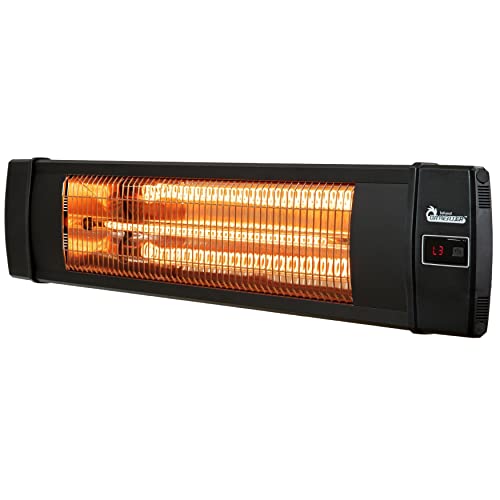
 ProCom Heating Natural Gas Ventless Infrared Plaque Heater10000 BTU6.4 x 17 x 23 InchesCheck on Amazon
The best natural gas space heater is the one whose BTU rating, venting type and gas hookup match the room, and for most living areas that means a thermostat-equipped wall unit somewhere between 10,000 and 30,000 BTU. This roundup sorts ten Amazon listings by exactly those traits. Among them are budget vent-free plaque and radiant units, larger blue flame models, one direct-vent wall heater and one forced-air shop heater. Everything below is drawn from listing titles, so details the titles do not state are marked “check the listing” rather than guessed. If you only read one thing, read the sizing example in the buying guide before choosing a BTU level, because the most expensive mistake here is paying for more output than the room can use.
Top picks at a glance
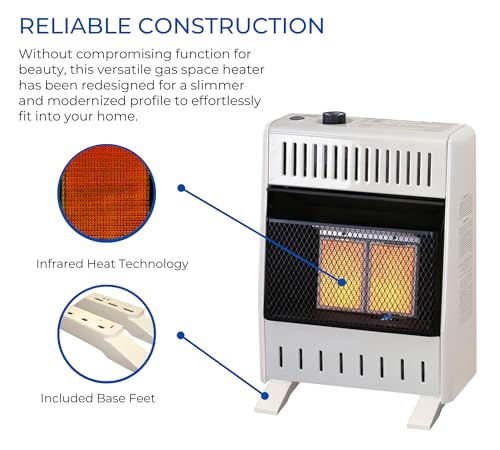
ProCom Heating Natural Gas Ventless Infrared Plaque Heater With Base Feet - 10,000 BTU, T-Stat Control - Model# MN100TPA-B


As an Amazon Associate we earn from qualifying purchases. Product prices and availability are accurate as of the date/time indicated.

Mr. Heater 30,000 BTU Vent Free Blue Flame Natural Gas Heater




As an Amazon Associate we earn from qualifying purchases. Product prices and availability are accurate as of the date/time indicated.

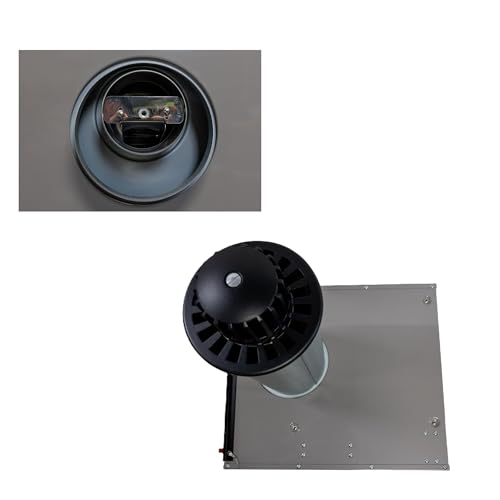
Comfort Glow 17,000 BTU Direct Vent Natural Gas Wall Heater, Gray, Large | Electronic Ignition, Thermostat, Heat up to 500 sq ft Area, Safety Pilot & Built In Pressure Regulator, Professional Vent Kit


As an Amazon Associate we earn from qualifying purchases. Product prices and availability are accurate as of the date/time indicated.

Mr. Heater 50,000 BTU Forced-Air Unit Heater (Propane or Natural Gas)


As an Amazon Associate we earn from qualifying purchases. Product prices and availability are accurate as of the date/time indicated.

Mr. Heater 20,000 BTU Vent Free Radiant Natural Gas Heater


As an Amazon Associate we earn from qualifying purchases. Product prices and availability are accurate as of the date/time indicated.
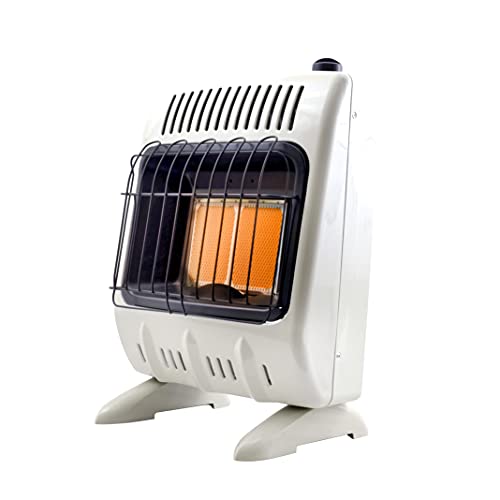
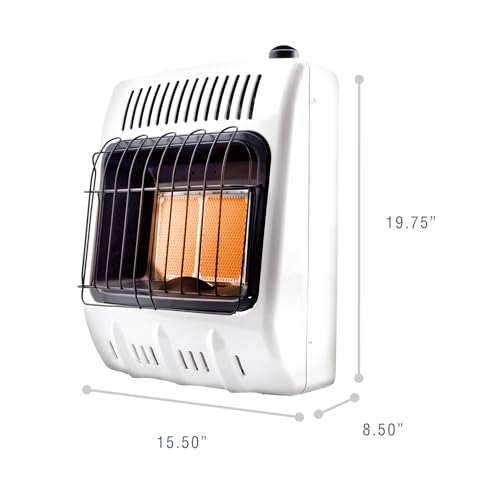
Mr. Heater 10,000 BTU Vent Free Radiant Natural Gas Heater



As an Amazon Associate we earn from qualifying purchases. Product prices and availability are accurate as of the date/time indicated.

BILT HARD Ventless Infrared Radiant Space Natural Gas Heater with Thermostat Control, 30000 BTU Gas Wall Heater with Wall Mount and Base Feet for Indoor Use, Piezo Ignition, Heats Up to 1400 Sq. Ft.


As an Amazon Associate we earn from qualifying purchases. Product prices and availability are accurate as of the date/time indicated.
| Model | Key point from title | Price tier | Best for |
|---|---|---|---|
| Comfort Glow 17,000 BTU Direct Vent | Direct vent, thermostat, vent kit | Premium | Safety-minded permanent install |
| Mr. Heater 30,000 BTU Vent Free Blue Flame | 30,000 BTU blue flame | Mid-range | Large open rooms |
| Mr. Heater 30,000 BTU Vent Free Radiant | 30,000 BTU radiant | Mid-range | Spot heating big areas |
| Mr. Heater 20,000 BTU Vent Free Radiant | 20,000 BTU radiant | Budget | Medium rooms |
| Mr. Heater 10,000 BTU Vent Free Radiant | 10,000 BTU radiant | Budget | Small rooms |
| ProCom MN100TPA-B | 10,000 BTU plaque, T-Stat | Budget | Small rooms with thermostat |
| ProCom MN300HBA-B | 30,000 BTU, manual control | Budget | Lowest cost per BTU |
| BILT HARD 30000 BTU Blue Flame | Thermostat, piezo ignition | Mid-range | Thermostat at 30,000 BTU |
| BILT HARD 30000 BTU Infrared | Thermostat, piezo ignition | Mid-range | Radiant alternative |
| Mr. Heater 50,000 BTU Forced-Air | Propane or natural gas | Premium | Garage or workshop |
What is changing in natural gas space heating
Gas space heaters are a mature category, and the more interesting shifts are around the product rather than inside it. Shoppers increasingly ask about thermostat control, electronic ignition and sealed or direct-vent construction, partly because indoor air quality gets more attention than it used to. Vent-free designs remain popular because they skip the chimney or vent run, but they also draw the most scrutiny, and rules on where they may be installed differ by state, city and building type.
Another trend is the electric alternative. Smart plug-in heaters and quiet panel heaters are easy to place and need no gas line, which makes them attractive for renters and for rooms far from a gas supply. Our smart space heater roundup and the panel space heater comparison cover that side. Gas still tends to appeal where energy prices, outage resilience or whole-room output are the priority, though local utility costs vary a great deal. If you are weighing running costs, our guide on how much electricity a space heater uses gives a way to compare the electric side with your gas bill.
Finally, safety expectations keep rising. Many buyers now pair a gas appliance with a carbon monoxide alarm and a natural gas detector as a matter of course, and some listings advertise safety pilots and built-in regulators. We cannot verify those claims here, so read them as seller statements and confirm them in the manual before buying.
How we picked these
This list is built from listing titles, published specifications, manufacturer documentation and buyer reviews that we read, not from anything we handled. Nobody on the team used or measured these units. We kept listings that are clearly natural gas heaters, spread them across size and venting types, and flagged two that behave differently from the rest: a forced-air shop heater and near-duplicate 30,000 BTU twins. Price tiers are relative within this set, with no dollar figures, because listing prices change often. Where a title is silent on a feature, we say so instead of filling the gap from memory about the brand.
The ten listings
Comfort Glow 17,000 BTU Direct Vent Natural Gas Wall Heater
The title describes a gray, large direct-vent wall heater with electronic ignition, a thermostat, a safety pilot, a built-in pressure regulator and a professional vent kit. It is claimed to heat up to 500 square feet. Direct vent generally means combustion air comes from outside and exhaust goes outside, which is the main reason this listing stands apart from every vent-free model here. It is also the only wall-mounted vented appliance, and the only one whose title mentions a built-in pressure regulator.
It suits a family room, finished basement or addition where a permanent installation makes sense and indoor air quality is a worry. A typical scenario is a 300 square foot room where a contractor is already cutting a wall opening for the vent, and the owner wants steady, thermostat-controlled heat without moisture released indoors. At 17,000 BTU it sits below the 30,000 BTU models, so the 500 square foot claim deserves a skeptical read in cold climates.
- Pro: vented design per the title
- Pro: thermostat and electronic ignition
- Pro: safety pilot and regulator mentioned
- Con: wall penetration and professional install likely
- Con: highest price tier in this set
Check the listing for clearances, maximum wall thickness, electrical needs for the ignition and exactly what the vent kit includes. Questions to ask before buying: does my wall construction match the vent kit, and who will install and inspect the gas connection?
Mr. Heater 30,000 BTU Vent Free Blue Flame Natural Gas Heater
This listing states 30,000 BTU, vent free and blue flame, on natural gas. The title says nothing about thermostat, ignition style or coverage area, so those are open questions you need to settle from the product page and manual. Blue flame units are commonly chosen for warming a room’s air rather than just one spot, though layout and ceiling height change the result a lot.
It fits a large living room or open basement where one strong heat source is wanted and local rules allow vent-free appliances. Picture a 600 square foot space with decent insulation and a cold-weather climate, where a smaller unit would run flat out all evening. In that kind of room, a 30,000 BTU heater can cycle comfortably instead of struggling.
- Pro: high output for the tier
- Pro: blue flame style suits whole-room heat
- Con: may overheat a small or tight room
- Con: vent-free rules vary locally
Check the listing for controls, safety shutoff features, mounting options and the required gas pressure. One question to ask before buying: is 30,000 BTU actually right for my square footage, or am I paying for output the room cannot use?
Mr. Heater 30,000 BTU Vent Free Radiant Natural Gas Heater
Same 30,000 BTU class as the blue flame version, but described as radiant. Radiant heaters usually warm what is in front of them quickly, which feels good near a seating area and less even across a long room. The title gives no thermostat, ignition or coverage details, so treat those as unknowns.
This suits a great room where people gather in one zone, or a workshop corner where you stand in front of the heat. If the sofa sits two or three meters from the heater, the radiant effect may feel direct and welcome within minutes. In a long, narrow room with furniture blocking the line of sight, the far end may stay cooler, which is a common radiant trade-off.
- Pro: fast felt warmth near the panel
- Pro: strong output for the tier
- Con: uneven heat in large spaces
- Con: title gives no control details
Check the listing for clearance to furniture, ignition type and any oxygen depletion sensor. Question to ask: where will people actually sit relative to the heater, and does the manual allow furniture that close?
Mr. Heater 20,000 BTU Vent Free Radiant Natural Gas Heater
A 20,000 BTU radiant, vent-free unit that sits between the 10,000 and 30,000 BTU siblings in the same family. The title states little beyond output, venting and fuel, which is typical of this listing style, so everything else sits in the “check the listing” column.
It is the sensible middle step for a den, hobby room or family room, though check local rules, since many codes restrict vent-free heaters in bedrooms. A 350 to 450 square foot den in a moderate climate is the kind of room this size targets, using our rough planning assumption of 20 BTU per square foot. In a colder region or a draftier house, the same room could need more.
- Pro: avoids the overshoot of 30,000 BTU
- Pro: budget tier
- Con: no thermostat mentioned in the title
- Con: radiant pattern is directional
Check the listing for controls, mounting and approved locations. Question to ask: does my local code allow this in the room I picked, and is my gas line sized for the added load?
Mr. Heater 10,000 BTU Vent Free Radiant Natural Gas Heater
The smallest of the Mr. Heater listings, at 10,000 BTU radiant and vent-free. The title gives no coverage figure and no mention of controls, so the product page is where the real decision gets made. Its value is mainly that it keeps output modest in a small space.
It suits a small office, a mudroom or a compact sitting area that needs a gentle boost rather than primary heat. Think of a 150 to 250 square foot room where the goal is taking the chill off, for instance a sunroom used mornings and evenings. If the room has a lot of glass, treat the output as barely enough.
- Pro: low output suits small rooms
- Pro: budget tier
- Con: too little for open layouts
- Con: thermostat not mentioned
Check the listing for mounting, controls and safety features. Question to ask: will this be a supplement or my main heat source? If it is the main source, 10,000 BTU may fall short in a cold climate.
ProCom Heating MN100TPA-B Infrared Plaque Heater, 10,000 BTU
This ProCom listing combines ventless infrared plaque heating, base feet, 10,000 BTU and T-Stat control. The thermostat is the notable trait at this size, since the other 10,000 BTU listing does not mention one. Plaque heaters send radiant warmth toward the front of the unit, which makes placement relative to where you sit more important than room volume.
A small den, hobby room or enclosed porch fits. If you want a steadier temperature without watching a knob, the thermostat helps; a plaque heater near a desk, for example, keeps one spot comfortable while the rest of the room stays cooler. It is not meant to heat a whole open-plan floor.
- Pro: thermostat control per title
- Pro: lowest-priced class in the set
- Con: limited output
- Con: radiant, so directional
Check the listing for safety features and whether the thermostat is mechanical or needs electricity. Question to ask: how close to the heater will I sit, and what clearance does the manual require?
ProCom Heating MN300HBA-B Blue Flame Heater, 30,000 BTU
The title says ventless blue flame, base feet, 30,000 BTU and manual control. Manual control means no thermostat in the headline specs, so you adjust the flame yourself. Together with the budget tier, that makes it the lowest-cost route to 30,000 BTU in this set, with the trade-off of more manual adjustment.
It is a cost-per-BTU option for a large, open space where you are at home and willing to tune the setting. A big family room or finished basement is a plausible fit, provided local codes allow vent-free heaters there. If you leave the house or go to sleep, a manual-control heater is a poorer match than one with a thermostat, so plan your routine around that.
- Pro: budget tier for 30,000 BTU
- Pro: blue flame suits larger spaces
- Con: manual control only per title
- Con: risk of overheating a mid-size room
Check the listing for ignition type and safety features. Question to ask: am I comfortable adjusting heat by hand all evening, and does the room really need 30,000 BTU?
BILT HARD Vent Free Blue Flame Natural Gas Heater, 30000 BTU with Thermostat
This listing pairs 30,000 BTU blue flame with thermostat control, wall mount and base feet, piezo ignition and indoor use. The title claims it heats up to 1400 square feet. That works out to roughly 21 BTU per square foot, which only makes sense in mild weather and a well-insulated space, so read it as a seller claim, not a promise.
It suits buyers who want 30,000 BTU with a thermostat rather than manual control, in a big open room or a small shop. The wall-mount option is useful where floor space is tight. A workshop with concrete floors and uneven heat loss, for instance, would benefit from a thermostat that keeps the flame from running constantly.
- Pro: thermostat plus 30,000 BTU
- Pro: wall mount or base feet
- Con: coverage claim looks optimistic
- Con: the title gives few safety details
Check the listing for the safety shutoff, thermostat type and clearances. Question to ask: what room size does the manual itself recommend for this model?
BILT HARD Ventless Infrared Radiant Natural Gas Heater, 30000 BTU with Thermostat
Nearly identical to the previous BILT HARD listing in its title, but described as infrared radiant instead of blue flame. It also states a thermostat, wall mount, base feet, piezo ignition and a 1400 square foot claim, so treat it as the radiant twin rather than a separate product line. That near-duplicate status means you should choose between them on heat style, not features.
Choose it if you want infrared warmth for a seating zone and still want a thermostat at 30,000 BTU. For example, a garage hangout area with a sofa and workbench might feel better with radiant heat aimed at people than with air warming alone, though the same caveat about uneven spread applies.
- Pro: thermostat on a radiant design
- Pro: wall mount or base feet
- Con: near-duplicate of the blue flame listing
- Con: same optimistic area claim
Check the listing for differences in heat pattern and clearances. Question to ask: do I want my room air warmed, or do I want warmth aimed at where people sit?
Mr. Heater 50,000 BTU Forced-Air Unit Heater (Propane or Natural Gas)
This is a different class from the rest: a 50,000 BTU forced-air unit heater labeled for propane or natural gas. Unit heaters are typically used in garages, shops and barns rather than living rooms, so it is the weakest match for a room-heater search and is included mainly for workshops. The title does not say which fuel it ships set up for.
It suits a two-car garage or workshop where moving a lot of warm air matters more than quiet or looks. Because it uses a fan, check whether it needs electricity, a vent run and a specific mounting height. Following the manufacturer’s instructions and local codes is especially important for an appliance this large, and a qualified professional should handle the gas and venting work.
- Pro: very high output
- Pro: moves air across a big space
- Con: not a living-room heater
- Con: fuel conversion and venting need care
Check the listing for venting, clearances and fuel setup. Question to ask: which fuel does this exact unit ship configured for, and do I need a conversion kit?
Natural gas space heater buying guide
Match BTU to the room
BTU is heat output per hour, and the common mistake is buying the biggest number on the page. Rooms differ by insulation, ceiling height, window area and climate, so any rule of thumb is only a starting point. A planning assumption of around 20 BTU per square foot for mild conditions and 30 to 40 for cold, leaky spaces is widely used, but it is an estimate, not a spec. Always compare the result with the manufacturer’s own sizing guidance, and remember that a heater cycling gently usually feels better than one blasting at full flame.
Vent-free, direct-vent or forced-air
Vent-free heaters skip the vent run and release combustion byproducts and moisture into the room. Direct-vent units pull air from outside and exhaust outside. Forced-air unit heaters push warm air with a fan and are usually sized for garages and shops. Each type has its own codes, installation needs and typical room, so a quick call to the local building department can save a return. If indoor air quality or humidity worries you, a vented design deserves a serious look.
Controls and ignition
A thermostat holds temperature steadier than a manual dial and reduces the temptation to leave the heater running hot. Piezo ignition lights the pilot with a click and generally does not rely on household power, while electronic ignition often does. Think about outages, and about how much you want to adjust the heater during an evening. Three of the listings here mention a thermostat, one mentions manual control, and several say nothing at all.
Gas supply and installation
Confirm natural gas versus propane, the supply line size and where the shutoff valve sits. Gas, electrical and venting work should be handled by a qualified professional, following the manufacturer’s instructions and local codes. A natural gas leak detector, like those in our natural gas detector roundup, plus a carbon monoxide alarm, add a safety margin. Never block a vent, store combustibles near the heater or leave it running unattended in a closed room.
Safety gear and local rules
Gas appliances sit at the intersection of fire, fuel and air quality, so treat the paperwork as part of the purchase. Ask whether permits or inspections apply where you live, keep children and pets away from hot surfaces, and keep fabrics and paper well back from the heater. Test your carbon monoxide alarm on the schedule its maker recommends, and if you ever smell gas, leave the building and call the gas utility from outside.
Worked example
Assume a 400 square foot den, 8-foot ceiling, average insulation and moderate winters. At roughly 20 BTU per square foot, the estimate is 8,000 BTU. Allowing for a colder spell, call it up to 16,000 BTU. That points to a 10,000 or 20,000 BTU heater, not 30,000. A 30,000 BTU unit would likely overshoot and cycle on and off, so it better suits a 600 to 900 square foot open space. These figures are assumptions for illustration, and your house may differ.
| Spec concept | What to look for | Why |
|---|---|---|
| BTU rating | Match to room, not maximum | Avoids overheating and waste |
| Venting type | Vent-free, direct-vent or forced-air | Affects air quality and codes |
| Thermostat | Stated in the title or manual | Steadier temperature |
| Ignition | Piezo or electronic | Outage behavior |
| Safety features | Shutoff or oxygen sensor in manual | Reduces risk |
| Fuel type | Natural gas confirmed | Wrong fuel is unsafe |
Mistakes buyers make
Buying on BTU alone is the classic error. A 30,000 BTU heater in a small room produces discomfort, not comfort. Next, buyers skip local code checks for vent-free appliances, then discover the room does not qualify. A third mistake is trusting seller coverage numbers, such as a 1400 square foot claim from a single 30,000 BTU unit.
Others forget fuel type, ordering a propane unit for natural gas or the reverse. Some hang a heater without confirming clearances to furniture and curtains. And plenty skip carbon monoxide alarms because the heater “has a sensor.” A sensor inside the heater is not a substitute for a room alarm, and a heater is not a substitute for a professional gas connection.
Verdict by use case
For a permanent, vented installation, the Comfort Glow direct-vent wall heater is the clearest match, subject to professional installation. For a large open room where codes allow vent-free, the Mr. Heater 30,000 BTU blue flame or a BILT HARD unit with a thermostat fits. For a small room, the ProCom 10,000 BTU plaque with thermostat or the Mr. Heater 10,000 BTU radiant makes sense. For a garage or shop, consider the 50,000 BTU forced-air unit and check venting carefully. If gas is not an option, an electric heater is the simpler path.
Frequently asked questions
What size natural gas space heater do I need?
Start with the room’s floor area and insulation. As a rough planning assumption, mild climates and tight rooms may need around 20 BTU per square foot, while cold or drafty spaces can need 30 to 40. A 400 square foot room might therefore land between 8,000 and 16,000 BTU. Oversizing causes overheating and short cycling, so a 10,000 or 20,000 BTU unit is often a better fit than a 30,000 BTU one. Treat seller coverage claims as optimistic and confirm with the manufacturer’s sizing guidance.
Are vent-free natural gas heaters safe to use indoors?
Vent-free heaters are sold for indoor use, but they release combustion byproducts and water vapor into the room, so rules matter. Some states, cities and building codes restrict or prohibit them, and many limit use in bedrooms and bathrooms. Look for safety features such as an oxygen depletion sensor, keep air flowing as the manual directs, and run a working carbon monoxide alarm. Follow the manufacturer’s instructions and local codes, and have the gas connection made by a qualified professional.
What is the difference between blue flame and infrared radiant heaters?
Blue flame designs generally warm the air in a room through convection, while infrared or radiant designs warm objects and people in front of the panel. Radiant units can feel quick on a nearby sofa but less even across a large space. Blue flame units tend to suit whole-room heating, though a lot depends on layout and ceiling height. Neither type is automatically safer, so compare venting type, controls and safety features rather than the flame style alone.
Can I use a natural gas heater during a power outage?
It depends on the design. Some gas heaters with manual or piezo ignition and no fan can run without household electricity, while models with electronic ignition, a thermostat module or a blower may need power. The titles in this roundup mention piezo ignition on some units and electronic ignition on others, but they do not spell out outage behavior, so check each listing and manual. Never use a gas heater as an excuse to skip a carbon monoxide alarm.
Can a natural gas heater run on propane?
Only if the manufacturer says so. Natural gas and propane burn at different supply pressures and need different orifices or conversion kits, so a unit sold for natural gas should not be switched by guesswork. Most listings here are labeled natural gas, and one forced-air unit is labeled for propane or natural gas. Always confirm the fuel type and any conversion requirement in the manual, and have a qualified technician do the work.
How much clearance does a gas wall heater need?
Clearances vary by model and by whether the heater is mounted on a wall or sits on base feet, so the installation manual is the authority. Expect required distances from furniture, curtains, shelving and the floor, and often a minimum distance from walls and the ceiling. The listings here mention wall mounts and base feet but do not list clearance numbers. Before buying, measure the planned spot, then compare it with the manual’s diagram.