Key takeaways
- Coil gauge over coil count: A 13- or 14-gauge pocket spring is meaningfully thicker steel than the 15- to 16-gauge wire in budget beds. Higher counts sound impressive on a spec sheet, but thin wire in large quantities still deflects. Ask for gauge; if the listing hides it, assume it’s thin.
- Foam density, not foam thickness: Comfort layers should run at least 3.5 lb/ft³ for memory foam and 1.8 lb/ft³ for polyfoam. A four-inch layer of 1.5 lb foam compresses faster than a two-inch layer of dense foam. Density is the number that predicts how the bed feels in year three.
- Perimeter reinforcement: Edge collapse is the most common failure for heavier sleepers, since sitting on the side of the bed concentrates load on a narrow strip. Look for high-density foam rails or a denser coil zone around the border, not just a taller cover.
- Total height and zoning: Fourteen inches gives enough room for a genuine support core plus comfort layers without either being shortchanged. Zoned construction — firmer steel or foam under the lumbar region — keeps hips from sinking out of spinal alignment.
- Heat management: More body mass means more heat and more contact area, so airflow matters. Ventilated foam, gel infusions, and ice-silk or phase-change covers all help, but an open coil layer beneath the foam does the most work.
What's inside
Anyone who has ever pulled apart a sagging mattress knows exactly where they fail. Pop the cover off a cheap bed after two years of supporting 250+ pounds and you’ll find crushed convoluted foam, coils that have lost their temper, and a perimeter that has folded inward like a tired cardboard box. The industry rates most mattresses for a vague “average sleeper,” which in practice means around 150 to 180 pounds per side. Go beyond that and the compression math changes completely: the same foam density that feels plush at 150 pounds bottoms out at 280, and the sleeper ends up resting on the support core instead of floating above it.
This guide approaches the problem the way you’d spec any load-bearing build — start with the structure, then worry about the finish. We looked at coil gauge and count, foam density, edge reinforcement, and cover breathability across six 14-inch hybrids and foam beds marketed specifically for heavier bodies. Below are the models worth your money in 2026, plus a buying checklist you can use to evaluate anything else you come across.
As an Amazon Associate we earn from qualifying purchases.



How to Choose a Mattress Heavy People (2026)
- Coil gauge over coil count: A 13- or 14-gauge pocket spring is meaningfully thicker steel than the 15- to 16-gauge wire in budget beds. Higher counts sound impressive on a spec sheet, but thin wire in large quantities still deflects. Ask for gauge; if the listing hides it, assume it’s thin.
- Foam density, not foam thickness: Comfort layers should run at least 3.5 lb/ft³ for memory foam and 1.8 lb/ft³ for polyfoam. A four-inch layer of 1.5 lb foam compresses faster than a two-inch layer of dense foam. Density is the number that predicts how the bed feels in year three.
- Perimeter reinforcement: Edge collapse is the most common failure for heavier sleepers, since sitting on the side of the bed concentrates load on a narrow strip. Look for high-density foam rails or a denser coil zone around the border, not just a taller cover.
- Total height and zoning: Fourteen inches gives enough room for a genuine support core plus comfort layers without either being shortchanged. Zoned construction — firmer steel or foam under the lumbar region — keeps hips from sinking out of spinal alignment.
- Heat management: More body mass means more heat and more contact area, so airflow matters. Ventilated foam, gel infusions, and ice-silk or phase-change covers all help, but an open coil layer beneath the foam does the most work.
The Best Mattress Heavy People (2026)s Reviewed
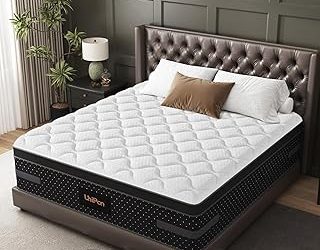
BedStory 14 Inch Hybrid King
The zoned lumbar section is the standout here, with firmer pocket springs concentrated under the midsection to fight the hip-sink that throws off spinal alignment for heavier sleepers. A 10-year warranty on a bed at this price point suggests genuine confidence in the coil unit rather than marketing optimism.
14 Inch Cooling Hybrid Queen with Ice Silk Cover
Seven-zone coil layout paired with gel memory foam and an ice-silk cover makes this the pick for hot sleepers who also need extra-firm support — a combination that’s genuinely hard to find. Edge support is reinforced enough to sit on comfortably while lacing boots.
Extra Firm 14 Inch Queen, Fiberglass-Free
The thick foam edge rail is the real engineering here, extending the usable sleep surface nearly to the perimeter instead of leaving a soft four-inch dead zone. Fiberglass-free construction also means a cover blowout won’t turn your bedroom into a remediation project.
Coolvie Hybrid Latex King
Latex over five-zone heavy-duty springs gives a livelier, more responsive feel than all-foam builds — easier to change positions on, and latex holds its shape under sustained load far better than mid-density polyfoam. The Euro top adds cushioning without the loft-loss of a pillow top.
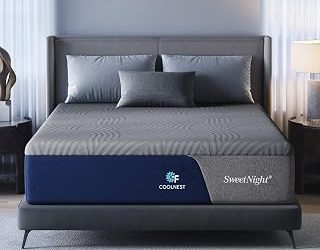
Sweetnight CoolNest 14 Inch King
A medium-feel, CertiPUR-US certified foam bed with five-zone support and a breathable build, best suited to heavier side sleepers who find extra-firm models punishing at the shoulder. Less structural than the hybrids, so pair it with a slatted frame using gaps under three inches.
Frequently Asked Questions
What mattress firmness works best for heavier sleepers?
Firm to extra-firm, generally 7 to 9 on the ten-point scale. Heavier bodies compress any surface further than lighter ones, so a mattress rated “firm” often feels medium in practice. Side sleepers above 250 pounds may want a firm support core with a slightly softer top layer to relieve shoulder and hip pressure.
Do I need a special bed frame?
Yes, and this is where most warranty claims get denied. Queen and king mattresses need a center support leg touching the floor, and slats should be spaced no more than three inches apart. Adding a plywood sheet or extra slats is a twenty-minute fix that prevents the localized sagging people blame on the mattress.
How long should one of these last?
Expect six to eight years with a proper foundation, versus the ten-plus years lighter sleepers see. Rotating head-to-foot every three months distributes wear across the coil unit and noticeably extends usable life.
Are hybrids genuinely better than all-foam for higher weights?
Usually, yes. Steel coils recover their shape under sustained load better than foam and allow airflow through the core. All-foam can work well if the support layers are high density, but the margin for error is smaller.
Final Thoughts
For most heavier sleepers, the BedStory 14 Inch Hybrid is the soundest all-around build — proper zoned coil support with a warranty that backs it. The Coolvie Hybrid Latex King earns the nod for anyone who wants responsiveness rather than sink, and the Ice Silk cooling hybrid is the one to reach for if overheating is your main complaint. All three prioritize structure over surface plushness, which is exactly the right order of operations.