
Our Top Picks
 FIRJOY Lazy Susan Turntable for Refrigerator15.3" x 11.1" Clear - 1 Pack12 x 12 x 3.5 inches1.65 poundsCheck on Amazon
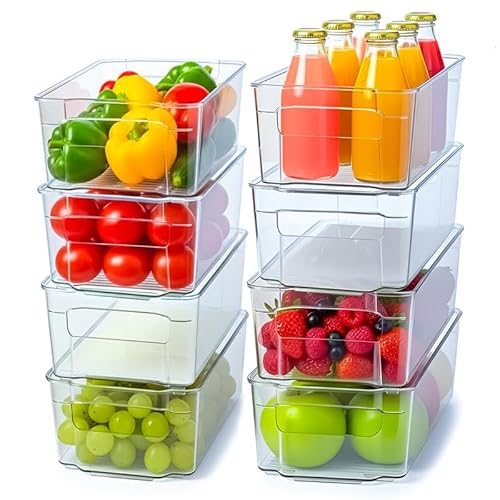


The short answer: the best fridge organizers are the ones sized to your actual shelves, easy to rinse, and matched to the food you buy most. For most households that means a small set of open-front bins for packaged items, one or two turntables for jars and bottles, and a pair of clear drawers or produce containers for fruit and vegetables. Add a narrow can or bottle rack only if you drink a lot of canned beverages. Start with measurements and a quick audit of what lives in your fridge, then buy the fewest pieces that solve your real clutter problem.
This guide does not rank products or name brands. It explains the main organizer types, how to pick materials, how to set up zones, and what to check before you order. Use it to narrow your search, then compare current listings against the dimensions of your own refrigerator.
Contents
- Why a fridge organizer is worth considering
- The main types of fridge organizers
- Comparison table: which type solves which problem
- Materials and finishes
- How to measure your fridge
- Setting up zones that stay tidy
- Buyer checklist
- Mistakes to avoid
- Food safety and fridge airflow
- Frequently asked questions
- Bottom line
Why a Fridge Organizer Is Worth Considering
A refrigerator is one of the few storage spaces in a home that gets opened many times a day, by several people, usually in a hurry. Without some structure, the contents drift. Small jars migrate to the back, a half-used packet of something gets buried behind a casserole dish, and the same condiment is bought twice because nobody could see the first one. Organizers do not make food last longer by themselves, but they make it visible, and visible food is far more likely to be eaten while it is still good.
There is also a practical cleaning benefit. When items sit in removable containers, a spill is confined to one bin instead of spreading across a whole shelf. You lift the bin out, wash it, and put it back.
It helps to be honest about what organizers cannot do. They will not create space that is not there. If your fridge is simply too full for the amount of food you buy, a set of bins may make the overload look neater but will not fix it. Treat an organizer purchase as step two, after you have cleared out expired items and decided what really belongs inside.
Start with a quick audit
Before shopping, take everything out and sort it into rough groups: drinks, dairy, condiments, leftovers, raw meat and fish, produce, and snacks. Count how many items fall into each group and note which ones are tall, which are wide, and which are small and easy to lose. This ten-minute exercise tells you more about what to buy than any product description. A household with many small yogurt pots needs something different from one that stores big juice cartons and leftovers in large glass dishes.
The Main Types of Fridge Organizers
Most products fall into a handful of categories. Each one solves a specific kind of clutter, so the goal is to match the type to the problem rather than buy a large mixed set and hope.
Open-front bins and trays
These are the workhorses. A bin is a rectangular container, often with a cut-out or low front, that holds a group of related items. Because it slides out like a drawer, you can reach the back of a deep shelf without moving everything in front. Bins suit packaged cheese, deli slices, sauces, lunch items and snack pots. Look for handles or finger holes, because a bin that is awkward to pull out will not be used. Width matters too: a bin that leaves a small gap on each side slides more easily than one that fits wall to wall.
Turntables (lazy Susans)
A turntable is a low rotating tray that lets you spin the contents toward you. It excels with jars, bottles, sauces and small tubs, which tend to disappear into corners. A lip around the edge helps stop things from sliding off when you spin it. Check the diameter against your shelf depth, because a turntable that touches the back wall or the door shelf may jam when the door closes. Turntables are less useful for flat items such as packets, which stack awkwardly on a round surface.
Stackable drawers
Clear stackable drawers create a mini set of shelves inside a tall gap. They are helpful if you have a shelf with a lot of vertical space above your items. The advantage is that you use height you were previously wasting. The risk is that stacking buries the lower drawer, so reserve it for things you reach for less often and keep the top drawer for daily items.
Produce containers and crisper liners
Fruit and vegetable storage comes in vented containers, lidded boxes and simple liners that sit in a crisper. Some designs include a raised base so produce is not sitting in moisture. Product descriptions often promise longer freshness, but results vary with the produce, the fridge and how dry the items are when stored, so treat those claims as a bonus rather than a guarantee. The reliable benefit is that loose items stay grouped and easy to see.
Can and bottle dispensers
These narrow racks or gravity-fed channels hold rows of cans or bottles on their side. They are a good fit if you keep a lot of canned drinks, and a poor fit if you do not, because they take up a fixed amount of shelf. Confirm that the rack accommodates the can sizes you buy, and think about whether a shelf with a lower clearance will work with a slanted design.
Door organizers and shelf risers
Door shelves are the warmest part of many fridges, because they sit outside the main cold air flow. An organizer here is best used for condiments and drinks rather than dairy or eggs, unless the fridge manual says otherwise. Shelf risers, which are small step-shaped inserts, lift the back row of jars so you can see them. They are cheap and make a noticeable difference to visibility.
Comparison Table: Which Type Solves Which Problem
| Organizer type | Best for | Watch out for | Good fit if |
|---|---|---|---|
| Open-front bin | Packaged cheese, deli items, snacks, lunch components | Too-wide bins that jam against shelf edges | Your shelves are deep and items get lost at the back |
| Turntable | Jars, bottles, sauces, small tubs | Diameter hitting the back wall or door | You own many round or bottle-shaped items |
| Stackable drawer | Using tall empty space above shelves | Lower drawer becoming forgotten | Your shelves are spaced widely apart |
| Produce container | Loose fruit and vegetables | Lids that trap moisture on wet produce | Your crisper drawer is a jumble |
| Can or bottle rack | Rows of canned or bottled drinks | Fixed size that wastes space if you drink little | You restock beverages in large packs |
| Shelf riser | Lifting back-row jars into view | Reducing clearance for tall items | You have unused space above short items |
Use the table as a quick filter. If none of the right-hand conditions describes your fridge, skip that type. Most households need only three or four of these categories.
Materials and Finishes
The material affects how easy an organizer is to clean, how clearly you can see what is inside, and how long it lasts in a cold, damp environment.
Clear plastic
Clear plastic is the most common choice because it lets you see contents at a glance and is usually light enough to pull out with one hand. Check that the product is described as food-safe, and read the care instructions for dishwasher suitability instead of assuming it is dishwasher safe. Thin plastic may crack if it is dropped, and some can cloud with repeated washing.
Wire and metal
Wire baskets allow cold air to circulate and are easy to look through. The gaps mean small items can fall through, and a coating may chip over time. Check whether the finish is intended for contact with moisture so it does not rust.
How to Measure Your Fridge
Measurement is the step most people skip and later regret. A few minutes with a tape measure prevents returns and wasted shelf space.
- Shelf depth. Measure from the inside of the door seal area to the back wall, not from the front edge of the shelf, since the door and its shelves need clearance.
- Shelf width. Measure the usable width between the side walls, and note any lip or divider that narrows it.
- Vertical clearance. Measure from the top of the shelf to the underside of the next shelf. Do this for each level, because heights vary.
- Door shelf depth. Door shelves are shallower, so measure how far items can stick out before touching the main shelves when the door closes.
- Crisper dimensions. Measure the drawer interior, including its height, and check whether the front has a slope that limits tall items.
Write the numbers down and take them with you when you shop. Compare them to the listed dimensions, and remember that interior measurements of the organizer matter as well as the outer size. If a listing gives only outer dimensions, assume the usable interior is slightly smaller.
Setting Up Zones That Stay Tidy
An organizer is only as good as the system behind it. Zones are simple: give each category a home, and put it there every time.
Top shelves: ready-to-eat
Upper shelves suit leftovers, drinks, snacks and anything you eat without cooking. Because these are at eye level, they are the first things people see, so they get used first. A turntable for sauces or a bin of snack items works well here.
Middle shelves: dairy and everyday staples
Dairy, eggs, and often-used items fit best in the middle, where the temperature tends to be more consistent in many models. A shallow bin for cheese and a caddy for small items keeps this level tidy.
Bottom shelf: raw ingredients
Raw meat and fish belong on the lowest shelf, in sealed containers or on a tray that can catch drips. A dedicated bin, washed regularly, is a sensible choice for this zone because spills stay contained.
Drawers: produce
Fruit and vegetables go in the crisper. Many people find it helps to keep fruit and vegetables in separate drawers or containers, because some produce gives off gases that affect others. Check the specific guidance for the items you buy rather than relying on a single rule.
Door: condiments and drinks
The door is for items that tolerate temperature shifts, such as condiments and beverages. A caddy keeps tubes and small bottles from tipping over each time the door swings.
Buyer Checklist
- I measured shelf depth, width and height for each level, and wrote the numbers down.
- I audited what is in my fridge and know which groups cause the most clutter.
- The product is described as suitable for food contact and for refrigerator use.
- I checked the care instructions for washing and dishwasher suitability.
- Handles or cut-outs make the bin easy to pull out with one hand.
- Dimensions listed are interior sizes, or I allowed for a smaller usable space.
- Turntables clear the back wall and the door when it closes.
- Nothing will block vents, fans, sensors or the light.
- I plan to buy only the types that match my own clutter, not a large mixed set.
- I checked current specifications and return conditions on the listing.
Mistakes to Avoid
Buying a big set before measuring
Large multi-piece sets are tempting, but fridge shelves vary widely, and a set designed for one layout may fit poorly in yours. Order one or two pieces first, confirm they work, and then add more.
Packing every inch
An organizer encourages fuller use of space, and a fridge crammed to the walls can struggle to circulate cold air. Leave gaps so air can move around food, and avoid pushing containers against the back wall.
Ignoring the door shelves
The door looks like convenient storage for everything, but it is often the warmest area. Keep perishable items such as milk on interior shelves unless the manufacturer states otherwise.
Choosing style over function
Matching containers look lovely in photos, but if they are hard to wash or too deep to reach, they end up unused. Prioritize easy access and easy cleaning over a uniform look.
Food Safety and Fridge Airflow
Organizers should never get in the way of safe food storage. Keep these principles in mind, and check your fridge manual and official food safety guidance for current recommendations.
- Keep raw and ready-to-eat food apart. Store raw meat, poultry and fish on the lowest shelf in leak-proof containers so juices cannot drip onto other food.
- Do not block airflow. Fridges circulate cold air through vents and sometimes a fan. Leave space around vents and avoid lining shelves with material that covers them.
- Check the temperature. Use a fridge thermometer and follow the temperature guidance from your local food safety authority. Overstuffing and frequent door opening can affect it.
- Use food-safe products. Choose containers described as suitable for food, and avoid reusing items that previously held non-food products.
- Mind heavy items. Glass and full containers can be heavy. Place them on lower, sturdy shelves and do not overload shelf supports.
- Do not rely on organizers to extend freshness. Follow the use-by dates and storage instructions on the packaging.
If your fridge starts to behave oddly after you add organizers, such as frost forming in unusual places or the compressor running constantly, remove them and consult the manual or a technician.
Frequently Asked Questions
What size fridge organizer do I need?
The right size depends on your shelf depth, width and clearance. Measure each level, then choose an organizer that leaves a small gap around it so it slides easily. Check the listing for interior dimensions.
Are fridge organizers worth it?
For many people they are, mainly for visibility and easier cleaning. If your fridge is already tidy and rarely overfull, you may only need one or two pieces.
Are clear plastic bins safe for food?
Look for products described as suitable for food contact, and follow the care directions. If a listing does not say, ask the seller or choose another item.
Can I put fridge organizers in the dishwasher?
Only if the product says so. Heat can warp some plastics, so use the recommended rack and check the instructions, or wash by hand with warm soapy water.
Where should I keep milk and eggs?
Inside the main compartment is often recommended over the door because of temperature swings. Check your fridge manual and the packaging for specific guidance.
Do turntables work in shallow fridges?
They can, if the diameter clears the back wall and the door. In very shallow spaces a long, narrow bin may be easier to use than a round tray.
How do I stop produce from spoiling quickly?
Store items dry, avoid crowding, keep fruit and vegetables apart where advised, and use older items first. Containers may help, but results vary.
How often should I clean my organizers?
Wipe up spills right away and wash bins regularly, especially the one for raw food. A routine tied to your weekly shop makes it easier to keep up.
Bottom Line
The best fridge organizers are modest, well-measured and matched to your own clutter. Clear out the fridge, measure each shelf, and start with a bin for packaged items, a turntable for jars and a drawer or container for produce. Keep raw food low and sealed, leave room for air, and check current specifications before you buy. When you are ready to shop, you can browse refrigerator storage bins, fridge turntables, stackable fridge drawers, produce storage containers and can dispenser racks, and compare each listing against your measurements.
Disclosure: As an Amazon Associate, we earn from qualifying purchases. Links marked as sponsored may earn us a commission at no extra cost to you.
More from Amazon
Programs that pair well with the guide above. Offers and eligibility are set by Amazon and may change.
A free business account with business pricing and bulk-buying tools for work, shop or home office.
Create a business accountFree shipping on eligible items, Prime Video and more. Eligible new members can start with a free trial.
Start a Prime free trialAudiobooks and podcasts to listen to on the go. Eligible new members can start with a free trial.
Try Audible freeAd-free music streaming. Eligible new subscribers can start with a free trial.
Try Music Unlimited freeAs an Amazon Associate we earn from qualifying purchases.
