Key takeaways
- Go thick, then go thicker: Under 12 inches, there simply isn’t enough material between your hips and the foundation. Fourteen inches is the practical floor for sleepers over 250 pounds, and 16 inches buys you real headroom on a shared bed.
- Coils beat foam for heavy loads: Pocket springs push back with mechanical force rather than relying on foam resilience, so they resist the permanent body impressions that sink all-foam beds. If you’re over 300 pounds, prioritize a hybrid.
- Demand zoned support: Firmer coils or denser foam under the lumbar region keeps your spine neutral instead of letting the heaviest part of your body dive. Look for 5-zone or 7-zone construction stated in the specs, not vague “targeted support” marketing.
- Check the edge, not the middle: Reinforced perimeter coils determine whether you can sit and sleep on the outer six inches. Weak edges effectively shrink your usable sleep surface and are the first thing to break down.
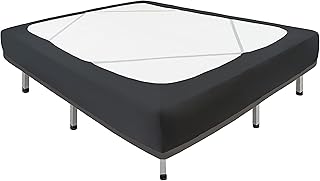
- Verify your foundation and certifications: Slats spaced wider than three inches will let any mattress sag regardless of quality — add center support if needed. CertiPUR-US and fiberglass-free construction should be non-negotiable.
What's inside
If you’ve ever put a knee on the edge of a new mattress and felt the whole side collapse like a cardboard box, you already know the core problem: most beds are engineered around a 150-pound sleeper. Push past 250 or 300 pounds and the physics change. Foam that felt plush in the showroom bottoms out at the hips, coil gauges built for average loads start to fatigue in the high-traffic zones, and the perimeter — the part you sit on every single morning to put your socks on — gives up first. Add two heavier sleepers to the same slab and the failure clock speeds up considerably.
I’ve torn down enough beds and rebuilt enough bed frames to know that support for larger bodies comes down to three measurable things: total build height, the density and layering of the comfort system, and whether the manufacturer bothered to reinforce the lumbar and edge zones. This guide breaks down what actually matters when you’re shopping for load capacity, then walks through the models below — a mix of thick all-foam builds and pocket-coil hybrids that hold their shape under real weight. No fluff, no showroom theater.
As an Amazon Associate we earn from qualifying purchases.


How to Choose a Mattress For Big People (2026)
- Go thick, then go thicker: Under 12 inches, there simply isn’t enough material between your hips and the foundation. Fourteen inches is the practical floor for sleepers over 250 pounds, and 16 inches buys you real headroom on a shared bed.
- Coils beat foam for heavy loads: Pocket springs push back with mechanical force rather than relying on foam resilience, so they resist the permanent body impressions that sink all-foam beds. If you’re over 300 pounds, prioritize a hybrid.
- Demand zoned support: Firmer coils or denser foam under the lumbar region keeps your spine neutral instead of letting the heaviest part of your body dive. Look for 5-zone or 7-zone construction stated in the specs, not vague “targeted support” marketing.
- Check the edge, not the middle: Reinforced perimeter coils determine whether you can sit and sleep on the outer six inches. Weak edges effectively shrink your usable sleep surface and are the first thing to break down.
- Verify your foundation and certifications: Slats spaced wider than three inches will let any mattress sag regardless of quality — add center support if needed. CertiPUR-US and fiberglass-free construction should be non-negotiable.
The Best Mattress For Big People (2026)s Reviewed
EGOHOME King 14 Inch Memory Foam
This is the pick for heavier sleepers who genuinely prefer foam contouring over spring pushback, and the copper gel infusion plus graphene cover does real work pulling heat out of the deeper cradle a larger body creates. The medium-firm tuning and ICA endorsement make it a solid choice for chronic back pain, though at 14 inches of all-foam it’s better suited to a single heavier sleeper than two.
BedStory 14 Inch Hybrid
BedStory built this one explicitly around heavier bodies, and it shows in the no-sag pocket spring core paired with zoned lumbar reinforcement — the combination that actually prevents the hip-dip most heavy sleepers complain about. The 10-year warranty signals genuine confidence in the coil unit rather than just the cover.
16 Inch King Luxury Hybrid
If two larger adults share the bed, this is where I’d start: 16 inches gives you a deep coil unit plus a substantial comfort layer without either one compromising the other, and the 7-zone support keeps shoulders and hips independently supported. The 365-night trial means you can actually test it through a full season of temperature swings.
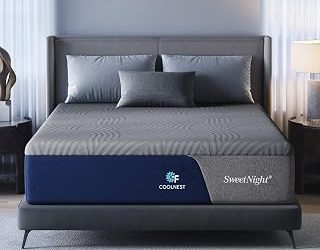
Sweetnight CoolNest 14 Inch King
Heat is a bigger factor for larger sleepers because more body mass means more thermal load sitting in the foam, and the CoolNest’s breathability engineering targets exactly that. The 5-zone ergonomic layout with a medium feel is a comfortable middle ground for sleepers in the 250 to 300-pound range who don’t want a rock-hard surface.
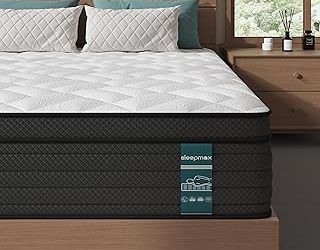
Sleepmax Queen 14 Inch Hybrid
A well-balanced hybrid for combination sleepers who shift between back and side positions through the night, with enough coil support to keep the lumbar curve honest. The 365-night trial and fiberglass-free build make it a low-risk entry point at the queen size.
Frequently Asked Questions
What mattress thickness do I need if I weigh over 300 pounds?
Aim for 14 inches minimum, and 16 inches if you share the bed. Thickness correlates directly with how much support material sits between your body and the foundation, which determines how long the mattress resists permanent compression.
Are hybrids really better than memory foam for heavier people?
Generally yes. Pocket coils provide active mechanical resistance that doesn’t degrade the way foam resilience does under sustained load, and they breathe far better. High-density foam builds can work well, but the density spec has to be genuinely high.
Will my existing bed frame handle a heavier mattress setup?
Check your slat spacing first — anything over three inches needs additional slats or a plywood layer. A center support leg running to the floor is essential on queen and larger frames; without it, the frame sags and the mattress follows.
Why does the edge of my mattress collapse before the middle?
Perimeter coils and foam rails carry concentrated load every time you sit down to dress, which is far more punishing than distributed sleeping weight. Reinforced edge construction is the specific feature that solves this.
Final Thoughts
For most heavier sleepers, the BedStory 14 Inch Hybrid hits the best balance of engineered heavy-duty support and price, while the 16 Inch King Luxury Hybrid is the smarter investment if two larger adults share the bed and want long-term durability. Foam loyalists dealing with back pain should look hard at the EGOHOME 14 Inch — just pair it with a properly supported foundation and it’ll hold up.