Key takeaways
- Fit tolerance: A full-size crib mattress runs roughly 52″ x 27.5″. Press it into a corner and check the gap along the opposite rail — if two fingers slide in, it’s too small. Measure your crib’s interior before ordering, especially with a build-it-yourself frame.
- Firmness over plushness: Press your palm into the surface. It should spring back immediately with no lingering impression. Infant sleep surfaces need to be genuinely firm; softness is a hazard, not a feature.
- Certifications that mean something: GREENGUARD Gold covers chemical emissions, CertiPUR-US covers foam content, and OEKO-TEX Standard 100 covers the textile cover. Look for at least one, ideally two.
- Dual-stage construction: One firm infant side, one slightly softer toddler side. Flip it around the time you convert the crib to a toddler bed and you’ve bought yourself three or four extra years from a single purchase.
- Cover removal and washing: Zippered, machine-washable covers with a waterproof layer underneath will save you at 2 a.m. Test the zipper pull before you need it in the dark.
What's inside
Building a crib is the fun part. You get to plane the rails, sand the spindles, and fuss over the finish until it feels right. Then you measure the interior opening, walk into the mattress aisle, and realize the real engineering problem is the thing you can’t build yourself. A foam slab that’s too soft is a suffocation hazard. One that’s a hair too small leaves a finger gap along the rail. And half the marketing copy talks about “cloud-like comfort,” which is exactly the opposite of what an infant needs.
This guide approaches nursery mattresses the way you’d approach any component spec: dimensions first, materials second, cleanability third. I’ve broken down what actually matters in the 2026 lineup — firmness ratings, certification labels worth trusting, dual-stage designs that stretch your investment into the toddler years, and the one category where a cheap pad genuinely beats an expensive one. Below are the picks that hold up under scrutiny.
As an Amazon Associate we earn from qualifying purchases.



How to Choose a Nursery Mattress (2026)
- Fit tolerance: A full-size crib mattress runs roughly 52″ x 27.5″. Press it into a corner and check the gap along the opposite rail — if two fingers slide in, it’s too small. Measure your crib’s interior before ordering, especially with a build-it-yourself frame.
- Firmness over plushness: Press your palm into the surface. It should spring back immediately with no lingering impression. Infant sleep surfaces need to be genuinely firm; softness is a hazard, not a feature.
- Certifications that mean something: GREENGUARD Gold covers chemical emissions, CertiPUR-US covers foam content, and OEKO-TEX Standard 100 covers the textile cover. Look for at least one, ideally two.
- Dual-stage construction: One firm infant side, one slightly softer toddler side. Flip it around the time you convert the crib to a toddler bed and you’ve bought yourself three or four extra years from a single purchase.
- Cover removal and washing: Zippered, machine-washable covers with a waterproof layer underneath will save you at 2 a.m. Test the zipper pull before you need it in the dark.
The Best Nursery Mattress (2026)s Reviewed
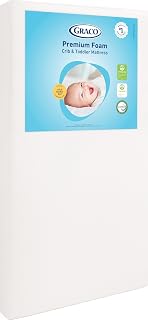
Graco Premium Foam Crib & Toddler Mattress
This is the sensible default — GREENGUARD Gold certified, waterproof, with an OEKO-TEX machine-washable cover and firmness that doesn’t apologize for itself. It’s lightweight enough that changing sheets one-handed is realistic, which matters more than any spec sheet suggests.
Letmxiu Premium Crib & Toddler Mattress
The knitted fabric and fleece surface give it a nicer hand-feel than most budget foam, and at 5″ thick it sits at a good height inside standard crib rails. Hypoallergenic and non-toxic construction, with a firm core that softens just enough at the surface for toddler use.
Organic Cotton Dual-Sided Crib Mattress
The two-stage design here is the standout: CertiPUR-US memory foam with a firm infant face and a cooling gel toddler face, wrapped in organic cotton. At 52 x 27.5 x 5.5 inches it fills a standard crib properly, and the waterproof washable cover handles the inevitable.
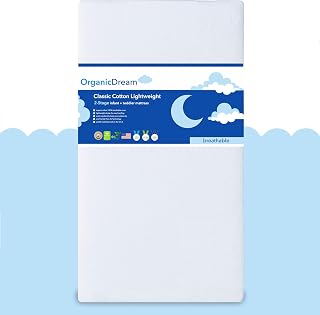
ORGANICDREAM Breathable 2-Stage Crib Mattress
The breathable core is the real argument for this one — airflow through the sleep surface reduces suffocation risk, and it’s GREENGUARD certified on top of that. At 6″ it’s the thickest here, so double-check your crib’s mattress support height before committing.
Premium Hypoallergenic Crib & Toddler Mattress
A straightforward breathable build at 52″ x 27.6″ x 5″ with a firm-yet-forgiving surface that works across both stages. Good value if you want certified materials without paying for organic cotton branding.
Frequently Asked Questions
How firm does an infant mattress actually need to be?
Firm enough that your hand leaves no impression when you press and release. If it contours to your palm the way an adult memory foam mattress does, it’s not appropriate for infant sleep.
Do I need a separate mattress when converting to a toddler bed?
Not if you bought dual-sided. Flip to the toddler face and keep going. Single-firmness mattresses are still usable but less comfortable as the child gets heavier.
What about pack-and-play mattresses?
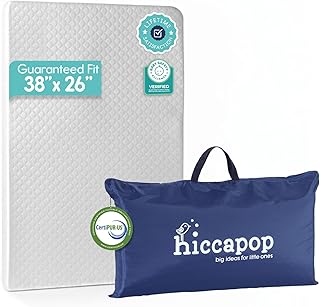
Different animal entirely. The Hiccapop Playard Mattress Pad at 1.25″ is built to fold into a carry bag and drop into a standard playard — never substitute a crib mattress in a playard, since the fit will be wrong and unsafe.
Can I add a mattress topper for comfort?
No. Toppers, quilts, and padded covers all defeat the firmness you paid for. A fitted sheet is the only layer that belongs on an infant sleep surface.
Final Thoughts
For most nurseries, the Graco Premium Foam mattress is the smart baseline — properly firm, properly certified, and easy to keep clean. If breathability is your priority, the ORGANICDREAM breathable 2-stage is worth the upgrade, and the Organic Cotton Dual-Sided model gives you the longest useful life from a single purchase. Add the Hiccapop pad if you travel.