Key takeaways
- A water test kit answers a narrow question, and buyers get into trouble when they treat the answer as broader than it is.
A water test kit answers a narrow question, and buyers get into trouble when they treat the answer as broader than it is. Test strips and drop kits give a quick, rough look at a handful of parameters such as hardness, pH, chlorine, and iron. Mail-in lab kits send a sample to a laboratory and return a report that covers many more analytes. Aquarium kits measure a different list altogether. Which one makes sense depends on whether you are curious about a tap, concerned about a private well, or managing a tank.
This guide is for homeowners, well owners, and hobbyists comparing options in 2026 based on what each title lists: strip counts, parameter counts, bacteria add-ons, and lab services. A kit is not a verdict on whether water is safe to drink, and no product here can promise that. If results look unusual, or if the water supply is a private well, contact your local health department or a state-certified laboratory for guidance, and follow each kit’s instructions for sampling and timing. Read the quick picks table first for a fast match, then use the buying advice to narrow it down before choosing among the detailed write-ups.
Quick Picks
Our top picks


As an Amazon Associate we earn from qualifying purchases at no extra cost to you.
| Product | Best for | Key spec from the title |
|---|---|---|
| Varify 17-in-1 Kit | Tap and well water with bacteria add-ons | 100 strips, 2 bacteria kits |
| SJ WAVE 22-in-1 | Broad strip panel | 22 parameters, 125 strips |
| 26-in-1 Water Test Kit | Largest listed parameter count | 26 parameters, 158 strips |
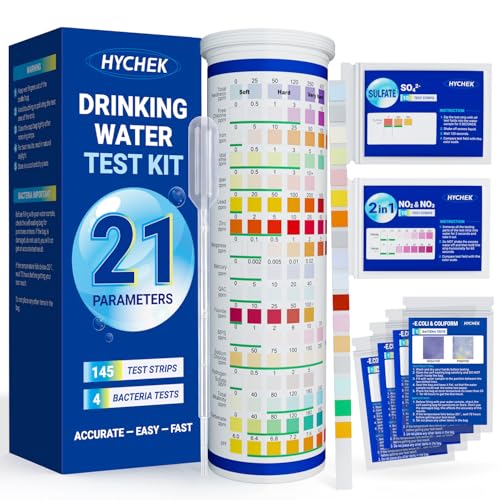
| HYCHEK 21-in-1 | Strips plus bacteria checks | 145 strips, 4 bacteria tests |
| Advanced Home Water Test Kit | Mail-in lab report | 116 analytes, lab service named in the title |
| Safe Home Premium Kit | Lab testing for a defined set | 50 parameters, lab testing |
| API Freshwater Master Test Kit | Aquarium owners | 800 tests, freshwater aquarium |
How to Choose
Strips, drop kits, or a mail-in lab
Strips are fast and cheap per test, but they read by color and are best treated as screening. Drop and reagent kits can give more granular readings for a few parameters and suit hobbyists. Mail-in lab kits take longer but cover more analytes and come with a formal report. If you suspect a specific concern, a lab is the stronger path; if you just want to track hardness or chlorine at home, strips are enough. Some households do both, using strips for periodic checks and a lab kit once a year or when something changes, which keeps routine costs low while still giving a documented record.
Parameter counts and what they mean
Titles advertise counts such as 17, 21, 22, or 26 parameters. A higher number often means more color pads on a strip, which can make reading harder without necessarily making any single result better. Look at which parameters the listing actually names, and decide whether they cover your concern, such as hardness, iron, copper, lead, nitrates, or pH. A shorter panel that names exactly what you care about beats a longer one that buries it. For lab kits, check the list of analytes and the lab’s accreditation on the listing.
Bacteria tests and well water
Some kits include bacteria tests, which are designed to flag presence or absence in a sample and usually require incubation time. Follow the instructions closely, since contaminated sampling can produce a misleading result. A positive result is a reason to contact your local health department or a certified lab for guidance, not to guess at a fix. Private well owners are commonly advised to test on a regular schedule and after events like flooding. Take the sample the way the instructions describe, with clean hands and the recommended container, because careless collection is the most common source of confusing results.
Storage, expiry, and what to ignore
Strips are sensitive to moisture and heat, so keep the container closed and check expiry dates. Ignore language like accurate or lab quality on strip kits unless backed by documentation. Budget kits often save money on strip quality and instructions, mid-range kits add bacteria checks and bigger strip counts, and premium lab services include a printed report and support. Match the kit to the question you are asking, and re-test if results seem off. A second sample taken carefully often clarifies whether a reading was real or a handling error.
The 7 Best Options
Varify 17-in-1 Complete Water Test Kit
Varify pairs 100 strips with two bacteria kits, for tap or well water. It is a middle-of-the-road kit for owners who want screening on common parameters and a bacteria check in one box. Keeping the extra strips on hand makes it practical to test again after a plumbing repair or a change in the water’s appearance.
- Strength: 100 strips provide room for repeated tests.
- Strength: bacteria kits are included.
- Trade-off: strips are a screening tool, not a lab report.
Skip it if you need formal documentation, and read the listing for the full parameter list. Bacteria kits also need a clean sample and a waiting period, so plan the test for a day when you can follow the steps without rushing.
SJ WAVE 22-in-1 Water Test Kit
SJ WAVE lists 22 parameters on 125 strips for drinking, tap, and well water. It suits households that want a wide panel and plenty of strips for repeat testing. A good habit is to record the date and reading each time, so changes over the seasons stand out.
- Strength: 22 parameters in the title.
- Strength: 125 strips support repeated checks.
- Trade-off: more pads can make color matching harder.
Skip it if you need bacteria testing included, since the visible title does not state it. Check the listing to see exactly which parameters are on the strip before relying on it for a specific concern.
26-in-1 Water Test Kit, 158 Strips
This kit advertises 26 parameters and 158 strips for well and tap water. It has the biggest listed panel and strip count in the group. Because so many pads sit on one strip, good lighting and a timer make the readings easier to compare against the chart.
- Strength: most parameters in the group.
- Strength: highest strip count for repeat use.
- Trade-off: large panels can be tedious to read.
Skip it if you prefer a simple, narrow test, and check the listing for the full parameter list. A kit this broad is best for people who like to log numbers and compare results over time.
HYCHEK 21-in-1 Water Test Kit
HYCHEK combines 145 strips with four bacteria tests, designed for tap and well water. The extra bacteria tests are the draw for well owners who sample multiple times. Each bacteria test generally needs its own clean sample container and a waiting period, so read the instructions before starting.
- Strength: four bacteria tests are included.
- Strength: 145 strips for ongoing monitoring.
- Trade-off: strips remain a screening method.
Skip it if you need lab-backed results, and follow the sampling instructions closely. Keep unused tests in a cool, dry place so the later samples are as reliable as the first.
Advanced Home Water Test Kit, 116 Analytes
This is a mail-in kit that the title says uses EPA certified drinking water labs, covering 116 analytes for well or city water. It is the broadest option here and the closest to a formal report. Households with a new well, a home purchase, or unexplained changes in taste or color often choose a lab route for the documentation alone.
- Strength: large analyte list in a lab setting.
- Strength: written report rather than color strips.
- Trade-off: it takes longer than a strip test and costs more.
Skip it if you only want a quick check, and verify the lab’s certification on the listing. The wait for mailed results can run to days or longer, which does not suit someone chasing a same-day answer.
Safe Home Premium Drinking Water Test Kit
Safe Home sends a sample to a laboratory that the title describes as EPA certified, and covers 50 parameters. It sits between a strip kit and the larger lab panel. That middle position suits owners who want laboratory handling without the longest analyte list.
- Strength: lab-based testing for a defined set.
- Strength: fewer parameters than the largest panel, which keeps the report focused.
- Trade-off: mailing and turnaround add delay.
Skip it if you need instant results, and check the listing for the analyte list. Compare it with the larger lab kit to see whether the smaller panel includes the items you care about.
API Freshwater Master Test Kit, 800 Tests
API is an aquarium kit rather than a drinking water kit. It lists 800 tests for a freshwater tank and fits hobbyists tracking tank conditions, not home tap or well water. Aquarium parameters differ from drinking-water parameters, which is why the two kinds of kit are not interchangeable.
- Strength: 800 tests for ongoing tank monitoring.
- Strength: built for aquarium use.
- Trade-off: it is not designed for household drinking water.
Skip it if your goal is to check tap or well water.
Which One Fits Your Situation
You are curious about tap water
A strip kit like SJ WAVE or the 26-in-1 gives a quick screening of common parameters. Think of the result as a starting point for questions, not a final answer.
You have a private well
HYCHEK or Varify add bacteria tests, while the Advanced Home lab kit offers a broader report. Consult a local health department for guidance.
You want formal documentation
The Advanced Home or Safe Home mail-in kits produce lab reports. Choose between them by comparing the analyte lists on each listing against your concern.
You keep a freshwater tank
The API Freshwater Master Test Kit is the only aquarium-specific option here.
Common Mistakes
- Treating a strip result as proof that water is safe or unsafe.
- Storing strips in a humid bathroom, where moisture can ruin them.
- Reading colors under dim light or after the stated time window.
- Using an aquarium kit for drinking water, even though both measure “water” in the broad sense.
- Ignoring a positive bacteria result instead of seeking guidance.
Related guides
- Battery Powered Floodlight Camera With Local Storage
- Cordless Drill Brush Attachment For Bathroom Grout
- Rechargeable Emergency Lantern For Power Outages
Frequently Asked Questions
Are test strips as reliable as a lab?
Strips are a screening tool, while labs follow formal methods. Use strips for trends and a lab for documentation.
How often should well water be checked?
Many sources suggest at least yearly, and after events like flooding. Your local health department can advise.
What do bacteria tests show?
They indicate presence or absence in a sample under set conditions. Follow instructions and seek guidance on any positive result. A negative result applies only to that sample on that day, so it is not a permanent clearance.
Can a kit point to the right filter?
It can offer clues, but a lab report or a professional is a better basis for equipment choices. Matching a filter or softener to a result is easier when the measurement comes from a documented source.
More from Amazon
Programs that pair well with the guide above. Offers and eligibility are set by Amazon and may change.
A free business account with business pricing and bulk-buying tools for work, shop or home office.
Create a business accountFree shipping on eligible items, Prime Video and more. Eligible new members can start with a free trial.
Start a Prime free trialAudiobooks and podcasts to listen to on the go. Eligible new members can start with a free trial.
Try Audible freeAd-free music streaming. Eligible new subscribers can start with a free trial.
Try Music Unlimited freeAs an Amazon Associate we earn from qualifying purchases.